
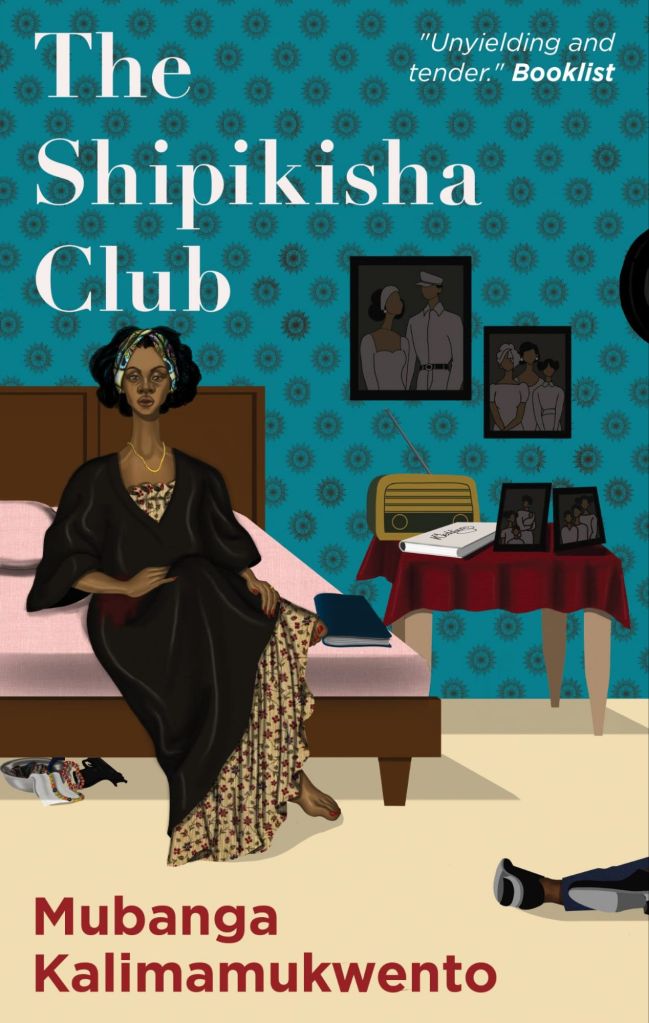
324 pp. July 23, 2026, Cassava Republic Press. Fiction/Zambia.
Sali has murdered her husband. She’s the only real witness to his death—it was just the two of them in the room—but their daughter was in the house and heard the gun go off, saw the blood. The narrative begins in the aftermath, when Sali appears in court charged with Kasunga’s murder, then revisits the events that led up to it through flashbacks and recollections. The initial perspective of the crime and of the family comes from Ntashé, the couple’s fourteen-year-old daughter when she’s called to testify; we learn that she mostly hates her mother, and is something of an unreliable narrator. Later, readers will ask themselves if this is because of Sali’s post-partum depression and her failure to bond with her daughter.
Although motherhood—the pain and difficulty and demands of it—is something the author returns to again and again, the main theme of the novel is gender violence and its fallout. Sali’s a murderer, but Kalimamukwento asks readers to consider what’s driven her to this terrible act. Inevitably, the night of the murder isn’t the first time the couple’s been in an altercation, but rather the culmination of many arguments and physical and emotional violence, even going back to their families of origin.
Running through the novel and true to African life, Christianity vies with traditional beliefs in the minds of many of these characters. They turn to what will make them feel or look good, or to what they believe will work best for each challenge. It’s usually a toss-up between the two belief systems, and ambivalence is normal. Some of the book’s most interesting passages describe aspects of Bemba culture that will be familiar to many African readers: marriage rites, and customs around pregnancy and the care of newborns; much of this is beautiful. However, the book shows, along with these beliefs and customs, we’ve inherited damaging ideas—like shipikisha for women. Shipikisha means to endure in Bemba; many African women will know a version of this from cultural teachings about how hard marriage is, how difficult men are, and how they must learn to endure the ravages of the patriarchy in silence. The burden is placed on a woman to hold her marriage together no matter what she suffers. Sali was trained in all of this too, and does her best to comply. But in her pressure cooker of a marriage, one night of violence is all it takes to undo everything.
Kalimamukwento’s characters are all wonderfully complex. Sali, is stubborn, greedy, strong-willed, and unlikeable, and yet is shown to simply be a woman who knows what she wants but makes poor choices—still unusual in portrayals of women in fiction. As her mother bemoans when she comes to visit her in jail, Sali never followed her mother’s guidance even in childhood; certainly she hasn’t followed her pastor father’s teachings, even though she looks up to him and is desperate for his love. Sali’s father is a terrible husband—a wife-beater, and an adulterer. Sali’s mother is practised at saving face before her community, enduring a bad marriage and doing her best to raise her daughter ‘well’; but she’s shown to have been a poor role model, with Sali swearing to never be like her. Kasunga, Sali’s husband, is the son of an overbearing mother who has believed superstitiously that her son is doomed to impotence; Kasunga inherited this belief unquestioningly, and in his relationship with Sali, it leads to both tenderness and cruelty due to his patriarchal ideas about manhood. He’s weak, but has redeeming qualities, particularly in how loving he can be.
While it starts off somewhat shakily—Ntashé suffers from some of the weakest writing—The Shipikisha Club builds to a shocking crescendo, quite the feat when readers already know the crime at the start. Kalimamukwento makes us care deeply about these characters by earnestly entreating, through her writing, us to understand them—although never to excuse any of their actions. The core of this powerful novel is a consideration of drivers of domestic violence, drawing a link between such violence and the patriarchy. Too often, Kalimamukwento shows, society is shocked by the most dramatic manifestations—like murder.—when there are always warning signs at points when tragic trajectories can be changed. Why, Ntashé asks, did one or the other of her parents not leave? Readers will ask this too; but in real life, we all how complex this can be when people are bonded in complicated ways. However, when the alternative is devastation, surely leaving is the only correct choice.
Affiliate link: Support independent bookshops and my writing by ordering it from Bookshop here.
Find out more about The Shipikisha Club from Cassava Republic here.


Leave a Reply