
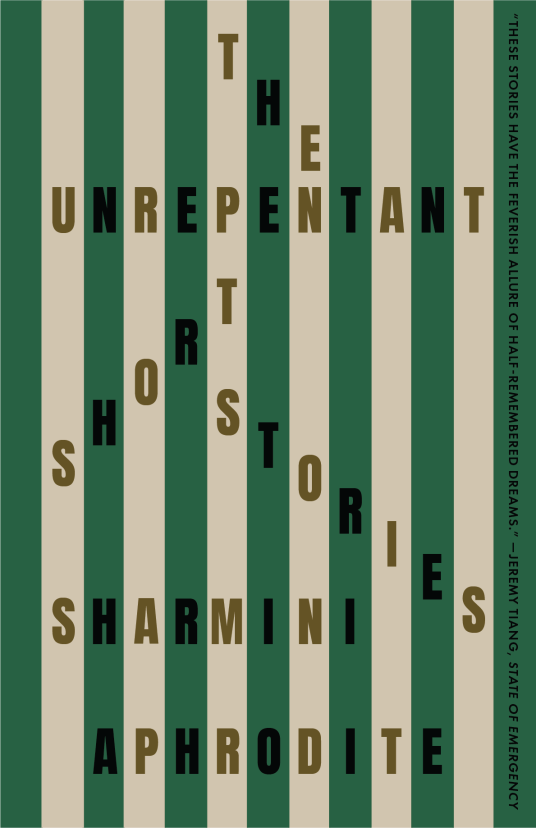
196 pp. November 1, 2025, Gaudy Boy. Fiction anthology.
There’s something particularly meaningful about learning Global South history through fiction or non-fiction from the region in question, and this collection of fourteen stories is a deeply emotive introduction to the history of Malaya—its colonisation through ships “that came earlier or later,” by the Portuguese, then the Dutch, then the British, then the Japanese—and then finally the complex struggle for independence from the British again.
The first story, plaintive and heart-breaking, sets the tone. In “The Light of God,” the chorus-like POV of younger siblings recalls how their brother disappeared. They don’t understand the events around them all that clearly: “It was clear that the communists in the jungles were the enemy, it was clear that our parents were afraid of them, but nothing is ever quite clear in the tropics. We were aware that we were living in the slipstream of history, even if the exact contours of that history were lost to us.” And they’re naïve in the way all younger siblings are: “Our brother was going to be the first Malaysian cosmonaut. This was decided in the April of 1961, just after the Soviets launched Yuri Gagarin into space. Our brother was eleven then, and we were six. We did not understand very well what a Soviet was.” We learn that because of this innocuous dream, their brother is suspected of being a communist, and soon disappears.
The collection is filled with such dream-like recollections—from freedom fighters, and from the families they’ve left behind. These are people labouring under compulsion, to speak, to act, to remember. Borders are shown for the fiction they are, but the pain of exile is very real: one man stands on a beach to watch the lights of his home across the water; another waits for news on the television and radio. Decisions made in far-off places land like bombs on small villages, producing tragedy and mourning. Time loses meaning; decades telescope in memory. But the day of freedom eventually does arrive.
In “One Hundred Perumals,” Aphrodite again very effectively uses first person plural to tell a story, through a legend, about migrant labour’s place in colonial history—here, how even though they worked alongside locals on plantations, such labourers were always outsiders to them and never accepted, yet exploited equally ruthlessly by colonisers. They had left their home for of false promises, to go to a country “that was for decades our damnation, that took our blood and our tears, our drink and our weeping.” And they joined the resistance and fought for Malaysia’s freedom, too, along with people from other countries and cultures whose histories, languages, and religions are now woven into Malaysia’s.
This is a beautifully written, evocative collection. Place and space are present, throbbing, vivid: the jungle is a place “where everything exists all at once, the entirety of time and space in a single crescendo”; dawn light is “feathery … suspended in the air.” A woman washes clothes by moonlight, with, “around her, the whispering of ferns and leathery, large leaves.” Human connection forms centre of the most memorable stories, the ones about love and loss; but everything hinges on memory.
The Unrepentant shows history is a living thing, as long as there are those who will remember. That first story ends with a thought that encapsulates the mood of the entire book: “We did not know when exactly we stopped waiting—what month, what day, what hour. We simply continued on with our lives, left only with memory, that nation without borders.”
Many thanks to Gaudy Boy and to NetGalley for the e-galley.
Affiliate link: Support independent bookshops and my writing by ordering it from Bookshop here.
Find out more about The Unrepentant from the author’s site here.
 Harare Review of Books
Leave a comment