
Earlier in the year, in March, HRB was at the opening of the Johannesburg Festival of Women Writers at the Nelson Mandela Theatre. It was a vibrant and colourful feminist affair! (So much so, in fact, that a meninist audience member tried to bring the vibe down, actually.)
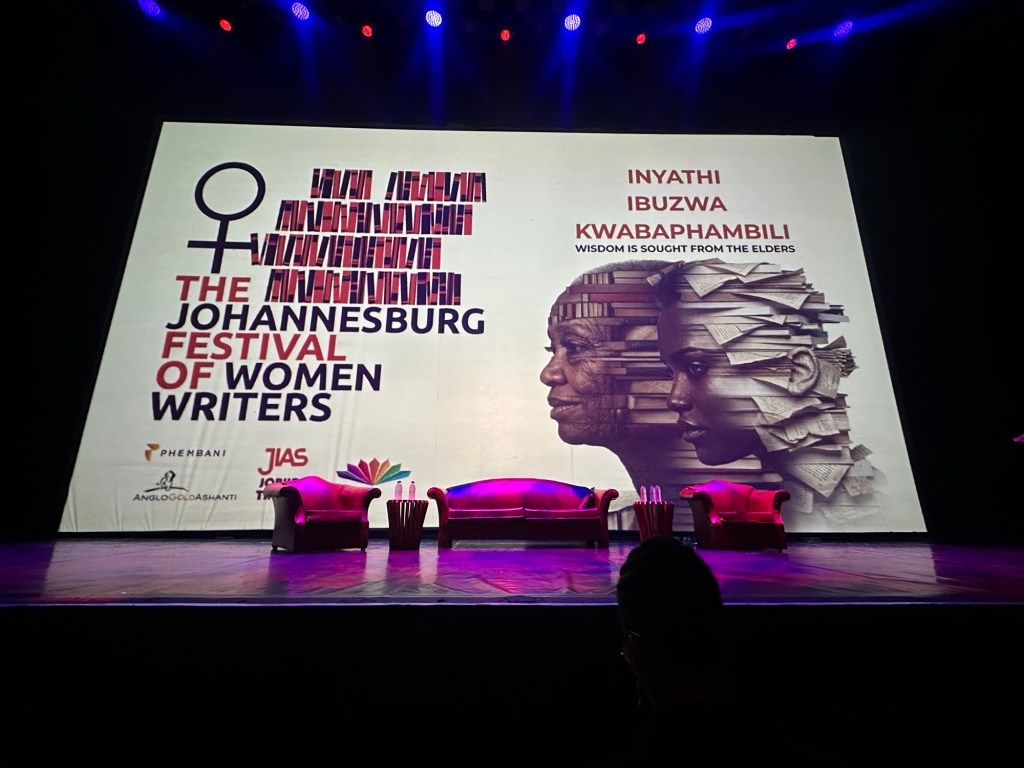
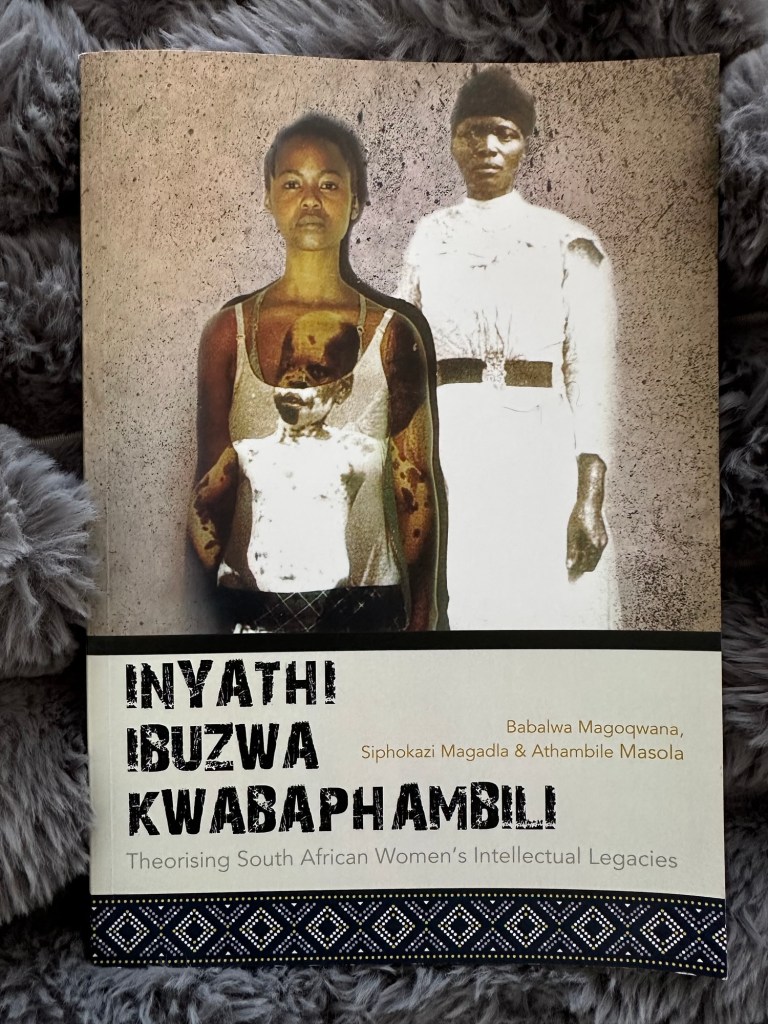
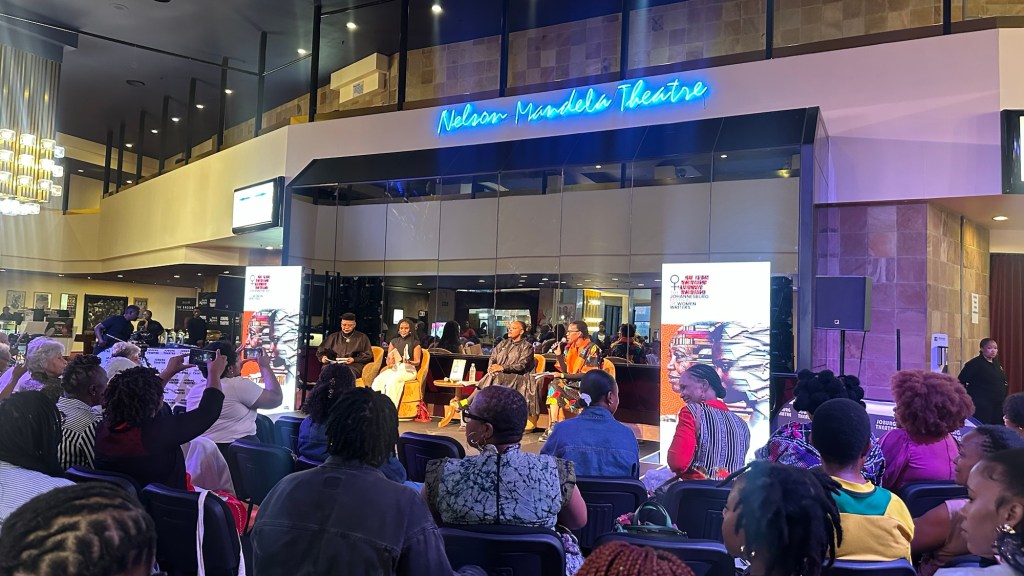
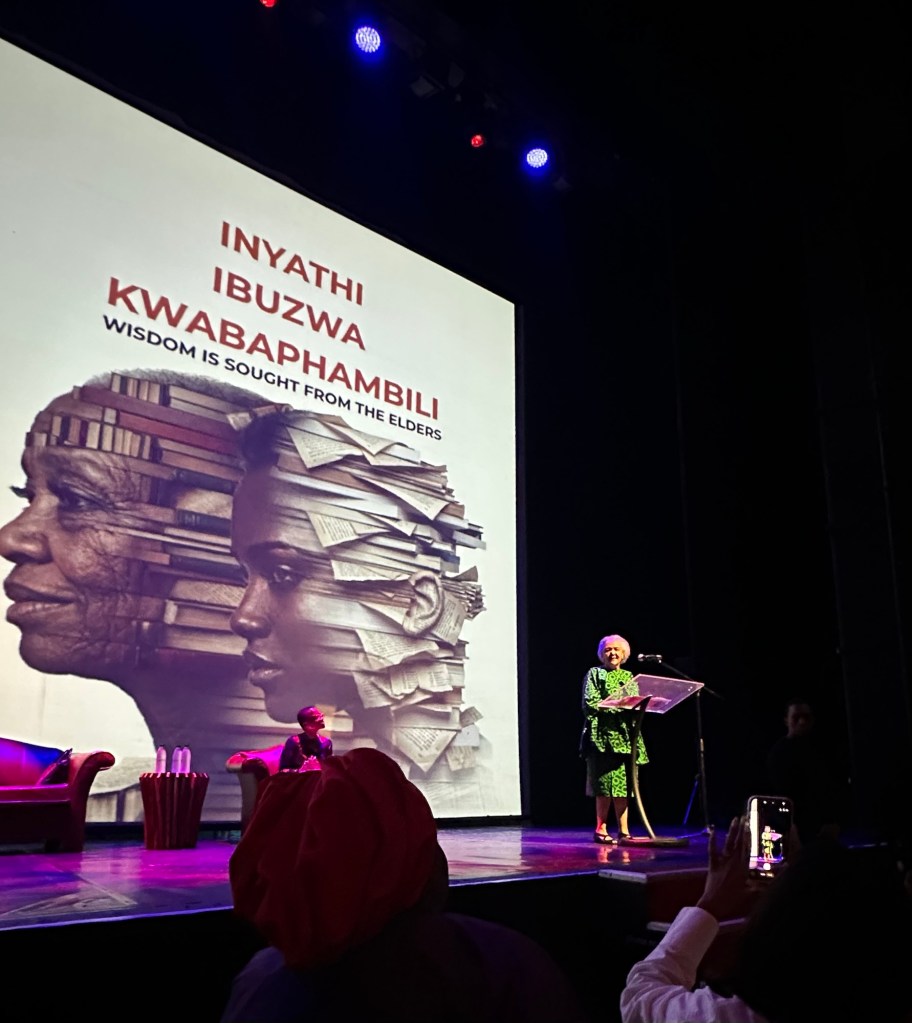
The evening began with the launch of Inyathi Ibuzwa Kwabaphambili: Theorising South African Women’s Intellectual Legacies, edited by Babalwa Magoqwana, Siphokazi Magadla and Athambile Masola. It’s out now from Mandela University Press. The blurb at the back of the book says:
This book seeks to create a systematic, eclectic, historical picture of the present and past women intellectuals, activists, artists, and cultural custodians. Using the concept of ‘ukufukama’ (incubate) we connect intergenerational knowledge transfer of our elders to the current struggles faced by the younger generation of women. We bring together different authors who engage the biographical and intellectual contributions of different African women and their imagination of the democratic South Africa. Writing about the various feminist intellectual traditions between the 19th and 21st centuries, this book systematically pulls together oral and creative texts to recover the memories of Nosuthu Jotelo, Sarah Baartman, Nontsizi Mgqwetho, Phyllis Ntantala, Brigalia Bam, Umntwana uMagogo, Miriam Makeba, Sibongile Khumalo, Lebo Mathosa, Thandiswa Mazwai, Celeste Ntuli, Nkosazana Dlamini Zuma, Neo Mathabe among the lives and works covered here. This range of voices shows that intellectual work is varied and has the ability to sit alongside each other. It importantly shows that scholarship emerges through community and conversation, which is to say feminist histories are created and recreated through conversations that care about women’s voices, stories, and being in the world. Ultimately, we think of the women featured in this book as forming a lineage, a tradition of black women’s’ survival wisdom, which facilitated change and enduring, radical transformation that demands theorisation and celebration.
Contributors to the book include, among others, Nomathamsanqa C. Tisani, Yvette Abrahams, Precious Bikitsha, Kholeka Shange, Pumla Dineo Gqola, Phumzile Mlambo-Ngcuka, Yolande Bouka, Bev Ditsie, and Nkosazana Dlamini Zuma.
(Inyathi ibuzwa kwabaphambili is a Nguni language saying that roughly means wisdom is sought from the elders.)
More images (and video) from the launch:
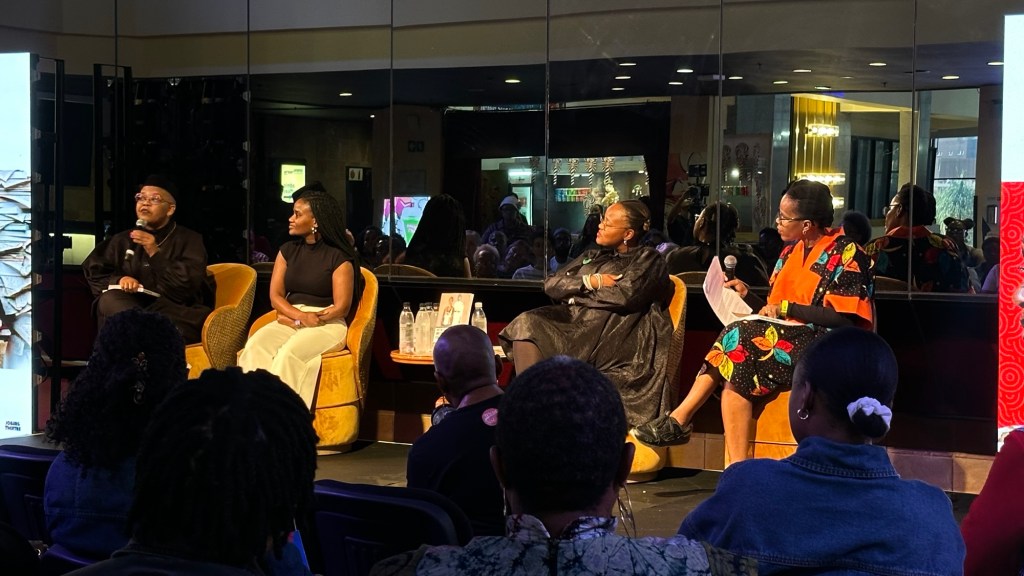
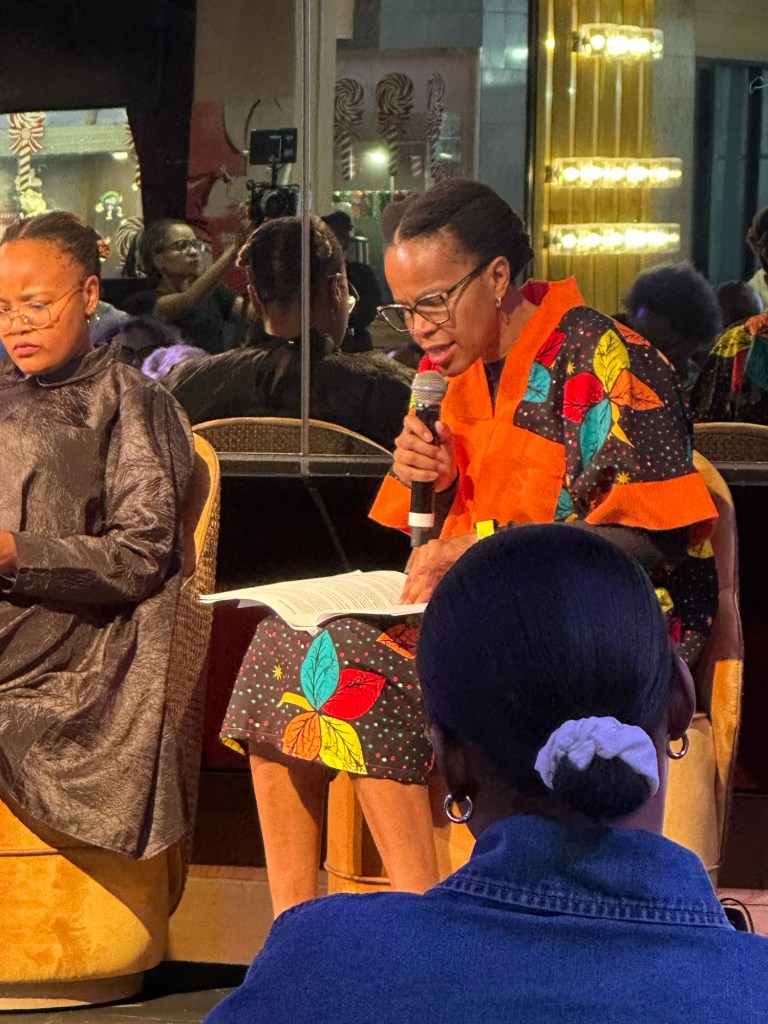
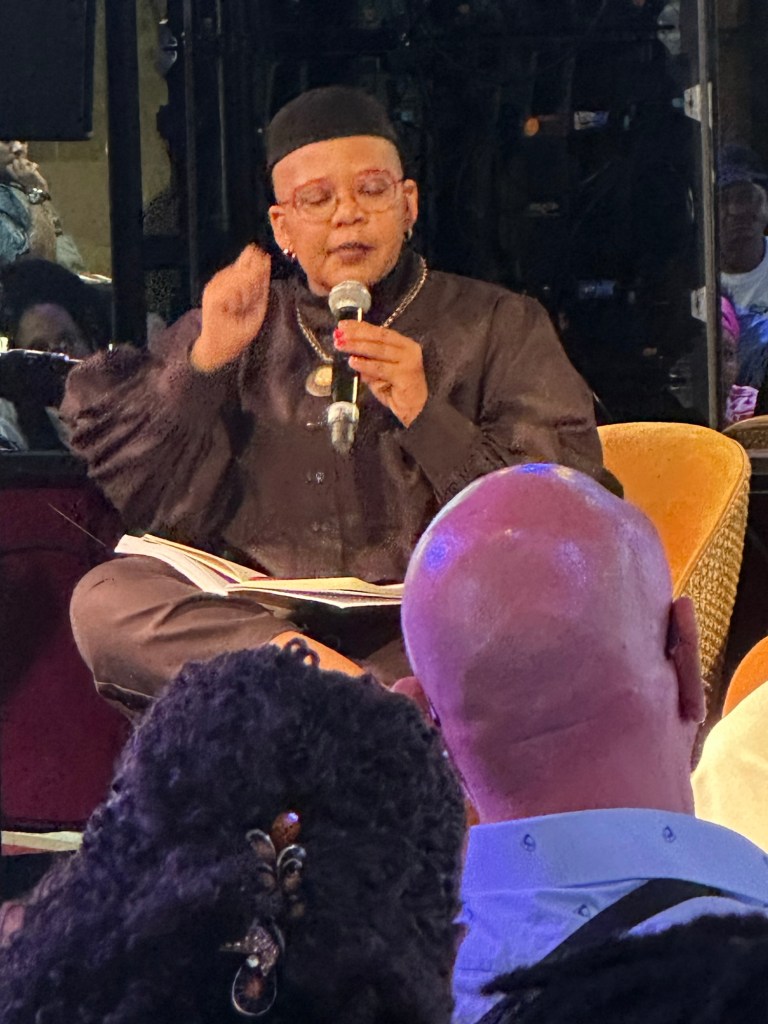
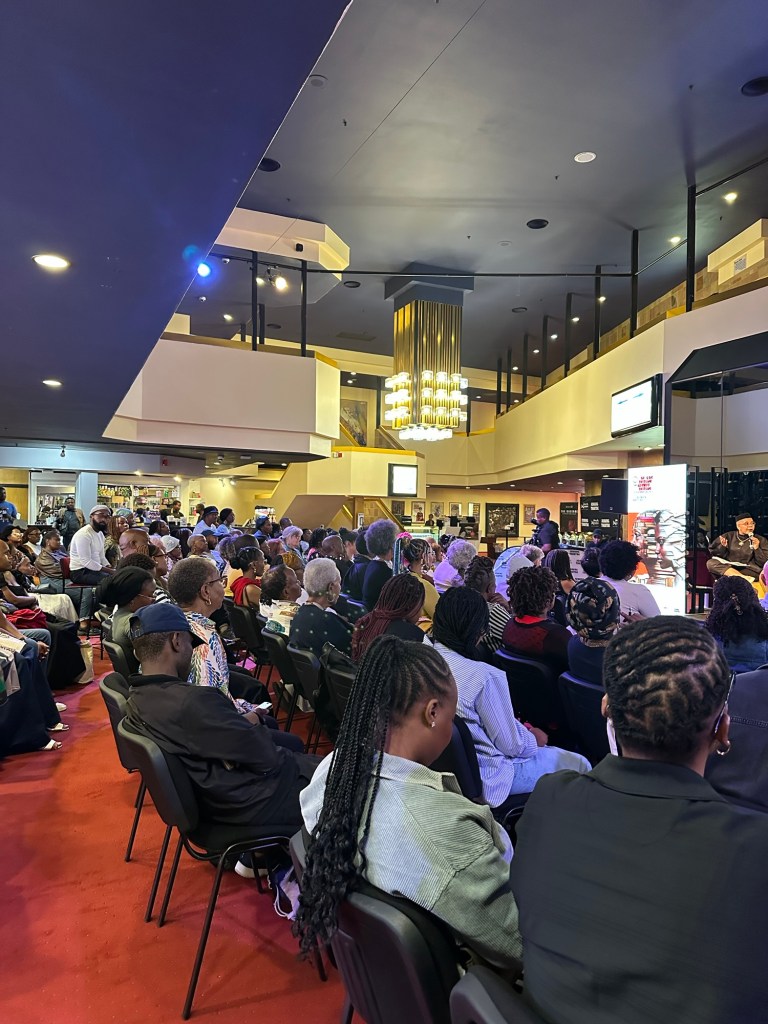
The main event, the festival’s opening night, was in the theatre proper. The festival’s founder, Ambassador Barbara Masekela, spoke on the importance of promoting literacy in children, and about women writers having ‘a room of their own’—the opportunity and funding to write.
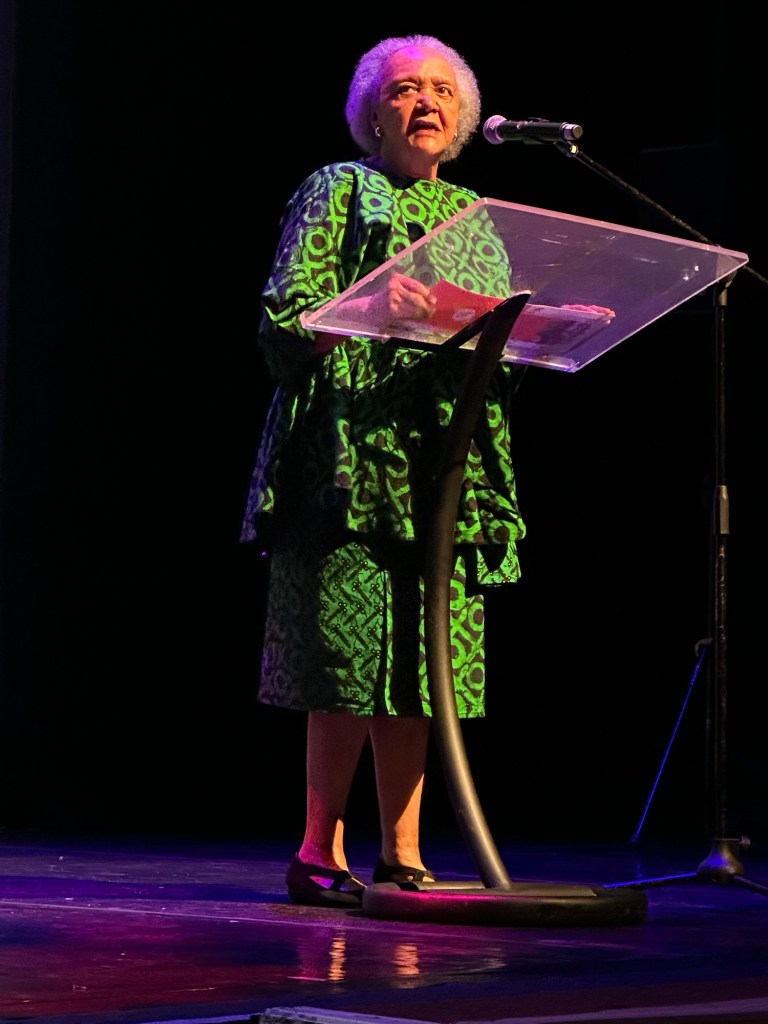
The inimitable Petina Gappah was the keynote speaker.
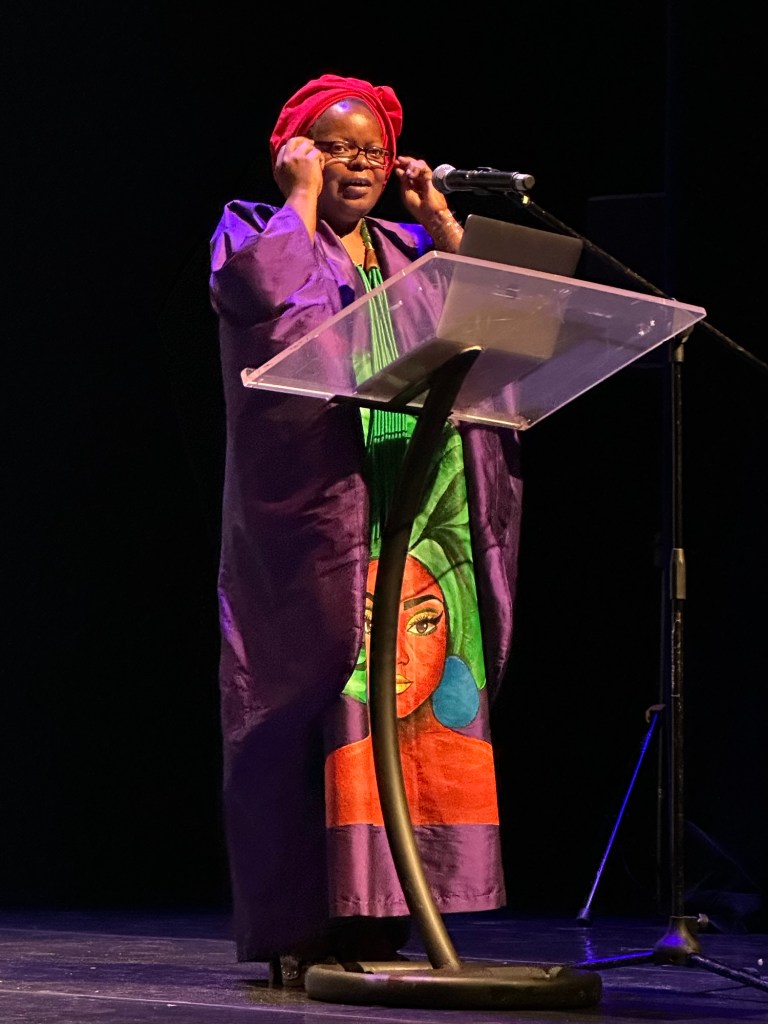
She talked about her experience of researching and writing about David Livingstone for Out of Darkness, Shining Light, and had audience members laughing at how his servants/companions preserved and transported his body.
She also spoke of her hope for storytelling in Zimbabwe:
“What I would wish for my country is that we should continue to contribute to the balance of all our stories, that those of us with stories to tell weave our own individual strands to make an unending tapestry that could be the story of our country and of our wider continent.”
A wonderful evening!


Leave a Reply