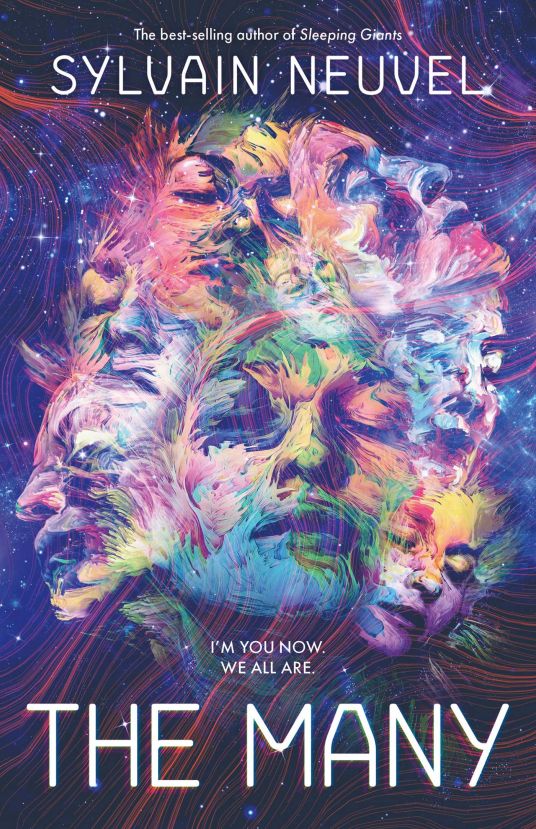
320 pp. April 21, 2026, Rebellion Publishing. SF.
Sometimes it happens in the world of entertainment and ideas that works are let loose upon the world that are eerily similar. Sylvain Neuvel’s The Many feels very much a reworking of the recent Apple TV series, Pluribus, even though this must be … unlikely? Not sure, too, if that’s unfortunate for Neuvel; it certainly feels that way at first, because he has even named a central character … Carole. And yes, this story is about a hive mind, too. And the thing that infects people has come from space. Ekphrasis? Coincidence? Regardless, all of this makes it hard to read the novel without constantly comparing it—or at least referring to—the series; however, I did try, and suggest that readers attempt, too, to judge the novel on its own merits.
The Many opens with Booker, who owns a bakery in a smallish city in Michigan, in the US. He goes in to work as usual; but then Carole, his miserable neighbour (”not depressed, just permanently hovering between various states of mild displeasure”) comes in and bites him on the arm. This sets off a series of rather unfortunate events—like Booker feeling compelled, in turn, to bite Carole’s husband … And from there it’s just a matter of time until the whole town is infected.
What’s fun about this novel (apart from the humour, which is excellent) is its structure—how the reader gets shown things from the points of view of all the main characters—which includes, more or less, the inanity of that of the infecting entity, transmitted to Carole by a tick—and so one can track the progress of the infection that way. It’s hard to determine by the end of the novel if the hive mind’s been a good thing, no matter the novel’s slant: The infecting entity seems to have arrived on Earth accidentally, but eventually reveals an agenda. It is, however, a useful device for exploring how the world might change if we all knew each other’s thoughts, and to consider if that change could be made permanent. Readers don’t get to find out, but the question is there for us to ponder.
It’s excellent how hilarity ensues in the novel when characters merge—if a little unsettling when those characters are children, given events described early on. If towards the end the novel isn’t as tightly written, that makes sense; Neuvel is grappling with describing a worldwide consciousness, and its implications (which, in spite of the entire premise, still feels like deus ex machina—but that’s the peril of It Came From Space). What saves the novel, again, is its humour and the very pleasing and neat reversal built into its structure.
While Neuvel is not doing anything particularly novel here, he certainly executes this idea with style. The Many is a great time, and highly recommended. It may even make readers think.
Many thanks to Rebellion and NetGalley for DRC access.
Affiliate link: Support independent bookshops and my writing by ordering it from Bookshop here.
Find out more about The Many from the author’s website here.


Leave a comment