
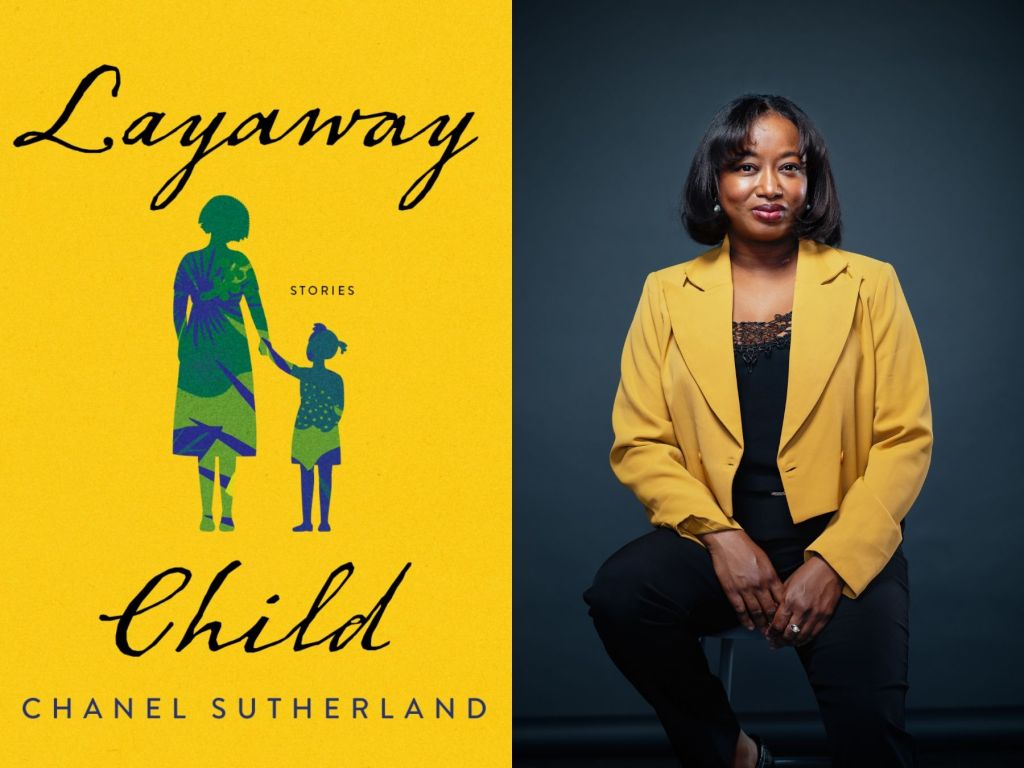
HRB is thrilled to share an excerpt from Chanel Sutherland’s Layaway Child: Stories, forthcoming from House of Anansi. The excerpt below is from the first story in the collection, “Beneath the Softness of Snow.”
Chanel Sutherland is a Vincentian Canadian writer of fiction and creative nonfiction. She won the 2025 Commonwealth Short Story Prize, which she was also longlisted for in 2022. Chanel is also the winner of the 2021 CBC Nonfiction Prizeand the 2022 CBC Short Story Prize and was named one of CBC Books 30 Writers to Watch in 2022. Chanel lives in Montreal.
About Layaway Child:
Magnificent stories about Caribbean immigrants navigating the emotional terrain of girlhood, displacement, longing, and identity across continents.
Layaway Child is a luminous debut short story collection by award-winning writer Chanel Sutherland that explores the emotional landscapes of Caribbean families fractured by migration, especially the harrowing yet resilient journeys of Black girls and women. In lyrical, linked stories, Sutherland traces the lives of mothers working abroad as housekeepers and nannies, and the children they left behind. From lush island childhoods marked by absence and community to the cold, alienating spaces of Canadian cities, Layaway Child captures the complexity of growing up between worlds. A mother, newly arrived in Montreal, is kept from speaking to her daughters by her own mother’s misguided attempt to help her let go of home. A schoolgirl becomes a spectacle under the gaze of white classmates. A young girl’s curiosity about the cosmos collides with the confusion of puberty. Sutherland brings deep compassion and sharp insight to each moment, revealing both the beauty of island life and the harshness of immigration’s toll.
BENEATH THE SOFTNESS OF SNOW
The room is filled with a foreign softness; it makes you uncomfortable. A menagerie of plush toys lines the inside of the crib. A shaggy carpet captures your footprints as you move across it. Even the lamp emanates a light so soft it barely casts shadows.
“It helps their eyes adjust,” the woman tells you, and you try not to picture the single bulb hanging over the mattress back home. The night you left for Montreal, the bulb had swayed slightly, its oscillating beam casting strips of light on the little girls sleeping beneath it, revealing too many details to remember.
“You have two of your own, right?” she asks, and all you can do is nod. For an instant, you become conscious of where you are, standing on a carpet softer than the mattress you used to sleep on.
Beyond the window, the sky is a bruised violet. The trees are like dark skeletons stripped down to their bones. You are still not used to this change; you think of the Cock ’n’ Pull It tree in the yard back home, its large seed pods rattling like maracas in the wind. It does not shed its leaves to survive the seasons.
“You must miss them terribly,” the woman says, and you watch as her lips form the word terribly. The brief pout of sympathy as she continues to lead you around the nursery, calling out things that are obvious—the change table, the rocking chair, the mobile. You want to tell her that you have such things in your country, but it would not be entirely true. Before you moved to Montreal, these things did not exist for you. They were like shapes drawn with crayons. They were details you read about in letters or heard through the static of long-distance phone calls from your sister Paula.
Juliette, you should see the baby’s room. It’s bigger than our whole house.
Paula bragged about the belongings of her employers as if they were her own. She would use up an entire calling card describing the fur coats she tried on when no one was around, the name-brand perfumes her employers gifted her for Christmas. Amid mink and Elizabeth Taylor’s White Diamonds, she’d finally mention her son. “Does he ask for me? Does he miss his mommy?” You always lied and said yes, even though the boy had stopped asking for her and started calling his grandmother Mama. The night you left home, you begged your mother not to let your daughters forget. “Tell them about me,” you said. “Make sure they know how much I love them.”
The woman turns to face you, and there’s a look of apprehension in her eyes. You realize that you have not said enough and force a smile.
“When are you due?” you ask, jutting your chin out at the stretched fabric of her shirt.
“Not for another few weeks.” She rubs her stomach in slow circles, and the gesture reminds you of a story you heard in your childhood about a magic lamp. “We’ll need someone immediately. Three nights a week and the occasional weekend.”
You know there is more you should say but cannot bring yourself to find the words. Instead, you stare at the decal adorning the beige wall—a rainbow arching up into white clouds then falling behind the crib.
“Look, do you even want this job?” the woman asks, not cruelly but earnestly. “Because I get the sense that you don’t.”
“No,” you tell her. “I mean, I do. I want the job.”
“Then tell me something about yourself. Anything. Why should I let you take care of my child?”
You watch her, this soon-to-be mother. There are things she wants you to say, things she wants you to surrender to her that are so fragile you fear that once you give them up, they will shatter.
She laces her fingers across her bump, and her eyes light up. “Why don’t you tell me about your girls?” she says.
Something unfurls inside of you, sore and crusted as an infected wound. You let your mind take you to a place you only go when you’re alone, where the tears flow like hurricane rain and taste like seawater. The words come, and you let them surge onto your lips. You hear yourself say, “Nadine and Elena—Lena.”
This is the first time you’ve said their names to anyone since arriving in Canada. You never speak about your girls, not to the other seven white women who had asked you questions about them, questions meant to expose some flaw that made you unfit to care for their children. Not to the women your sister entertains every Friday, a circle of mothers who have bonded over their misery after leaving their own children behind. Most of them have not seen their sons and daughters for years. Some have become attached to the children they are paid to watch.
“How old are they?” the woman asks, and you press your heels into the carpet to keep from running away.
“Four and three,” you say, then, “No, five and three. Nadine just turned five. Lena will be four in April.” You can already feel the cracks.
The woman shakes her head and looks out the window. “I can’t imagine doing what you did,” she says. “Leaving my children behind like that.”
Your breath comes out as a silent cry that pushes through your lips, falling and sinking into the soft carpet under your feet. Outside, night crawls toward the room, but the snow makes everything look bright.
Layaway Child is forthcoming from House of Anansi on May 12. Find out more and pre-order on their website here or on Bookshop here (affiliate link).


Leave a comment