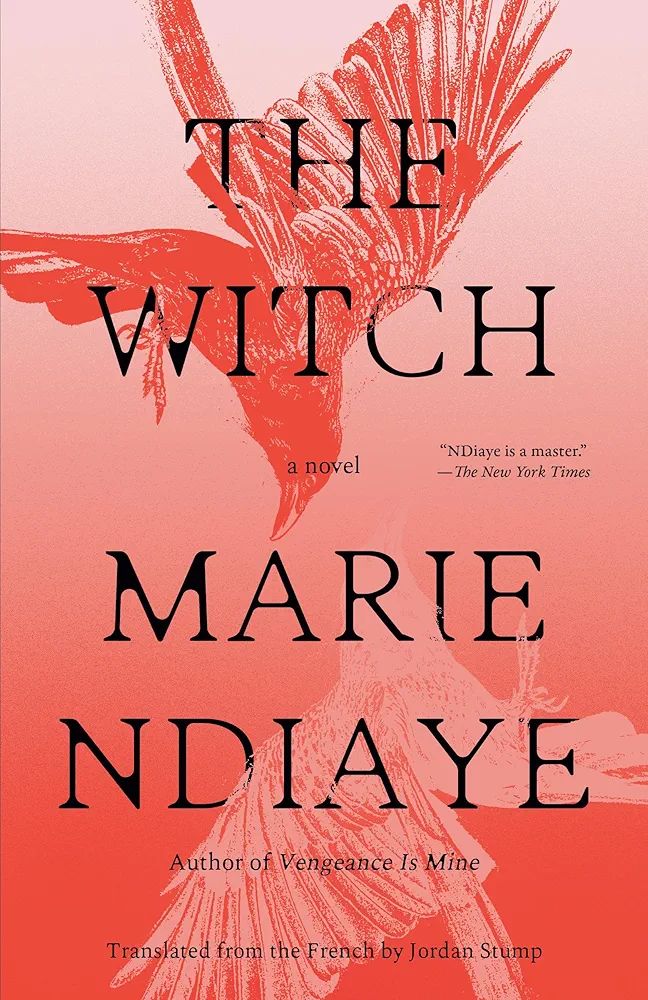
145 pp. April 7, 2026, Vintage Books. Fiction.
Amused that so many Goodreaders hate this novel, which I found smart, funny, and well-written.
Lucie is a descendant of witches, but never really came into her power. In her own words, her ability as a witch is “slight, apparently just strong enough to keep the gift going, to pass it along.” It’s a generational gift she’s inherited that allows the possessor to see the past and the future, but it exacts a slight cost: these women’s eyes bleed when they use it.
Nevertheless, Lucie’s twin daughters excel at mastering it, effortlessly, when they come of age at twelve and she begins to teach them; they quickly outgrow their need of her, and soon fly away (literally). So this is a story that’s partly about motherhood and letting go of your offspring, even as you want them to succeed and be so much more than you.
But, as you can tell, this is also an absurdist tale. An example: Characters constantly reappear out of the blue, at ridiculous points in the story—like the nosy and rather enigmatic neighbour (who’s also a terrible mother). She’s pivotal towards the end of the novel. There’s the disgruntled, selfish, and extremely unlikable husband who runs off to find his own happiness but—surprise, surprise—only finds more of himself instead. Other characters come and go, mainly serving to increase the fantastical elements of the story: Lucie’s recently divorced parents, her sightly deranged but affectionate mother-in-law, and a host of other characters, including a kind of Greek chorus of unhappy teachers, abused women all.
So this is additionally a fable about women’s (and girls’) freedom and power (or lack thereof, as applies) in various societal situations. It feels truthful: not all of the women in the story overcome their challenges, or figure their lives out; not all of them are good, or even nice; they don’t necessarily escape their situations. In NDiaye’s sharp, wry, tongue-in-cheek prose, she’s at no point didactic—but she manages to make salient points about the multifariousness of women’s circumstances.
Enjoy the story! It’s a quick read, often darkly funny and very memorable—completely deserving of its inclusion on 2026’s International Booker Prize shortlist.
Affiliate link: Support independent bookshops and my writing by ordering it from Bookshop here.
 Harare Review of Books
Leave a comment