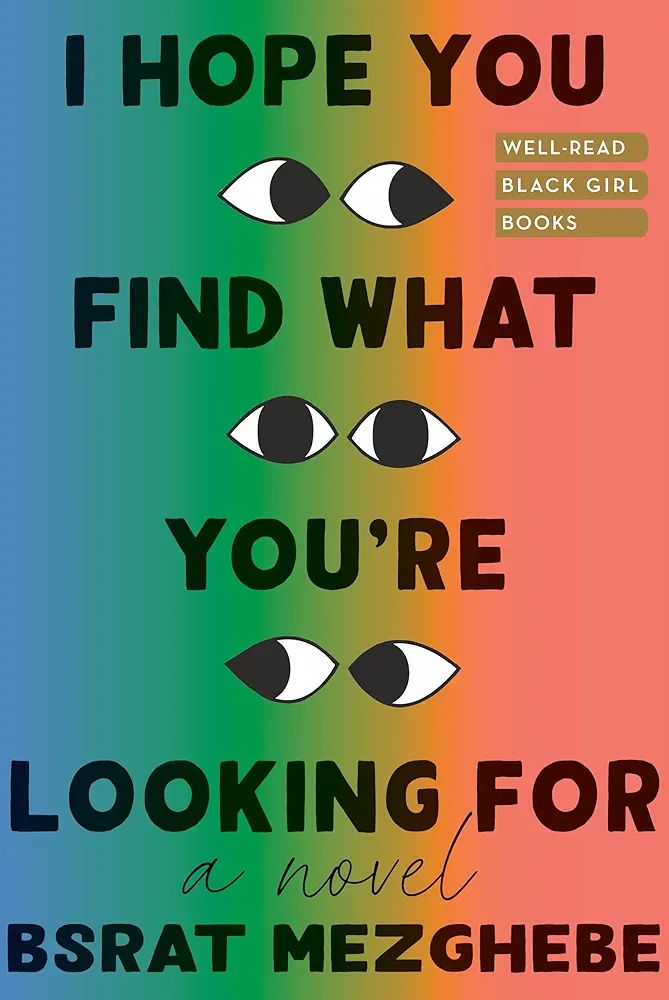
288 pp. February 10, 2026, W.W. Norton. Fiction.
Between this and Baalu Girma’s Oromay, I’ve recently found myself immersed in stories from that part of the world, and concerning the same period of time: Ethiopia’s attempts to suppress what they considered a rebellion by those fighting for Eritrea’s independence, in the 1970s. Unlike Oromay, however, I Hope You Find What You’re Looking For is a story about a family—how it’s made, how it keeps secrets, and how those secrets won’t stay hidden forever.
It’s a tale well told, well paced, and full of softness. It switches between the points of view of two women and a girl, the family of this novel: the young girl just starting to figure out her identity; her complicated and unforthcoming mother who carries heavy and painful secrets; and her other “mother” who just wants the best for her family, but who also finally has a chance to make her own dreams come true.
Elsa’s a hero on at least two levels: a former freedom fighter, she’s overcome so much to raise her daughter, including leaving a country at war to make a new life as a migrant. Her recollections, when they finally come, of how she went to war are a compelling part of the story. I enjoyed, too, how Mezghebe weaves a narrative that normalises what the world would see as a “non-traditional” family, even as one of the characters expresses her received wisdom about what family should be—that a man should be in charge, or at least present. While Mezghebe doesn’t explore this idea fully—a tendency in the novel, as she only lightly touches on more difficult subjects—she shows that family is so much more: that it’s love, support and community, no matter what shape this takes.
I feel, on some level, that I must defend this book regarding the softness I describe above. It’s no longer in fashion to enjoy simple, happy, earnest stories, and the ending here may seem a little too happy to be true, a little trite. It’s a hard, mean world, and we’ve mostly developed a grimly ironic response to it. This novel feels like it harkens back to a wholesomeness we secretly still wish for, but can never admit to. Simply put, this is a nice story where everything gets tied up neatly, and that makes me happy.
… Which is not to say this is a novel without tension—between the girl’s two mothers, between mother and daughter, and others; between the past and present; memory and protectiveness; wanting more, and making the safe choice. All of these elements are present, and give weight to the story.
And Mezghebe immerses the reader into Eritrean history and Eritrea’s immigrant community in the US, with its rhythms and customs—good, less good, and hilarious. The warmth of her perspective will stay with me, and I look forward to reading more of her work.
Thank you to W. W. Norton and Edelweiss for a DRC.
Affiliate link: Support independent bookshops and my writing by ordering it from Bookshop here. (Ebook here)


Leave a comment