
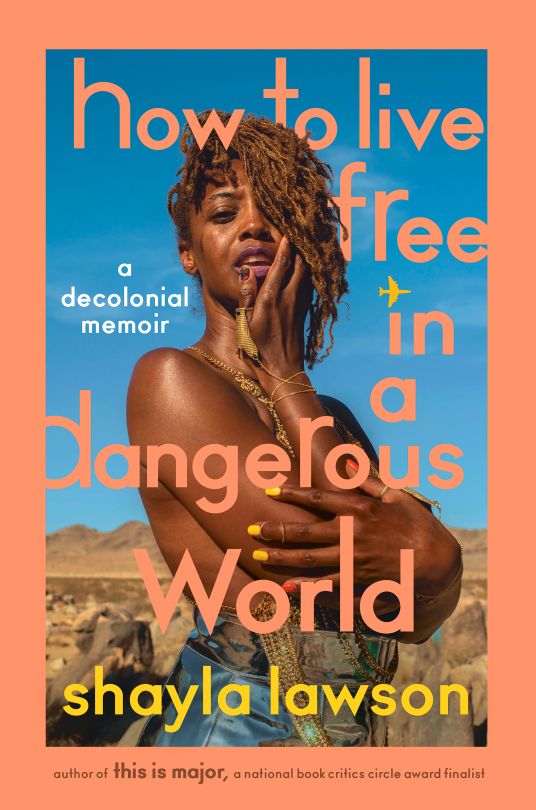
320 pages.
Expected publication date: February 6, 2024 (Tiny Reparations Books)
Nonfiction.
How many essay collections by Black women have you read? Memoirs? How about travelogues? If your quick answer to that last question was one, and you meant Nanjala Nyabola’s Travelling While Black: Essays Inspired by a Life on the Move, that makes two of us—before I read this book.
There’s long been a perception that Black people don’t travel, and perhaps the market for books about Black travel was small as a result. Happily, Black people themselves are changing this perception in small and large ways (see Travel Noire on Instagram, for example). Far more importantly, Black women’s voices are still so rarely heard, particularly in non-fiction about life experiences, making books like Nyabola’s and Lawson’s crucial records.
Like Nyabola’s book, however, Lawson’s How to Live Free in a Dangerous World rather defies the categorisation of travelogue (and admittedly doesn’t claim to be). There’s a lot about travel—Lawson has visited and lived in lots of fascinating places—but this is very much a book about Lawson’s personal journey: inward to find themself (Lawson’s preferred pronoun) and in the process to find liberation, and then outward to give that liberation to the world. If that sounds a little mystical, it is in some ways—the spirit is never far away from their ruminations—but that doesn’t at all take away from how valuable, readable and entertaining these essays are.
Lawson, like Nyabola, uses place as a tether—a placeholder, if you like—to confront issues affecting Black people. Where Nyabola addresses subjects like justice and freedom, Lawson tackles Blackness, relationships, gender, time, disability and chronic illness, sex, privilege, and liberation, among other things.
Lawson is a deeply engaging writer; I sat with their book all weekend, only putting it down to look things up or to say, “Hmm…” and make notes. I do confess to picking this up in the first place to read about their time in Zimbabwe, and that delivered spectacularly! (Zimbabwe is a very small place.) Apart from that, though, there’s a great deal in here that’s worth re-reading, and through their journeys and meditations on them, Lawson brings so much healing, care and affirmation to the woundedness of Black women’s hearts. Buy this one for your sisters.
Thank you to NetGalley and to Tiny Reparations Books.
Support independent bookshops and my writing by ordering it from Bookshop here.
 Harare Review of Books
Leave a comment