
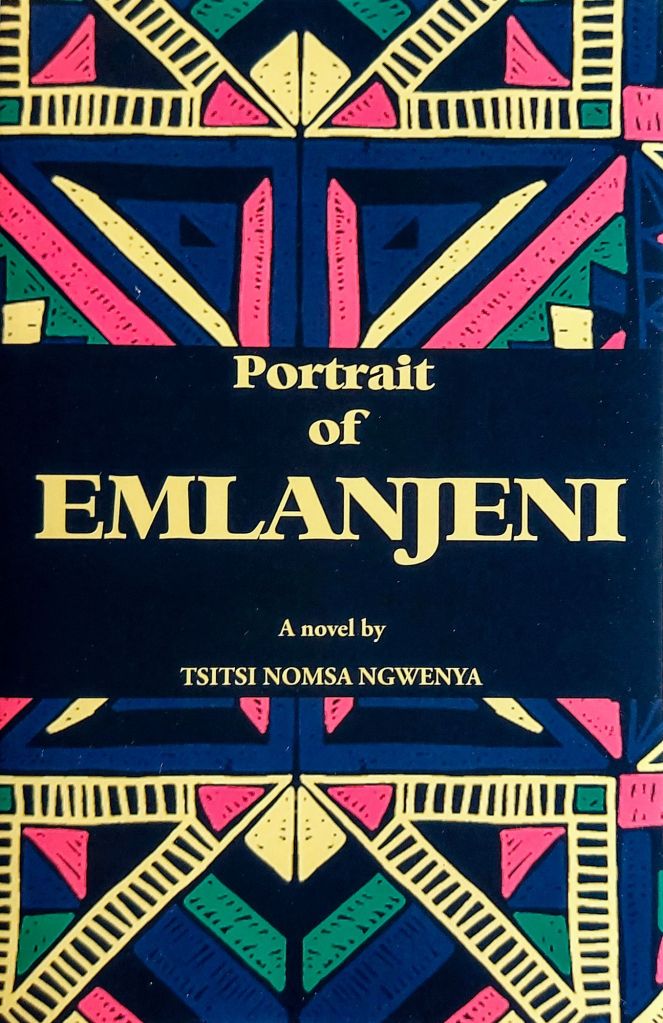
280 pages.
First published March 20, 2023 (Carnelian Heart Publishing)
Fiction/Zimbabwe.
How to describe this book to those who don’t know the place it’s about, and the feelings the place evokes? I grew up in Bulawayo and surrounds, and this book is all my feelings of home, language and culture, all wrapped up together. Such a pleasant read that satisfied something deep inside me. Portrait of Emlanjeni captures a slice of the life of a Matabeleland village, past Kezi, as the villagers wait for the rain. From descriptions of the weather and landscape to the rhythms of life in the village, Tsitsi Nomsa Ngwenya presents a beautiful snapshot that’s left me feeling nostalgic for home.
Populated with colourful characters and steeped in tradition, the novel explores the conflict between old ways of life and new, never deciding for the reader the value of one over the other. An example is how the modern court system is shown to be fair in the strictest sense, but an old woman ponders how the traditional system considers the impact on family and the wider community. The simplicity of village life and the sense of community there are contrasted with urban life, where you keep your doors locked, where you can’t hang out your clothes without fear of them being stolen, and where everyone is a stranger. And yet the city of the novel is appealing in its way, as that’s where jobs and education are to be found.
Ngwenya emphasizes the importance of the education of girls and women, while dignifying the knowledge and care of the women of the village who did not themselves receive an education. At the centre of the novel is a depiction of traditional spirituality—how the people depend on applied cosmology to set the rhythms of the agriculture around which their lives revolve, and in the reasons for a romance gone wrong and a family’s misfortune, with one man’s horrifying adherence to his family’s tradition causing him to meet his terrible comeuppance.
Ngwenya’s tender, gentle portrayal of village life and the pacing of the novel satisfy like the rain in the most vivid image from the book: after the dry, burning, barren season, the rains finally arrive; everything turns verdant, productive work resumes, and the hearts of the people are happy. Very beautifully done.
Thank you to Carnelian Heart Publishing for providing a copy for review.
Read with: Vice Nganga’s Once Upon a Time; very similar themes.
 Harare Review of Books
Leave a comment