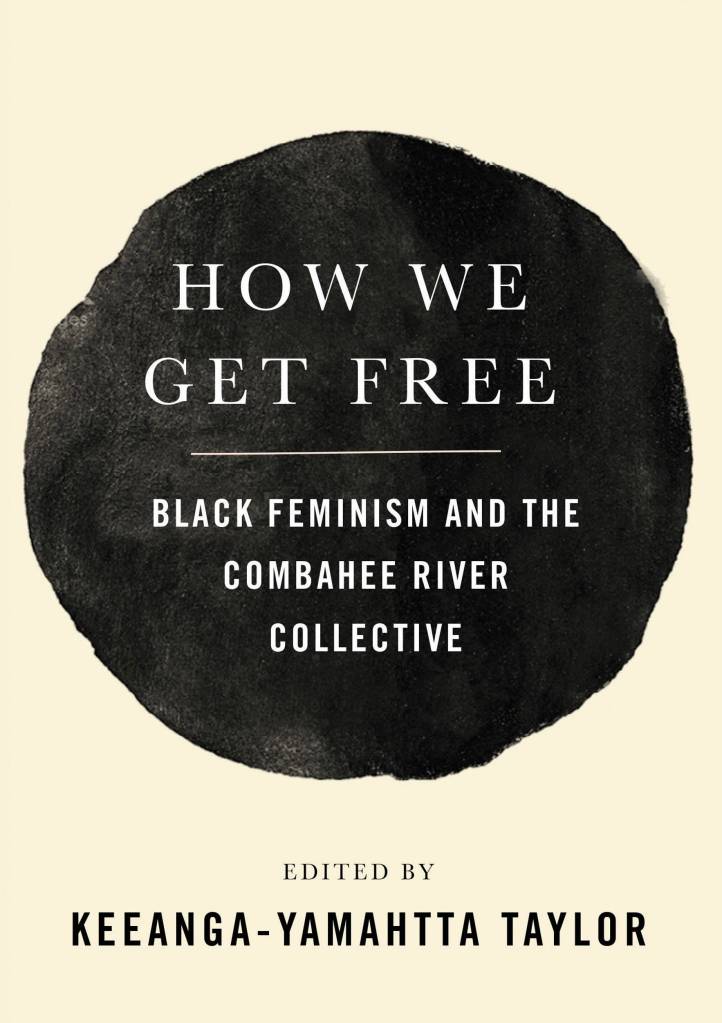
How We Get Free: Black Feminism and the Combahee River Collective. Edited x Keeanga-Yamahtta Taylor.
191 pages.
First published in November 2017.
Genre: Non-fiction collection.
I have a secret list in my head of truly radical, me-changing books. On that list, off the top off my head, there are at least two books: Ama Ata Aidoo’s Our Sister Killjoy, and this book.
I had heard of the Combahee River Collective (CRC, from now on) of course: if you’ve had brushes with feminism in general, and Black feminism in particular, perhaps at the intersection of those with civil rights and socialism, then you probably have too. You may have come across the Combahee River Collective Statement (and if you hadn’t, now is as good a time as any to check it out—online here (pdf), or here, but it is also reproduced in the book).
The CRC was active from 1974 to 1980. This book, written 40 years after the CRC Statement, and just after Donald Trump won the US Presidential election, ponders the CRC’s legacy, though essays and interviews with former members, including Barbara and Beverly Smith, and Demita Frazier, and with contemporary activist Alicia Garza.
This will remain an important reference book for me, and I plan to re-read it every year, at least. Here are just a few of my highlights:
Black writer and public intellectual Anna Julia Cooper in 1892: “The colored woman of to-day occupies . . . a unique position in this country. . . . She is confronted by both a woman question and a race problem, and is as yet an unknown or an unacknowledged factor in both.”
In all of their cases and perhaps thousands of others, these women had come to revolutionary conclusions that their, and indeed all Black people’s, oppression was rooted deeply in capitalism.
The CRC statement is believed to be the first text where the term “identity politics” is used.
[We] see as our particular task the development of integrated analysis and practice based upon the fact that the major systems of oppression are interlocking. The synthesis of these oppressions creates the conditions of our lives…. Black, other Third World, and working women have been involved in the feminist movement from its start, but both outside reactionary forces and racism and elitism within the movement itself have served to obscure our participation… Our politics evolve from a healthy love for ourselves, our sisters and our community which allows us to continue our struggle and work… If Black women were free, it would mean that everyone else would have to be free since our freedom would necessitate the destruction of all the systems of oppression.
From the Combahee River Collective Statement
Just, you know, please read this. Powerful, important, brilliant.
[…] How We Get Free: Feminism and the Combahee River Collective – Keeanga-Yamahtta Taylor (Ed.) (2…Absolutely brilliant review of the impact of the CRC. An education. This will remain an important reference book for me. […]

 Harare Review of Books
Leave a comment