
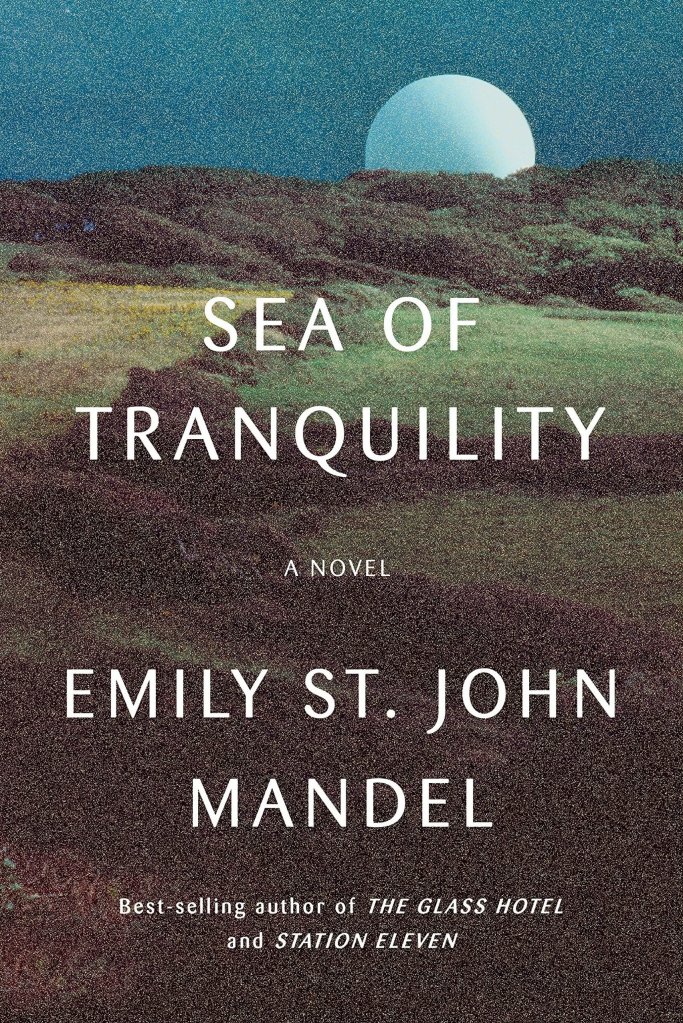
255 pages.
First published in April 2022.
Genre: Science fiction.
This review first appeared in The Sunday Long Read, Issue 341, April 24, 2022.
I have a predilection for science fiction, and I have to work hard to recommend books from other genres. Many recent books, however, have strong science fictional elements, and Sea of Tranquility falls into this category.
Many of you will have recently watched the TV series based on Station Eleven, another of Emily St. John Mandel’s novels. Sea of Tranquility has a similar, post-apocalyptic feel; but, as Olive, a character in the book, says: “What if it always is the end of the world?”
Edwin St. Andrew is the third son of an earl, a “Remittance Man,” who goes through a very disorienting experience in the Canadian wilderness in 1912. Gaspery-Jacques Roberts lives on the moon in 2401, and has an opportunity to change the past. Olive, the author of a pandemic novel, is on tour at the beginning of another pandemic, in 2203. Olive tells us, in one of the lectures she gives on the tour:
“I think, as a species, we have a desire to believe that we’re living at the climax of the story. It’s a kind of narcissism. We want to believe that we’re uniquely important, that we’re living at the end of history, that now, after all these millennia of false alarms, now is finally the worst that it’s ever been, that finally we have reached the end of the world.”
In her book, Olive also writes:
“Pandemics don’t approach like wars, with the distant thud of artillery growing louder every day and flashes of bombs on the horizon. They arrive in retrospect, essentially. It’s disorienting. The pandemic is far away and then it’s all around you, with seemingly no intermediate step.”
So, yes, this beautifully written book is a pandemic novel, spread across centuries of human existence. It is also a novel about relationships, endurance, time travel, and colonization; about home, climate change, and climate grief. With characters living in early 20th century and 21st century North America, and in colonies on the moon in the 23rd and 25th centuries, this book gives us a God’s eye view of the end of the world.
Emily St. John Mandel has an exceptional way with words, and, once again, uses her prodigious talent to explore the theme of our humanity through apocalyptic events. She has written five novels, and lives in New York City, in the US.
Rated: 8/10.
 Harare Review of Books
Leave a comment