
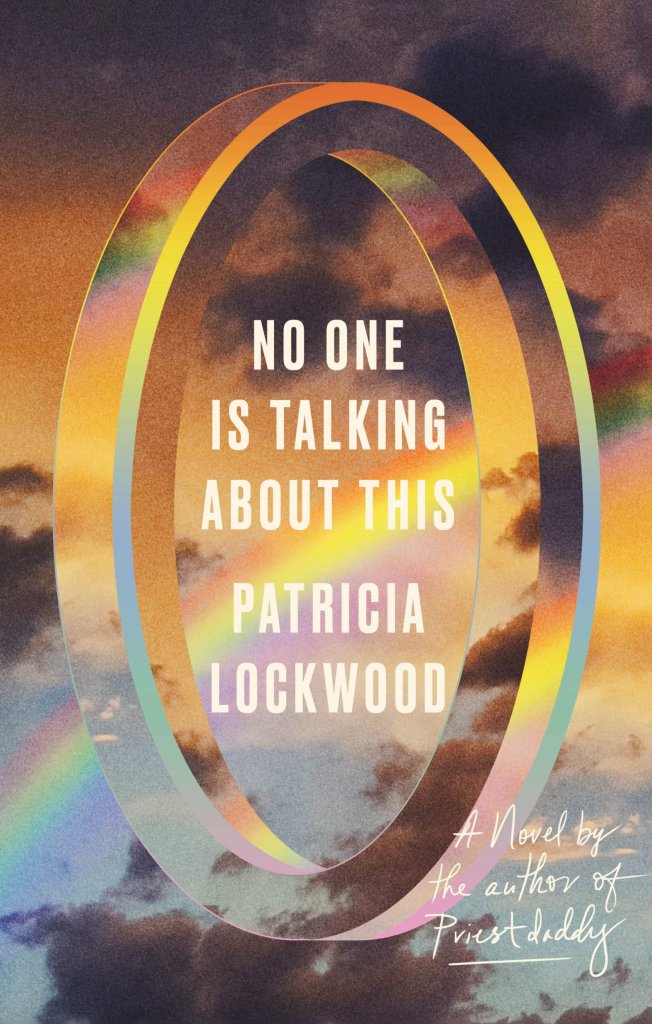
210 pages.
First published in 2021.
Finished reading on Oct 26, 2021.
Genre: Fiction.
Supplied blurb: As this urgent, genre-defying book opens, a woman who has recently been elevated to prominence for her social media posts travels around the world to meet her adoring fans. She is overwhelmed by navigating the new language and etiquette of what she terms “the portal,” where she grapples with an unshakable conviction that a vast chorus of voices is now dictating her thoughts. When existential threats–from climate change and economic precariousness to the rise of an unnamed dictator and an epidemic of loneliness–begin to loom, she posts her way deeper into the portal’s void. An avalanche of images, details, and references accumulate to form a landscape that is post-sense, post-irony, post-everything. “Are we in hell?” the people of the portal ask themselves. “Are we all just going to keep doing this until we die?”
Suddenly, two texts from her mother pierce the fray: “Something has gone wrong,” and “How soon can you get here?” As real life and its stakes collide with the increasingly absurd antics of the portal, the woman confronts a world that seems to contain both an abundance of proof that there is goodness, empathy, and justice in the universe, and a deluge of evidence to the contrary.
Fragmentary and omniscient, incisive and sincere, No One Is Talking About This is at once a love letter to the endless scroll and a profound, modern meditation on love, language, and human connection from a singular voice in American literature.
TW/CW Death of a child; grief.
Happily, I went into this book without much expectation. It made some waves on the book scene, but I didn’t see much. It’s very clever, and really funny at first; and then it deals with the death of a child (TW), which is about as far from funny as you can get.
The first half of the book is essentially Us on Twitter (the Portal, in the book) or Facebook, for the two Olds still on there: the inanity, the utter drivel we fill our lives with, every day. I laughed out loud many times — and cringed, too, because who likes mirrors? Some examples at the end of this post (had to choose just a few of my highlights; there are so many things to be embarrassed over. Also, omg, SM is making us into the same person!)
The second half of the book (or maybe last third? too lazy to check) deals with the protagonist’s sister finding out her unborn child has Proteus Syndrome, and the shattering that follows. It is beautifully, sensitively done. The absolute contrast between the two halves of the book, the transformation of the protagonist from a mindless Tool of the Hive Mind to a struggling human being is one of the best transitions I’ve ever read. I also learnt a lot about Proteus Syndrome, and had my heart quietly broken by the small details of a family dealing with having a child with a terminal illness.
In short, a read that was very much worth my time, and one of those books that will stay with me — a book, even, that I’d be happy to re-read in the future. Come for the absolute wit and hilarious commentary on how social media is melting our brains; stay for the reminder about what matters.
Rated: 9/10.
Every day their attention must turn, like the shine on a school of fish, all at once, toward a new person to hate. Sometimes the subject was a war criminal, but other times it was someone who made a heinous substitution in guacamole.
For as long as she read the news, line by line and minute by minute, she had some say in what happened, didn’t she? She had to have some say in what happened, even if it was only WHAT? Even if it was only HEY!
“Colonialism,”she hissed at a beautiful column, while the tour guide looked at her with concern.
Previously these communities were imposed on us, along with their mental weather. Now we chose them—or believed that we did. A person might join a site to look at pictures of her nephew and five years later believe in a flat earth.
You anticipated arguments against you and played them out in the shower
(I’ve never done this, of course.)
“Don’t normalize it!!!!!” we shouted at each other. But all we were normalizing was the use of the word normalize, which sounded like the action of a ray gun wielded by a guy named Norm to make everyone around him Norm as well.

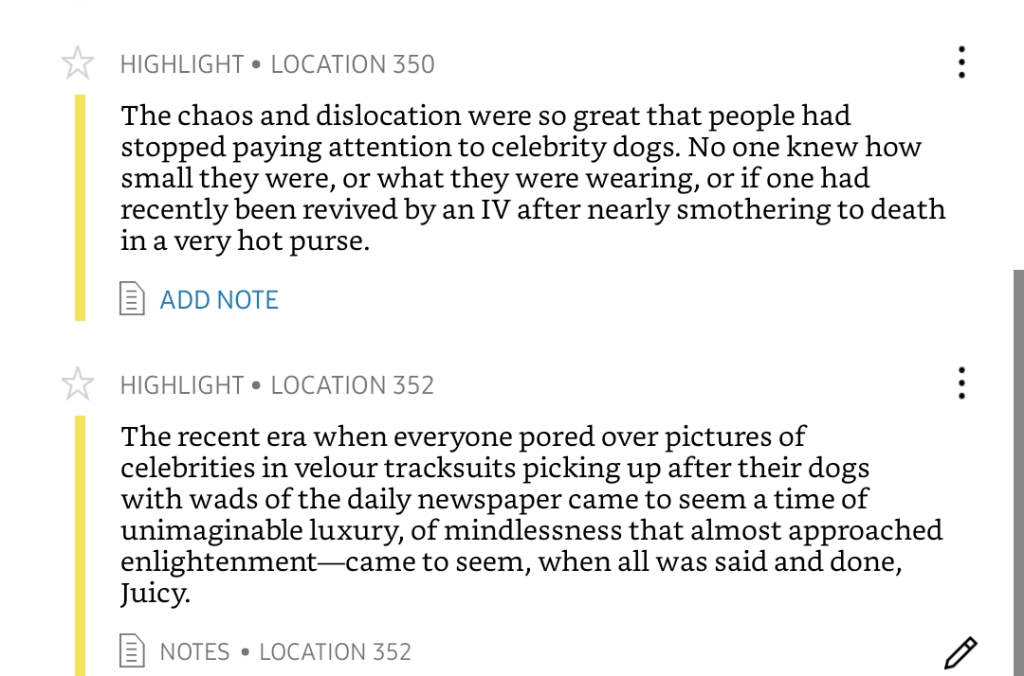
What did we do before SM? This, apparently 😭
What, in place of these sentences, marched in the brains of previous generations? Folk rhymes about planting turnips, she guessed.
 Harare Review of Books
Leave a reply to State of Paradise x Laura van den Berg – Harare Review of Books Cancel reply