
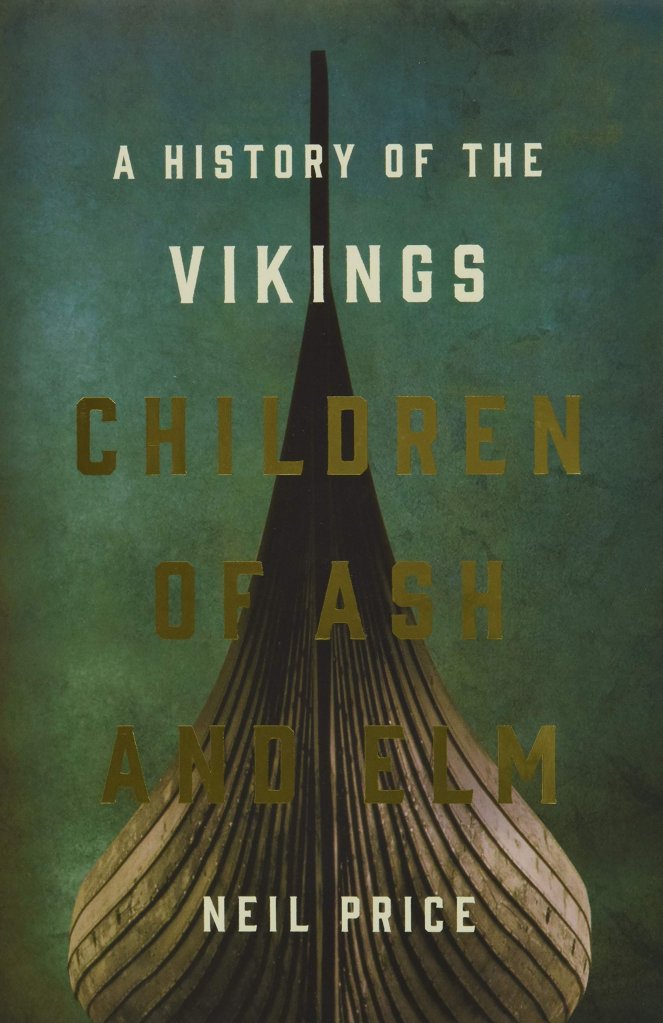
656 pages.
First published in 2020.
Finished reading on 26 Aug 2021.
Genre: Non-fiction.
Publisher’s blurb: The Viking Age – between 750 and 1050 – saw an unprecedented expansion of the Scandinavian peoples. As traders and raiders, explorers and colonists, they reshaped the world between eastern North America and the Asian steppe. For a millennium, though, their history has largely been filtered through the writings of their victims. Based on the latest archaeological and textual evidence, Children of Ash and Elm tells the story of the Vikings on their own terms: their politics, their cosmology, their art and culture. From Björn Ironside, who led an expedition to sack Rome, to Gudrid Thorbjarnardóttir, the most travelled woman in the world, Price shows us the real Vikings, not the caricatures they have become in popular culture and history.
This was basically a textbook 😭😪 It didn’t need to be this long, not for a layperson. But maybe I’m not the target market. Very interesting nonetheless, but it was soooooo loooooong 😭
Regardless. Here’s what I learnt about Vikings:
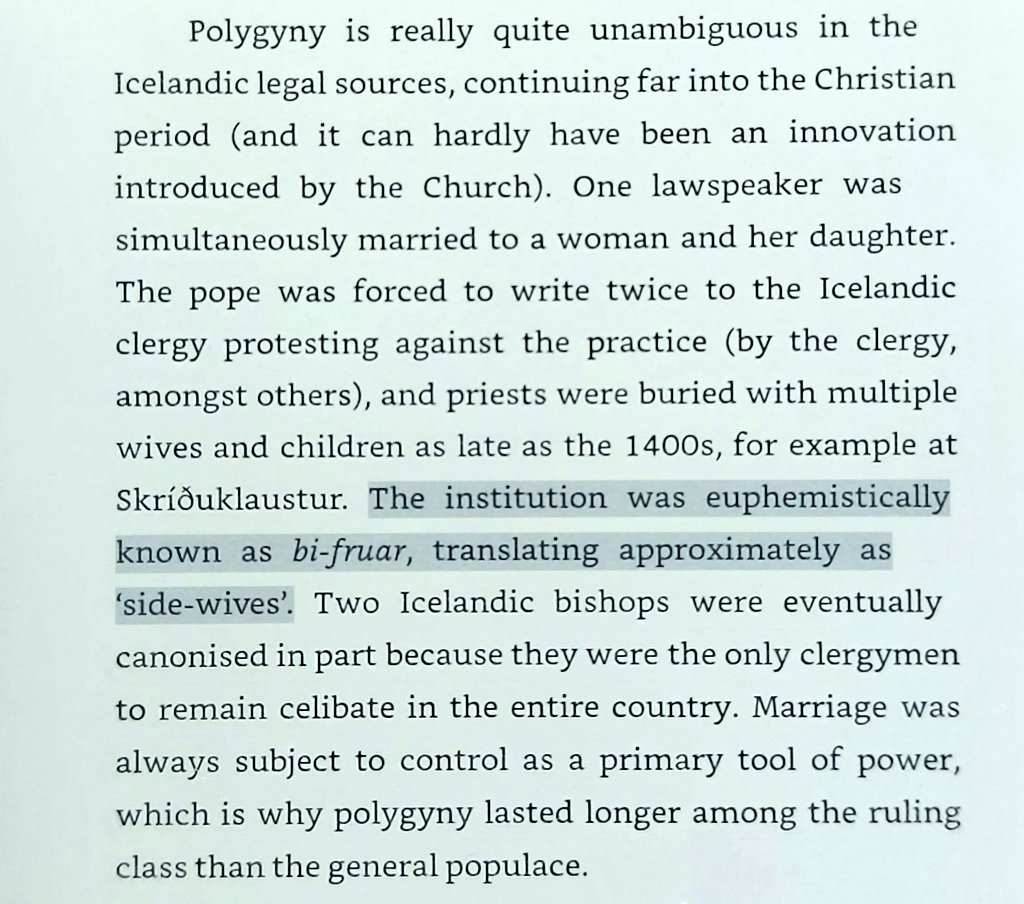
Women could sue for divorce if their husbands objected to their adultery
In the Saga of Gísli, a woman threatens divorce when her husband objects to her adultery. Extreme poverty—the fault of the husband because he did not support his family—was also sufficient grounds. Violence within a marriage was a significant feature of divorce petitions, although the severity of the injuries cited in such cases is so great that it seems the threshold of tolerance for male aggression was high.
Vikings were well-groomed
… washed once a week, regularly changed their clothes, and “drew attention to themselves by many such frivolous whims”—behaviour so astonishing that the English women preferred them to their husbands.
Vikings didn’t have pockets either
Interestingly, no Viking-Age clothing for either sex has ever been found with pockets.
Vikings hated girls
At least in central Sweden, a consistent pattern seems to emerge with up to 7 percent of men having been malnourished as children compared to up to 37 percent of women. Child mortality was high, estimated at between 30–60 percent, which leads to an inescapable conclusion: girls and boys were given different amounts and qualities of food, strongly to the advantage of the boys and to a potentially life-threatening degree for the girls. It is impossible not to read a chilling value system into this discrepancy.
We should never make assumptions
… for centuries archaeologists have resorted to determining the sex of the dead through association with supposedly gendered objects—thus weapons in a grave are held to suggest a man, jewellery sets denote a woman, and so on. Beyond the obvious problems of conflating sex and gender, and also effectively sexing metal, these readings risk simply piling one set of assumptions on another in what forensic decision-makers call a ‘bias snowball’ of cumulatively questionable interpretations.
In a tenth-century chamber grave designated Bj.581 from an urban cemetery at Birka in Sweden, an expensively dressed corpse was buried seated and surrounded by a full weapon set (which is rare), with two riding horses. This truly spectacular burial was excavated in 1878 and has been held up ever since as a type example of a high-status warrior from the mid-900s, a kind of ‘ultimate Viking’ of the time. Bj.581 was published as such in generations of standard works. As part of this interpretative package, the deceased was always assumed to have been a man, because warriors were ‘obviously’ male (conflating sex and gender in the familiar way). In 2011, however, an osteological study suggested the buried person was actually female, and this was confirmed by genomic analysis in 2017—the deceased carried XX chromosomes.
Viking heirs had to pay heavily for the drinks
Special burial clothes are also made for the dead chieftain, on which no less than a third of his wealth is spent (this has worrying implications for the archaeologist, in that these things are made for the grave). Another third of his wealth goes to the brewing of appropriate quantities of alcohol, while only the remaining third is inherited by his heirs.
I am not including ibn Fad.lān’s account; but,
Vikings were brutal
… and not a pretty, blonde people like in the films.
As I have earlier stressed, ibn Fad.lān’s horrific narrative is an essential corrective for anyone who finds the Vikings admirable.
Counterfeiting is an old profession
One particularly famous Rhineland workshop that began operations in the ninth century can be recognised by the name Ulfberht inlaid into its blades. Originally (one presumes) the signature of its master smith, it became an early logo in an almost modern sense, and swords bearing it continued to be produced for another two hundred years. There were also many fake versions of lower quality and sometimes even with the name misspelled—the market-stall rip-offs of the Viking Age.
Viking helmets had no horns
Vikings became mercenaries
in Constantinople and other places.
Vikings and not-white people
as the Irish chronicler Duald Mac-Fuirbis records that “after that the Norsemen brought a great host of Moors in captivity with them to Ireland… long were these dark people in Ireland”.
Truly fascinating!
Here and there in the streets, you might even meet a few far-travelled blámenn, ‘blue people’, whom we would know as people of colour. There is little evidence of racism in Viking society and, as far as I am aware, not a single example of a denigrating epithet or attitude on the basis of skin colour.
A famous Viking of the late ninth century, a man called Geirmund Hjørson, was the son of a Norwegian trader and a Samoyed woman from northern Siberia. He was so dark and unusual in his looks that he earned the nickname heljarskinn, ‘black-skin’.
One Viking version of Christianity 😂
Thus we read of Jesus’s birth in Galileeland, his later travels to Jerusalemburg, and how the Lord lives in a great hall in the sky (clearly Valhöll).
And, finally,
An amazing Viking woman who landed on Turtle Island
Shortly after the year 1000, Gudríd Thorbjarnardóttir coasted the shores of Helluland and Markland before landing in Vinland with her husband, Thorfinn karlsefni, and their crew. They were probably not the first Norse visitors and likely followed the path taken by others before them. Gudríd was pregnant, and while in Vinland, she gave birth to the first European child born in North America (and how appropriate to future history that he should be called Snorri). She had already come a long way, of Norwegian family from Iceland via Greenland, and from one set of beliefs to the new faith. She met First Nations people, and later—making a pilgrimage to Rome—she would almost certainly meet the pope; she had eaten wild grapes in Vinland, and she would taste Mediterranean wines under the Italian sun. By the time she reached old age as a Christian nun in Iceland, Gudrídwas probably the most travelled woman on the planet.
The Vikings who went there didn’t know quite where they were, and possibly fought with the indigenous people.
There are also various images in the book, which helps with context.
Again. This book was very, very long. Interesting, but long. So, allow yourself to read it over a long time.
Rated: 8/10. Great for historians, interesting for laypersons, and skip over what you don’t care about.
 Harare Review of Books
Leave a reply to August 2021 reads – shona reads Cancel reply