
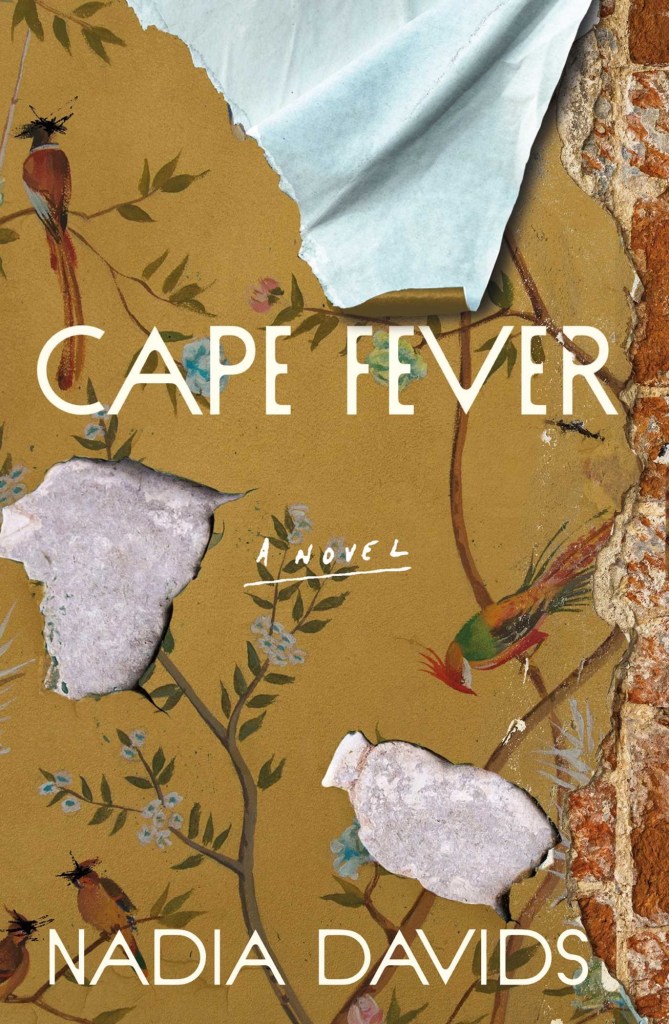
240 pp. December 9, 2025, Simon and Schuster. Fiction.
A version of this review appeared in The Continent, 14 March 2026, Issue 232 (pdf link)
Outside of South Africa, the history of slavery at the Cape is perhaps not so well-known. Fiction then serves as an excellent vehicle for telling aspects of this story, particularly in this excellent novel from Davids.
Davids introduces us to Soraya, described by her mother as prone to daydreaming and telling fanciful tales. Because of her family’s precarity, Soraya is sent into service—first, we learn, for a family called the Edenburgs, where something unspecified and unspeakable happens; and then for a woman, the solitary widow named Alice Hattingh.
Mrs Hattingh seems strange but this is easily explained, Soraya reasons, by her loneliness while she waits for her son, who fought in the Great War, to come back home from Britain. It’s only when Heron Place’s resident ghost persists that Soraya begins to think something may be amiss. Things unravel rapidly when Mrs Hattingh takes an abnormal interest in Soraya’s personal life.
Appropriately titled, this novel unfolds in a beautiful, haunting dream sequence. Soraya may not be as grounded as her mother wishes, but her dreaminess causes her to see a reality missed by the pragmatic-minded. The subtext of the novel is what really chills, far more than any ghosts or the spectral wind that hurtles down the mountain, bringing endless dust; because this is a novel about domestic exploitation, and about colonisation and slavery, drawing clean lines linking all in uncomfortably truthful ways.
Threaded through the novel are evocative snapshots of the rhythms of life in Cape Town’s Malay Quarter, or Bo-Kaap, centred as they are around family, community, and faith. There are riches here, far beyond what Mrs Hattingh and her ilk “have spun … out of gold dust and spite.” Soraya says,
“I see the marvel now, that we, who have been ripped to pieces so many times over, who have known such darkness, can still spin and sew lives of such brightness, make music that fills the streets, sing prayers that ring out over the entire city; that we find ways to say over and over, We are here! We are here!”
If Mrs Hattingh proves to be a sympathetic figure—just barely—in the end, Davids also delivers a poetic and so sweetly satisfying justice, something readers cannot always expect with stories like this. It’s a great relief, unexpected when the power dynamic skews so heavily against Soraya, and so strongly in favour of her employer. Davids has written a novel that is entertaining, suspenseful, and compelling, a very rare treat.
 Harare Review of Books
Leave a comment