
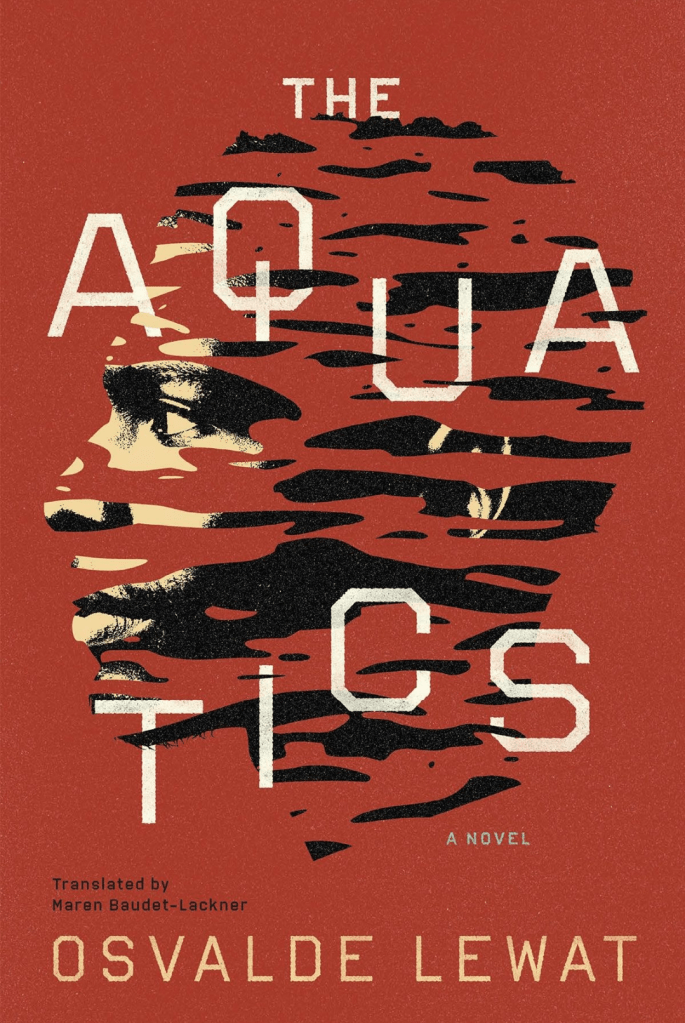
237 pp. December 2, 2025, Coffee House Press. Fiction.
Osvalde Lewat’s novel reads at first like the usual, somewhat tired satire about African countries: a place called Zambuena; a mostly invisible leader, the Old Man whose influence is felt everywhere; a bloated Official Party with bloated officials; a culture of terror and repression. But then the story’s focus sharpens on the dull and stifling life of Katmé, wife of an ambitious, rising political star, the Prefect of Akriba. Katmé is managing a whole staff of servants, eating with fine silverware, and determinedly ignoring her own demon: the death twenty years ago of her mother.
Everything changes when a foreign company is contracted to build a road in Katmé’s home area that’s planned go over her mother’s frankly pathetic grave. Her canny husband seizes on this—as grabby politicians do—as his opportunity to advance his career, and he pulls Katmé and the grave into his machinations. The unfortunate collateral damage of all of these manoeuvrings falls on Katmé’s gay best friend (her “brother”), old schoolmate, and protégé, Samy: because naturally, homosexuality is illegal in Zambuena—what will they say when they find out the Prefect and aspiring Governor’s wife supports a person like that?
The Aquatics morphs quite quickly from satire to horror. What happens next to Samy is unspeakable—and, as Lewat makes clear, everyone is responsible. It overshadows Katmé’s own painful journey back to herself, away from her naivety and the bubble in which she’s chosen to enclose herself—one that will be familiar to many middle and upper class Africans, in the face of nightmarish inequality. Katmé has to face up, too, to the fact that she’s never really seen Samy for himself, and to how she’s used him.
There’s very little redemption, in the end—although some, yes, from Katmé’s feminist (re)awakening, which is quite bracing and heartening. However, the brutality in this story, being a real feature of life for gay people across so much of Africa, is extremely sobering. It’s hard to get away from the fact that Katmé is so much like the rest of us, living obliviously, caring only about how comfortable she can get. If the Aquatics of the novel are monsters, then perhaps so are we all.
Affiliate link: Support independent bookshops and my writing by ordering it from Bookshop here.
***
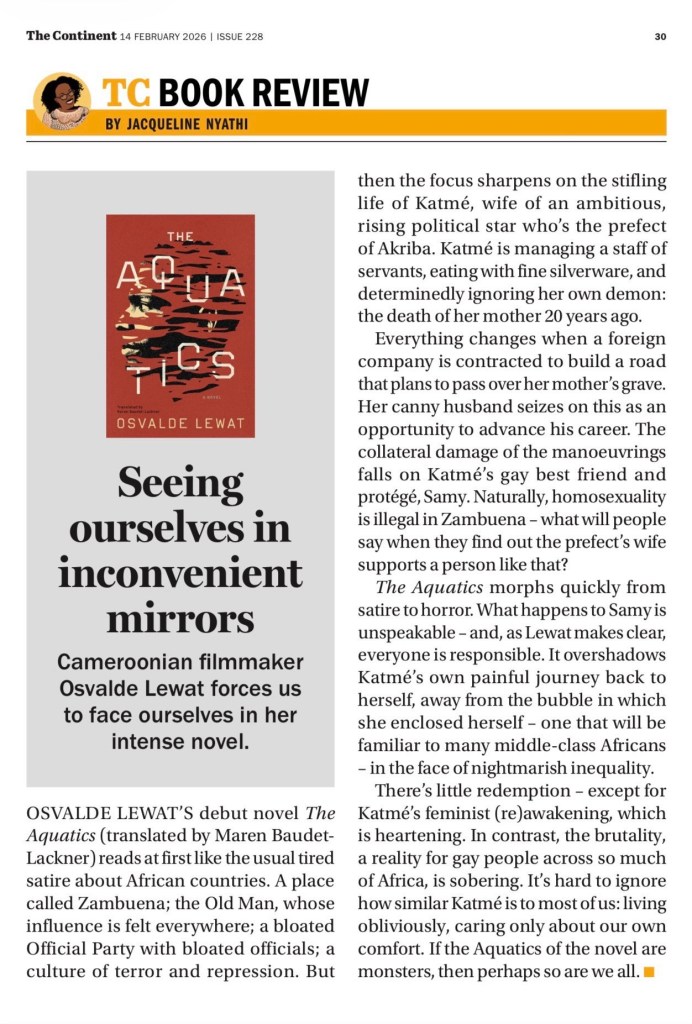
Here’s the version that appeared in The Continent:
 Harare Review of Books
Leave a comment