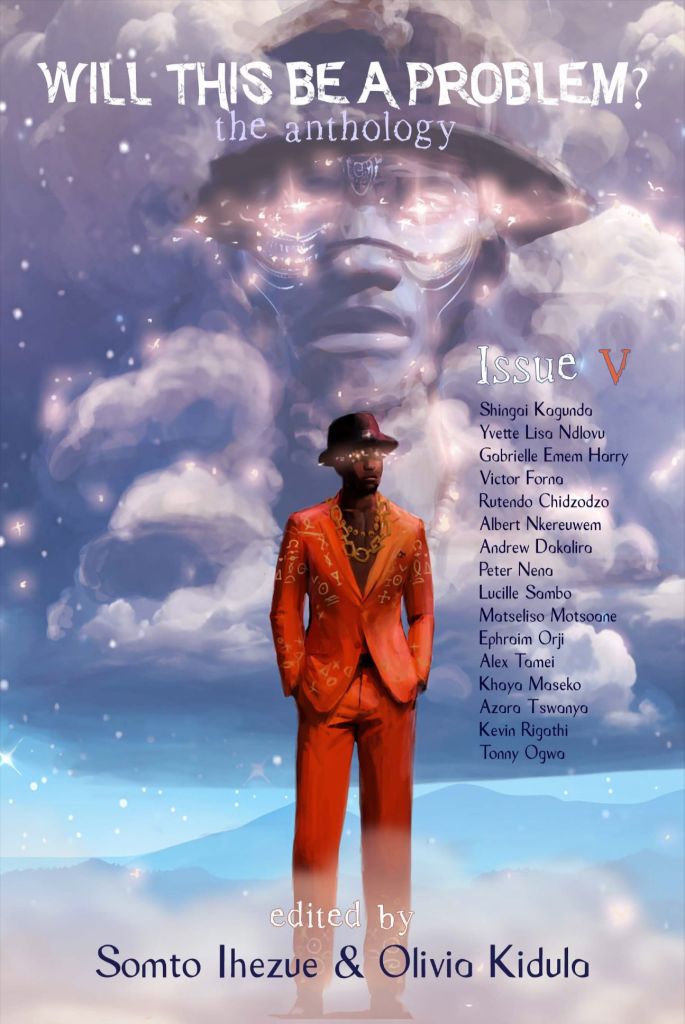
308 pp. Published January 4, 2025. Anthology of short African fiction.
Love African SFF! I’m a huge fan. The finished quality isn’t always even, and I confess I often get grumpy about editing quality (I’m not proud of this)—but there’s always soooo much heart. We have so many so very many stories to tell; and with this new democratisation in publishing, we outchea (as I’m told the cool kids say).
So, this fun collection from editors Olivia Kidula and Somto Ihezue has both really well-polished stories from now-established writers, and some from those who are seemingly new to it (that is, authors to watch out for—which is always great!). Below, a run-down some of the stories I loved and/or found memorable.
Ephraim N. Orji’s The Sirangori Fey Market is on that favourite theme in African short fiction, the market—which makes sense because it’s frequently the centre of social life on the Continent, both in villages and cities. Orji’s market is bewitching and bewitched: it moves around you. Then Rutendo Chidzodzo explores another common theme in African (and Global South) cultures, mermaids/njuzu, in the very short I’m Home. I loved Something Cruel by Gabrielle Emem Harry because there’s African Science-style teleportation, and also cool young otherworldly beings. Also, a great reminder about how belief systems and worldviews really just exist to explain things… Like, in this story, misfortune as seeming punishment, delivered by said beings. (And how I was told all kinds of things were taboo growing up that are not at all “scientific” in the Western sense, but I can see why those ideas exist. African cosmologies just make things more fun.)
Ash Baby by Andrew Dakalira is cinematic in its description of a cosmic battle breaking through into our reality. The beautifully written Dinosaurs Once Lived Here by Zimbabwean literary star Yvette Lisa Ndlovu has more cosmic themes—this time, world endings and beginnings. I loved the juxtaposition of cosmological origins and (alt-?)colonial history in Tonny Ogwa’s The Clans. Matseliso Motsoane’s Baby Potion is incredibly creepy, and got me thinking about all the things you don’t know when you marry into a family. (Lol).
I loved Khaya Maseko’s high punk Acceptance with its stylistically brilliant future-building, complete with cool tech and anti-capitalistic rebellion. Shingai Kagunda’s contribution, The Language We Have Learned to Carry in Our Skin reminds readers about the importance of holding onto our stories, and of oral tradition. Maybe, you see, written stories can be manipulated or suppressed in the milieu of post-colonial oppression. Maybe there’s value, still, in the ways we’ve always passed history on?
If Memory Serves by Kevin Rigathi is brilliant. It’s one of those stories that overturns all of your assumptions—where when you get to the end, you have to go back to the beginning again—and it’s very well executed. It’s one of my big favourites in this collection. And while I didn’t get everything that was going on in Victor Forna’s Mr Original Swag, I really liked its style. The very nerdy biologist in me really dug Albert Nkereuwem’s Commensalism, or the Labyrinth’s Vessels. NB. I feel like this story gives us the solution we need to all of our problems—and the answer really is 42. Wink.
Another huge fave is the excellent Why Donkeys Have 44 Teeth, by Peter Nena. First of all: I did not know this? B: Where do cats even keep their 30?! The best thing about this story is the POV—our protagonist is a young boy, and that permeates everything (so well done!). Also, it’s a really gory horror story (which tbh is never my cup of tea—soooo how amazing is it that this is one of the best stories I’ve ever read?!) with so many fun African SF elements. Cinematic and immersive, and I’m going to read it again. Possibly read it to my little human too, to see if it scares him.
The above is not all; there are other stories too. It’s one of those collections that’s really worth your money because of the variety in themes and styles it showcases. Expect gods and otherworldly beings, humans and superhumans; stories of families, society and culture; revenge plots; thoughts on memory and history; ponderings about the past and future; and alternate worlds (as well as the numinous one we’re in that we don’t necessarily always correctly perceive). Find science in all kinds of configurations (ours is science too), politics, and even a kind of screed against Capital. It’s all very exhilarating, and you should absolutely get your hands on this.
Grateful thanks to Olivia Kidula for sending me a copy for review.
 Harare Review of Books
Leave a comment