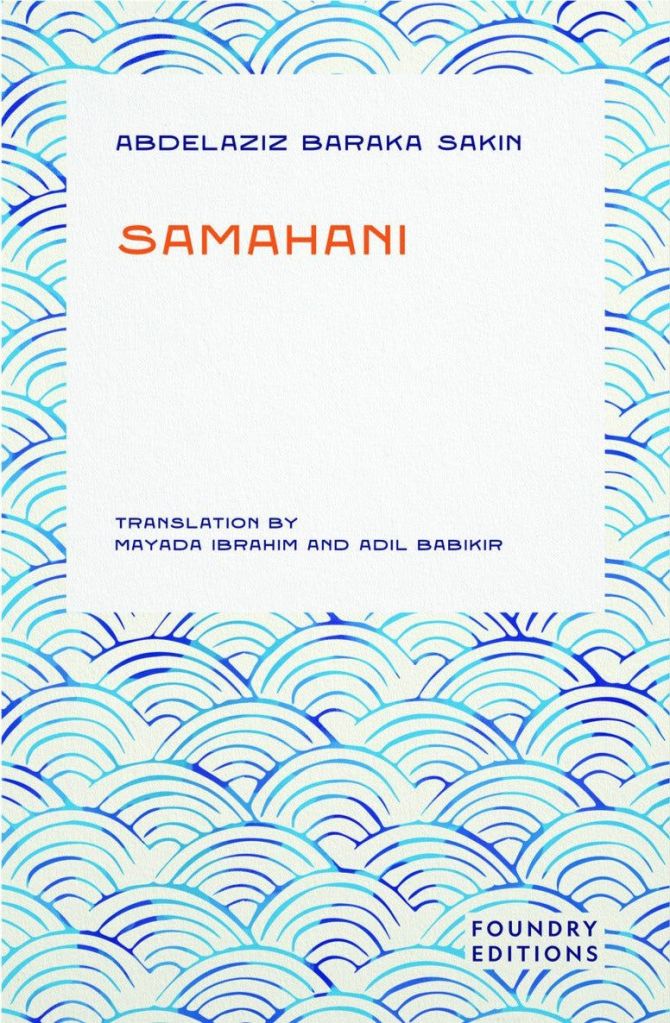
184 pages. Published September 24, 2024 by Foundry Editions. Fiction.
Quite as if it appeared in my inbox just to make sure I ended my reading year on a high note! Samahani was my African Book of the Year for The Continent (The Continent’s Africans of the Year 2024 edition pdf here).
Samahani is Sudanese literary luminary Abdelaziz Baraka Sakin’s (semi-)fictional treatment of the East African slave trade. We’re introduced to 19ᵗʰ century Zanzibar, where Omanis have settled and enslaved native Zanzibaris and other East Africans. They‘ve grown rich on trade and, of course, the use of forced and unpaid labour. The beginning of the novel sets the scene for readers with a précis of the history of the area since 1652 (when the Omanis arrived) and the activities of the settlers—royalty, army, and sailors—as they made room for themselves. We hear a bit about the “Blessed” and ageless Sultan, and then we meet his daughter, the rather silly and spoilt Princess, “her” eunuch, and the story’s other important characters, before we learn about life on the island where Europeans have just arrived with a view to challenging the Sultan’s rule.
Samahani is sharp but lush, and always lively. It’s extremely witty, very definitely spicy, often funny, and frequently heartbreaking. It’s pitch-perfect, never letting up. You know, if I was ever going to get through a story about enslavement (a frequent struggle), I feel like this kind of fiction was the only way to do it: a story that reads like a fairytale, while never shying away from the truth of slavery’s brutality. So it’s a very hard read in that sense, yes, but Sakin gives us the gift of the storyteller, who teaches and tells in entertaining ways: in the ridiculousness of the Sultan (and his daughter too), in glimpses of the ongoing resistance against the colonisers, and in a hopeful ending—the origin story of a future hero.
Samahani is breathtaking, and takes first place on the list of all the African lit I read this year. I cannot recommend it enough; Hollywood needs to get on this!
Many thanks to translator Mayada Ibrahim for a review copy ❤️
 Harare Review of Books
Leave a comment