
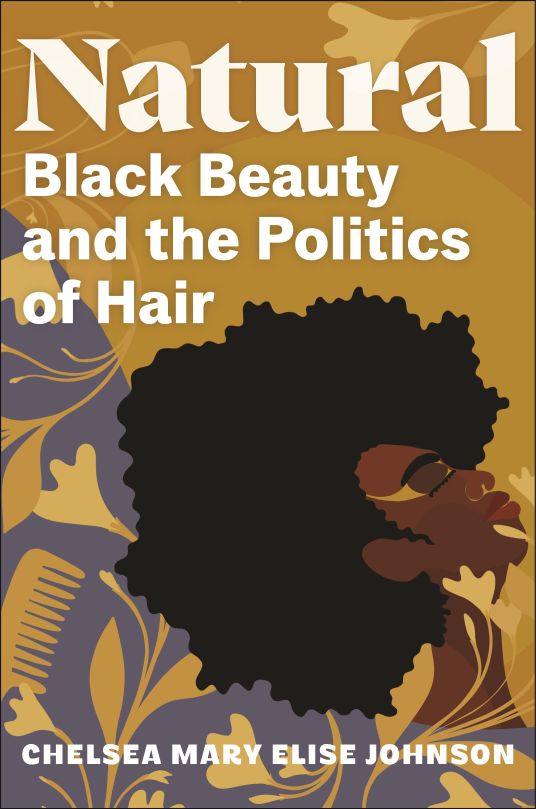
288 pages. Published October 15, 2024 by NYU Press. Non-fiction
Twenty-six years ago, I did the BC (big chop): I cut my hair very, very short, removing all of my chemically treated hair. There was no natural hair movement then—at least, not that I knew of—and I had no access to internet forums or You-Tube tutorials. What I did have was hair fatigue: I had had relaxed hair for much of my life until then, had recently explored a fun cut (short back, and a bob), and now had what I thought was over-processed hair. I also a friend who had always been natural and who knew what to do with her hair. It felt like it was time.
Years later, for a time, it was inevitable that any Black woman who lived online would get caught up in the natural hair discourse: whether to do the BC or to transition, the pros of the so-called LOC method, what products were best for naturalistas, and so on. We were inundated with pictures of TWA (teeny weeny afros), of twist-outs, of women measuring the progress of natural hair growth. We learnt all of the jargon. We scrolled for methods of styling whatever length we had. And for anyone watching, it was clear that this was a revolution happening all over the world, and online.
As indeed Chelsea Mary Elise Johnson has recorded in this book, her wonderful and truly very accessible analysis of the natural hair movement, covering its history, impact, and implications. Black hair is historically fraught: it’s been made into an expression of Black identity, for better or for worse, by Black people themselves and by those who would control or subdue them. Johnson traces the evolution of Black hair as expression in the US from the time of slavery, through entrepreneurship at the beginning of the twentieth century and Black Power and the Civil Rights movement in the 1960s, to the natural hair movement at the turn of the century and into the 21st. She deals adeptly with aspects from feminism to misogynoir, the economics and geopolitics of Black hair, the natural movement as a wellness project, Black hairstyles as protest, and, in thinking about colourism and texturism, who can be considered natural.
This is a wonderfully compact yet all-encompassing assessment of a very complex subject. Johnson keeps it personal while presenting cogent arguments and analysis. Her interviews of women across the Black diaspora make her analysis inclusive; too often, analyses like these become mired in the US experience—understandably. Natural is a book everyone should read, and then keep on their shelf as a cultural reference. It will be relevant for years to come.
Many thanks to NYU Press and to NetGalley for early access.
Affiliate link: Support independent bookshops and my writing by ordering it from Bookshop here.
 Harare Review of Books
Leave a comment