
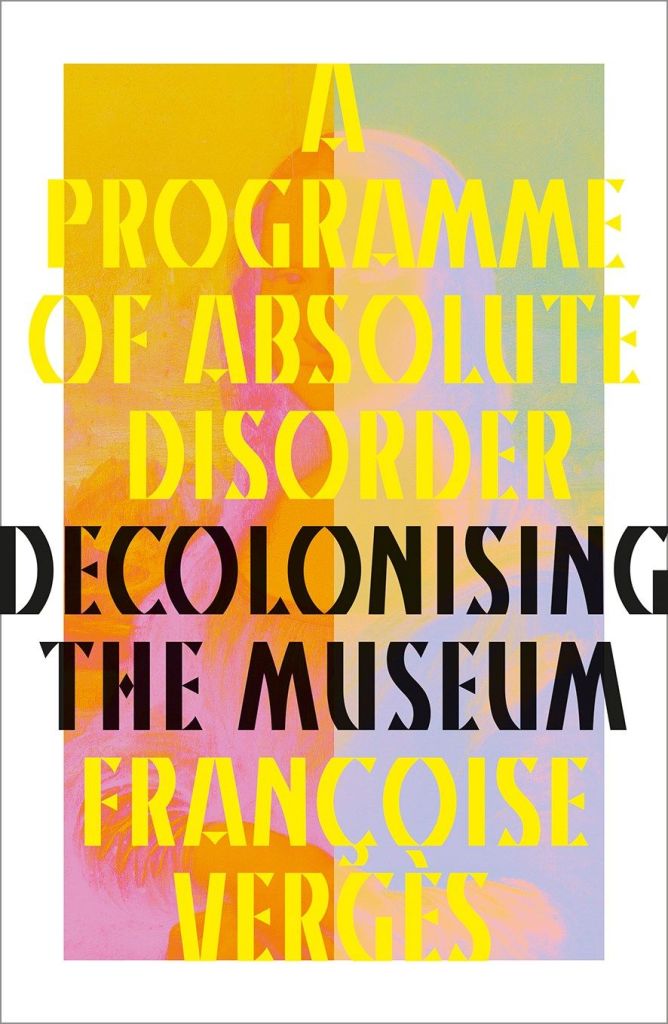
224 pages. Published July 20, 2024 by Pluto Press. Non-fiction.
TL;DR A somewhat dense but excellent review of the current state of ethnological museums, and possible futures of decoloniality.
I’ve read three books this year and one article¹ on museums, their current status and their future. I’m reading completely as a lay person; I found that approach a relatively limited one for some of the material presented in this book.
Vergès reviews the present state of “universal” museums, particularly the ethnological ones of the European former colonisers: the Louvre, the British Museum, and the like. The French, Germans, English, Belgians and Portuguese all looted and rampaged all around Africa, bringing back tons of Africa’s heritage to the metropole. Much of this heritage now lies neglected and dusty in the storerooms and basements of museums, although a small fraction is on show in vitrines in galleries for tourists—generally not African—to ogle at without understanding. Because these dislocated objects are without context, and cannot have context where they are: many were created for community use, worship, memory, etc, to serve and to perish with that use, something they cannot any longer do.
The trouble, of course, as activists point out with increasing volume, is the concept of the “universal” museum. Calls for repatriation of African holdings are met by museum directors’ and creators’ assertions that these “objects” (a problematic term in itself) are safer where they are, and serve the purpose of educating the world about humanity. They, you see, are the rightful educators and custodians to enable this, in their minds. Vergès reminds us that what is in fact happening is Europe seeing itself as the true cradle of Civilisation (because of the Enlightenment): superior, of course, the true arbiters of art and taste.
But even if we did accept the universal museum’s transformation into a depositary institution for all of humanity’s works, concrete, practical, and ideological questions are carefully avoided in the text: who would be their handlers? Who would be the directors? Who would write the catalogue? Who would draw up the categories? Who would fund this? Who would authorize loans? Who would decide which objects to include or remove?
There are many other problems with the Western museum as it is: the role of “philanthropy” in artwashing, gentrification, whitewashing, obscuring the history of slavery and colonialism (and the role of those same custodian nations in this), and so on. Vergès also takes us through a history I didn’t previously know: Napoleon rampaging through Europe and divesting conquered nations of their art treasures, many of which ended up in the Louvre—so there’s actual precedent for the looting that later happened in Africa and other places.
Vergès ends the book by zooming into Réunion as a creation of France, and how it’s evolving its own history even as it grapples with its identity. As such, Vergès and others founded the Maison des civilisations et de l’unité Réunionnaise (MCUR), a “museum without objects” that aimed to counter the idea of the Western-style universal museum, centring Marronage, and moving away from the universal museum’s fixation on visual respresentation. In some ways the project failed, derailed by politics; but it set a precedent for imagining museums in new ways, Vergès says.
Is the persistence of the Western, ethnological museum about money? To some extent it is: these museums draw crowds, and it makes some kind of sense that they’d want to preserve that, to not be emptied through the repatriation of the material heritage they have that was looted. But that’s clearly not the full story, as so much of that heritage is not on display but in storage. It seems that it’s a lot more about prestige, and superiority, as Vergès eloquently argues about the origins of the Louvre. Perhaps it’s also about control, and power. And, more than likely, with respect to material heritage from previously colonised peoples: it’s simple epistemicide.
Finally, remembering the words of Aimé Césaire:
And the museums of which M. Caillois is so proud, not for one minute does it cross his mind that, all things considered, it would have been better not to have needed them; that Europe would have done better to tolerate the non-European civilizations at its side, leaving them alive, dynamic’ and prosperous, whole and not mutilated; that it would have been better to let them develop and fulfill themselves than to present for our admiration, duly labeled, their dead and scattered parts; that anyway, the museum by itself is nothing; that it means nothing, that it can say nothing, when smug self-satisfaction rots the eyes, when a secret contempt for others withers the heart, when racism, admitted or not, dries up sympathy; that it means nothing if its only purpose is to feed the delights of vanity; that after all, the honest contemporary of Saint Louis, who fought Islam but respected it, had a better chance of knowing it than do our contemporaries (even if they have a smattering of ethnographic literature), who despise it. No, in the scales of knowledge all the museums in the world will never weigh so much as one spark of human sympathy. (From Discourse on Colonialism)
Is there an ethical future for museums? A Programme of Absolute Disorder is one attempt to imagine one.
Many thanks to Pluto Press and to Edelweiss for an early copy.
¹ Alírio Karina (2022) Against and beyond the Museum, Third Text, 36:6, 651-662, DOI: 10.1080/09528822.2022.2145049. Against and beyond the Museum: Third Text: Vol 36 , No 6 – Get Access
Further reading:
- Ghosts of the British Museum: A True Story of Colonial Loot and Restless Objects x Noah Angell
- Fifteen Colonial Thefts – Sela Adjei, Yann LeGall (link tk)
Support independent bookshops and my writing by ordering it from Bookshop here.
 Harare Review of Books
Leave a comment