
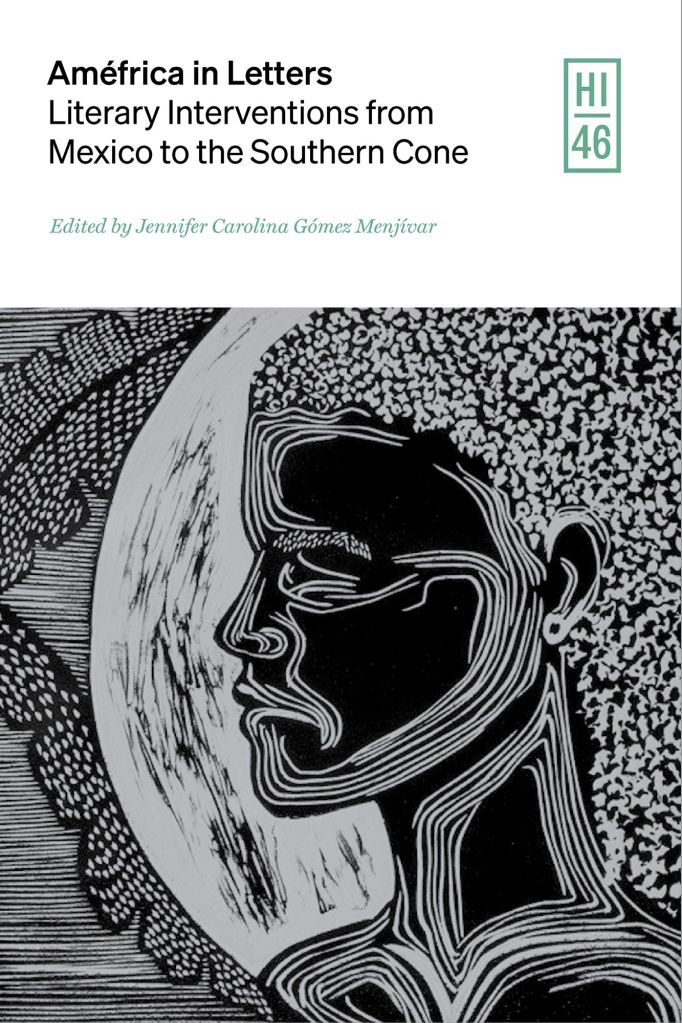
270 pages.
First published Nov. 15, 2022 (Vanderbilt University Press)
Non-fiction.
It took me a very long time to get through this, and that’s only partly because I’m sure I’m not the intended audience. It’s a very illuminating book, but perhaps it was written for academics—and so, parts of it are quite dry, and other parts arcane. However, I slogged through, got through the bilingual parts, and think I’ve come away with a better understanding of (and more outrage over) the plight of Black people, and the status of anti-Black racism in Central and South America.
I don’t think another book like this exists (although it may, and I do not claim to have checked). This seems to be either an understudied area, or underexposed, perhaps, outside of academic circles. I learnt about Afro-Columbians, who have been displaced by their own government from their land for capitalistic reasons, and the music they’ve produced in protest. Although I’ve read about anti-Black racism in Brazil (the work of [[João H. Costa Vargas]], for instance), I learnt from Améfrica in Letters that a Black Brazilian man is killed by the police there every four hours. Kimbo, a novel by Quincy Duncan, exposes the complicity of the state and the Catholic Church in anti-Black racism in Costa Rica, and dance forms, the morenos de paso in Chile, and bomba in Puerto Rico, have possible links to Africa, including the Kingdom of Kongo. And I have insight now into the challenges around defining the Afro-Brazilian archive, which may not be, like the Western canon, solely located in written work.
There’s a lot more: writing about gender in Mexico and Panama, the complexity of self-identity for Afro-Hispanic writer Antonio Preciado, the terrible crimes committed by the British (and others, later) against the Garífuna and the beautiful work of Xiomara Cacho Caballero to recover the language, and more. There are so many commonalities of experience, expression, culture and heritage for Black people around the world, and after reading Améfrica in Letters, I am both radicalised and encouraged about the work of resistance and activism against anti-Black racism. Améfrica in Letters is indeed a dense read, but an important one, and I’m glad I’ve managed it.
Thank you to Edelweiss and to Vanderbilt University Press for the DRC.
 Harare Review of Books
Leave a comment