
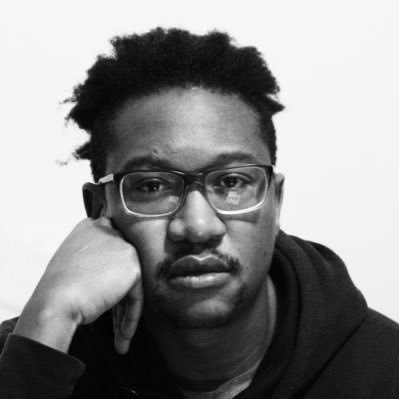
Farai Mudzingwa writes fiction, longform journalism and tv/film script. He was shortlisted for the Miles Morland Foundation Writing Scholarship (2019).
His short fiction has been published by Weaver Press, Kwani?, Writivism, Short Story Day Africa: ID and Mbonga Press. He has been listed for the Short Story Day Africa (2019), Yvonne Vera Award (2013) and Writivism (2016) short story competitions.
His longform articles and reporting have been featured in Chimurenga Chronic, The Mail & Guardian, The New Humanitarian, New Frame, Africa Is A Country, ContemporaryAnd, This Is Africa, TRT World, Harare News, Cityscapes Magazine and The Africa Report.
Avenues by Train is his debut novel, published by Cassava Republic Press in 2023.
More: Linktree
Jacqueline for Harare Review of Books: Thank you, Farai for agreeing to do this. I appreciate your time. I loved Avenues by Train so much!
Farai Mudzingwa: You’re welcome. Thank you for reading and reviewing!
HRB: First, what made you write such an incredibly nostalgic book?! (My poor heart!)
FM: Haha, my apologies. It took me on a deep dive into my childhood too. Initially, I just wanted to write a short contemporary piece on The Avenues, but then the research took a life of its own. Also, I am constantly researching and reviewing the historical archives for other projects, and much of the material from that research fed into the back stories and flashbacks required in this novel. I guess I got lost in the details of life in the past few decades then placed all of that on the page.
HRB: You’ve been writing for at least a decade, right? Did you know you were going to be a writer when you grew up?
FM: Never. I would have easily chosen anything over writing pages on end. But here we are. March this year was exactly 10 years from the day I wrote my first short fiction, A Native Metamorphosis that is in the Writivism anthology Sundown and Other Stories. I wrote that on my sister’s couch when I had resigned from my day job in a huff and found myself with time, beef with capitalism, and a laptop.
HRB: Avenues by Train is your second novel, I believe? Did you enjoy the process of birthing this book more than you did for Green Shadows of the Kiya Kiya Republic?
FM: Avenues by Train is my first novel. Kiya Kiya Republic is a short story or novella. They had entirely different processes. I wrote Kiya Kiya Republic in only 3 months, from the first jot to printing, during the lull before I began the year of final editing of Avenues by Train. Kiya Kiya Republic was really a fun pandemic project whereas Avenues by Train put me through the wringer. For a bit more context, Kiya Kiya Republic is 15,000 words, but did not require as much sweat from me as any of the 15 chapters of Avenues by Train, including the 600-word opening chapter.
HRB: There are commonalities between your two books, namely the presence of African or Shona mythologies and cosmologies. In my review of Avenues by Train, I said in your role as author, you were acting as a kind of svikiro. Why is Shona mythology so important to you in your work?
FM: That was a wildly generous compliment! I receive. I see Shona spirituality as a unique aspect of our existence. In much the same way that mbira music (the local variants) is unique to the Shona. I believe that our art is forever lagging behind if it is based on following outside trends that are local elsewhere. So, much like how our guitarists in the 1960/70/80s tapped into mbira rhythms to produce the uniquely Zimbabwean melodies that one hears from Jonah Sithole, Joshua Hlomayi Dube, Flavian Nyathi, Robson Banda etc, I intended to do the same with this book. To take what makes us uniquely Shona or Zimbabwean and craft that into a literary form. And in the same way that the mbira guitar does, hopefully transfer some of that Shona spirituality through the pages.
HRB: I had a suspicion that Miner’s Drift might be Chegutu, although you’ve located it north, I think, of Harare. I enjoyed your portrayal of life in Miner’s Drift, and then fairly inevitable migration to Harare, known in my own childhood as Bambazonke, the city that grabs everything. (Almost everyone moves to Harare at some point, it feels like). It grabbed and swallowed up Jedza’s sister, Natsai. Jedza’s own move coincided with Zimbabwe’s descent into anarchy. Is your portrayal of Miner’s Drift at all coloured by your appreciation and nostalgia for the small town of your own childhood?
FM: Harare is indeed a Bambazonke. A sinkhole for migration. Yes, Miner’s Drift is heavily influenced by Chegutu. It particularly pays homage to Chegutu as it was in that brief period of jubilation, flux, promise and anxiety following Independence. I located Miner’s Drift east of Harare and closer to the Mozambican border to emphasise the role of migrations within Southern Africa. But yeah, my portrayal of Miner’s Drift was driven by small-town nostalgia.
HRB: There was a kind of tribute to one of Zimbabwe’s favourite writers, Marechera, in the book, although that thread ends quite early—without giving the plot away. I know you’re a fan of Marechera’s. What is it about his writing, or his life and story, that moves you so much?
FM: I’m a fan of Marechera’s legend more than I am of his work. I knew of him way before I had read him, which I only did in my 30s. But he was the eminent literary figure of my childhood, and is this presence that hangs over me as a writer now. We are in his shadow. My depictions of The Avenues and one of the time periods I was fictionalising (1980s/90s) inevitably led me to Marechera as his apartment and favourite haunts were located in the same area. Also, the political theme in the novel drew me to the tragic events from his life which I just had to include in the narrative.
HRB: And now, for that wonderful Chapter Seven in the book: Time Swerves Back. There are three distinct sections: the chorus of vaDziva; the hilarious legal document that you mentioned in the conversation you had with Tendai Huchu as being inspired by Layli Long Soldier’s Whereas; and then the final call-and-response by the South Anglo Army men. I am fascinated (maybe a little obsessed) by that chapter, its structure and form and its very presence, and I mentioned elsewhere that it puts me in mind of the chorus by mozzies in Serpell’s The Old Drift. At what point did you write that chapter, why is it in the centre of the novel, and what is its significance?
FM: That chapter says, there were people here. There was a civilisation here. It is crafted to contrast capitalist greed against a people with an age old system of living with the land.
It deliberately sits in the centre of the novel, as a pivot around which all the elements of the book revolve. The lives of the characters and the destiny of the land itself, was set on a course from the events of that chapter. Nothing was ever going to be the same for the land and its people after that column marched in.
However, despite the magnitude of that invasion, I did not want it to take up “space” in this story. This is not a story about Rhodesia or the white supremacy it introduced. This chapter was designed to acknowledge the greedy and tragic genesis of the present state, but to also show how foolhardy and insignificant that destructive enterprise was in the arc of history.
And so, it was originally a brief couple of pages with the ancestral chorus and a few lines of the South Anglo Army chorus. My editor then insisted I give full throttle and suggested Whereas and other texts, but also helped me get the tone of those colonisers – the bumbling, brandy-filled, boisterous opportunists’ tone. The drunken voices are amplified so as not to take them as seriously as they took themselves – they were just entitled “boys being boys” on a genocidal scale. And we continue to pay the price for their misadventures.
HRB: Also in the interview with Huchu, you spoke about Norman Geoffrey Oswald Moffat (I enjoy the play on NGO there, which I only got just now), the only white character in the book who interacts with the main cast. His appearance is brief, but he’s quite the piece of work (you mentioned a kind of Boris Johnson of 30 or 40 years ago). I wonder what a book only on him would be like? So many books on white men in Africa cast them into heroic roles, when we know that could not be further from the truth. Why did you write your only realised white character as a kind of cartoonish figure? Or, in a more leading question, why does your writing so far so determinedly not pander to the white gaze?
FM: NGO is written as a descendant of the South Anglo Army men in the colonial choruses of Chapter Seven. He is their reincarnation. He serves merely as a gauge of the lingering colonial influence on the continent and the varying insidious and sometimes seductive forms it takes. He is more allegorical than concrete even as his actions and presence have tragic consequences. His entitlement, callousness, emptiness and sinister clumsiness represent more of a western cultural attitude than him as an individual.
On the white gaze, that was not a concern at all. I believed Zimbabweans needed a book that we can read and truly connect with, without wondering what the people around us think. Something that they can read and exclaim that they see their lives in this medium that seems dissociated from their lives. I wanted to blend the streets and the page, so to speak.
I do understand how the perspective is quite disorienting for non-Africans and I have had to fight every step of the way to have this work respected in its form. I see negative reviews from white readers who see it for NOT being magical realism, fantasy, afrofuturism or whatever – instead of taking it for what it is – fiction unlike what they have known. This book requires respect and a shift in preconceptions and I am unapologetic in placing that demand on the reader. I love the engagement I am getting from Africans – South Africans, Ugandans, Nigerians, Zimbabweans and Ghanaians, and it is in those moments that I know it was worth it.
HRB: I’d like to talk more about lineages, and your writing, again something you mentioned in your chat with Huchu. You spoke of Stanley Nyamfukudza, a writer I have still, unfortunately, never read. (More on that later). Could you tell me more about why you admire him?
FM: I find him to be an accessible and practical writer. His book The Non-believer’s Journey gets right to it. It is not pretentious or trying to do “too much”. It is focussed storytelling and I found its grittiness riveting. He wrote at “street level” so to speak. About an ordinary non-hero going about ordinary motions in a darkly extraordinary period. And then, Nyamfukudza himself, from what little I understand about him, wrote and published in the country, until he couldn’t write and publish in the country, then emigrated and stopped publishing when that became necessary to do. I find that practical – not hung up on romantic notions of an artist.
HRB: Are there any other writers or writings that you would consider Avenues by Train to be descended from?
FM: Nehanda by Yvonne Vera and Feso by Solomon Mutswairo influenced some aspects of the national sentiment of the ancestral voices. Dostoevsky’s Crime and Punishment has themes of guilt and atonement that bled into this work. The futility and strife in Steinbeck’s The Grapes of Wrath lent a sombre tone as well. The playfulness of Salinger’s The Catcher in the Rye, Van Ruit’s Spud and Richmal Crompton’s Just William series tilted my hand in Gerry’s childhood chapters. Junot Diaz’s The Brief and Wondrous Life of Oscar Wao gave me the idea of footnotes in a novel. The dark humour and satire is my take on Heller’s Catch 22. And always on my mind when writing was Melville’s Moby Dick – I was always aiming for his depth of allegory. There are many more!
HRB: Nyamfukudza and many other Zimbabwean writers have been out of print for a very long time, and you and I have had exhaustive, complaining discussions about the reasons for this. Tinashe Mushakavanhu speaks of encountering so much important Zimbabwean writing only in foreign archives. It means that the riches of our own literature are not accessible to Zim’s young readers, just as I never encountered Nyamfukudza in my own childhood in Bulawayo, and have still never come across his books as an adult. What are your thoughts on this, and how can we remedy it?
FM: So many reasons that I think simply come down to the state of the economy and society not affording a literary industry to exist.
HRB: Music—in particular, the traditional music of the Shona people—is very central to the novel, and to Shona spirituality in general. We know it drove the struggle for liberation from the colonisers, and it has a liberatory function in the novel, too. I know there’s a playlist for the book somewhere. Could you explain a little about music as spirituality, and your use of music as an added voice and character in the novel?
FM: I’ve been in my mbira music era for years now and I love its history, complexity and spiritual leanings. The lyrics, as they are used particularly in a bira setting, are poetic and can take on seemingly infinite meaning. They have a broad emotional range. I mostly used mbira music as a lamentation in this novel. A lamentation for the past, of individual strife, of loss, but also of regeneration and catharsis. Our griots held our communities together in this music, in these melodies and in these lyrics, and they told stories through them. I was aiming to harness that melody in the narrative.
Here’s the YouTube playlist: https://youtu.be/ZBr5eohenIc?si=3DYcJ9I57TGXqpMf
HRB: Thank you! Do you think Avenues by Train will be an O-level set book one day, as I hope? 🙂
FM: I would like it to be a set book. It would have to pass whatever bureaucracy manages that whole process, the censorship board, and be affordable. But yeah, I would love for it to be popular in the culture and referenced like the books of Chinodya, Vera, Mungoshi, Dangarembga etc. To have cultural significance on the level of local pop or Sungura or Zim Dancehall songs. To have people questioning some pre held notions about our culture and critically engaging with how things are. If I overhear some teenager say to another, “You’re now being a Jedza”, then my work here will truly be done!
HRB: I know you’ve only just published this wonderful book, and you probably want to take a break—but just in case, is there anything cooking in the background?
FM: I am certainly taking a break! But also, the work of marketing this book is intense, so there really isn’t time for me to focus on the next work at the moment. I have a political biography on my father that I’ve been compiling research material on, so that will be happening at some point. I think Kiya Kiya Republic is due for a sequel. I’m not averse to another work of historical fiction but only when the dust settles!
Avenues by Train is available in Zimbabwe from Book Fantastics (+263 779 210 403/Instagram/Twitter)
 Harare Review of Books
Leave a comment