
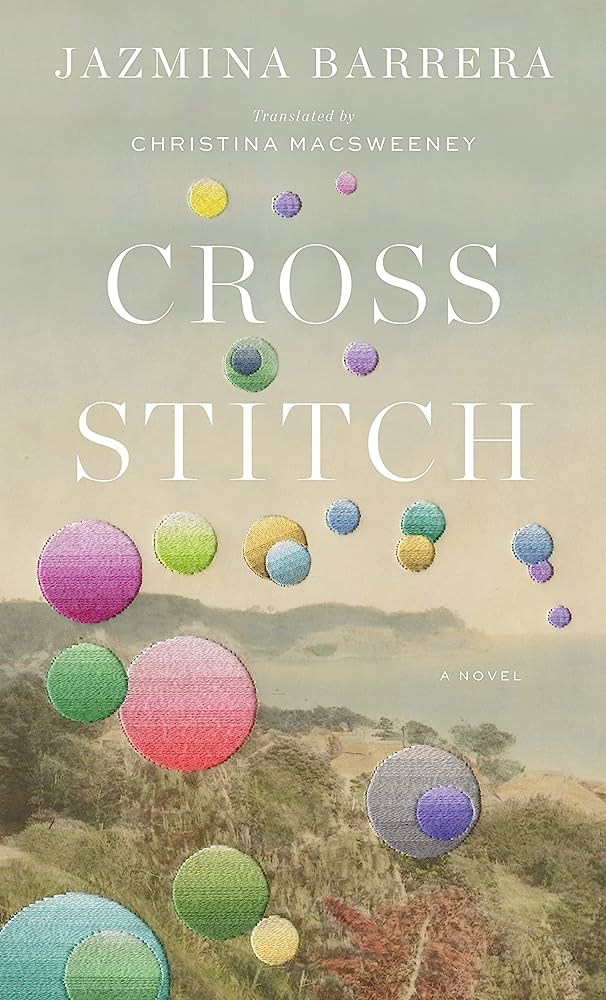
224 pages.
Expected publication date: Nov 7, 2023 (Two Lines Press)
Fiction.
I don’t usually read the publisher’s blurb before I start a book, and I’m really glad I didn’t here. I like to go on a voyage of discovery; sometimes the blurb spoils it. Somewhere in the middle of this novel, I began to wonder about possible connections between two words: text, texture. Surely….? I went to Merriam-Webster online:
Text; from Anglo-French tiste, texte, from Medieval Latin textus, from Latin texture, context, from texere to weave.
Merriam-Webster
Weaving. A tapestry. That’s what Jazmina Barrera presents us with: a text woven from threads about the lives of three young women, about embroidery as text and language (the textural possibilities in it), and about the (feminist) history of embroidery, with vivid scenes about traditional Mexican embroidery. It’s incredibly beautifully done; as she intends, as she builds layer on layer, you start to see a picture emerge.
One of three friends has drowned. In her grief (and regret), Mila goes through her memories of their teenage years and friendship, and the last time she saw Citlali, on the friends’ trip to Paris. In one of the most powerful symbols in the book, Mila is embroidering with black thread on black fabric, a purely textural piece. It’s the focus of an achingly beautiful scene towards the end of the book, bringing the reader some closure for the heartbreak.
This is a novel for lovers of literary fiction, coming-of-age stories, and stories with complex women. It’s full of art history, and Barrera firmly locates the “women’s work” of embroidery in that history. In doing so, she’s created her own defiant work of subversive stitching. I’m powerfully inspired to continue mine.
Support independent bookshops and my writing by ordering it from Bookshop here.
 Harare Review of Books
Leave a comment