
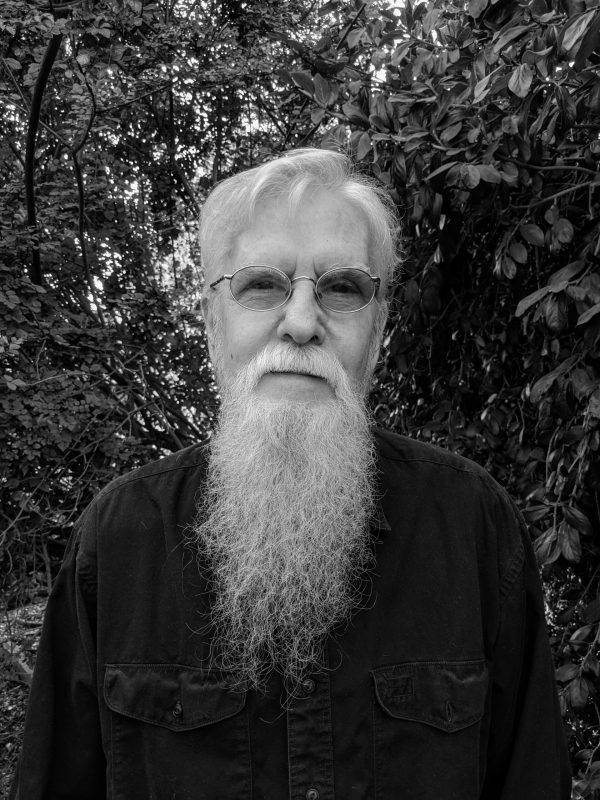
I am grateful to Emily Keough and to Richard Martin for the opportunity I had to ask about Mr Martin’s book, Oranges for Magellan (Regal House, 2022; my review here), already one of my favourite novels of 2023. Also for such great answers!
Oranges for Magellan is the story of Joe Magellan, flagpole sitter, who decides he must break the world record of 444 days on top of a flagpole, set by his nemesis, “Shipwreck” Blake. Themes in the book include family and marriage, addiction, and friendship.
(The following is very lightly edited for clarity.)
shonareads: Why flagpole-sitting? What inspired that?
Richard Martin: I’ve always been charmed and intrigued by people who pursue oddball callings. One day I read a newspaper article about a man in Los Angeles, a preacher without a church who had gone up on a pole to sit and minister to passersby. The man’s wife ran a small restaurant at the foot of the pole. He’d been up only a few days up when tremendous Santa Ana winds arose, knocked down the pole and put him in the hospital with a broken leg. I looked up the restaurant and called the man’s wife. All I remember of the conversation was asking if her husband was going to go back up and try it again, and her response: “Not if I have anything to say about it.” And my imagination was off to the races.
SR: Why did you choose Oranges for Magellan as the title?
RM: I chose Magellan as the protagonist’s last name to contrast Joe’s flagpole-sitting quest to the quest of the explorer Ferdinand Magellan. Joe is stuck (by choice) in one small spot while Ferdinand aims to sail around the world. Ferdinand himself did not in fact complete the voyage, but was murdered in the Philippines. And a major part of the book is the question of whether Joe will succeed or fail in his far more stationary quest. The oranges relate to the fact that sailors in those days suffered mightily from lack of Vitamin C (which a few oranges would have quickly supplied), and to the orange tree Joe first sat in after his father died. The suggestion is that something vital, something essential, is missing from Joe’s life.
SR: I described Joe as a navel-gazing narcissist. Would you agree?
RM: I don’t know if I agree but I laughed with understanding when I read your question. He certainly qualifies as self-centered, self-absorbed, but that’s at the troubled heart of every obsessed individual, and without his obsession there’s no book. So I’d say he’s probably not certifiably narcissistic, which is kind of incurable, isn’t it? He seems at least willing to negotiate about transforming for the better the most extremely selfish parts of himself. He wants to be a better man, father, husband, teacher, soul. And I think he does start to care more deeply about others. The crises of the marriage, the effect of his quest on his son, the battle with Shipwreck, the pressures of the quest itself—all these forces have left him vulnerable enough now that he can at least begin to be a kinder soul moving forward, whatever the fate of the marriage.
SR: I felt very situated in the setting of Los Angeles in the ’80s; the writing was very evocative. Do you have an attachment to the L.A. of that time?
RM: I’ve lived in Southern California most of my life. I drank and got sober here. I think I located the book in Los Angeles itself, more toward downtown, because that’s where the fellow who inspired the book made his brief attempt at flagpole-sitting. Maybe it’s an unconscious nod of gratitude toward him for that inspiration. God bless him. Some of the setting is based on the real L.A., some of it I will shyly blame on my imagination.
SR: There’s a religious thread running through the book, particularly when Simeon is introduced. Was religion an important aspect when you were planning the novel?
RM: That’s a big question. The quick answer is yes. I don’t want to inject my personal beliefs into this or any fiction, I don’t see that as the purpose of fiction, but I imagine it sneaks in there anyway. Since I was very young I’ve felt an affinity with the mystical, or simply the mystery at the heart of existence, being, death, what happens after, and this thing we call God. I don’t mind so much that I don’t know. Joe seems as baffled by these matters as he is by everything else, probably moreso. He’s certainly a long way from the pole-sitting preacher (with his simple attempt to start a church) who was the inspiration for my story.
I like to present the question of God through robust conversation, so that the reader takes the side of one and then the other. In his exchanges with Clover and Shipwreck, Joe seems to always take the adversarial point of view, questioning contradictions in others’ beliefs. But Shipwreck is the master of contradictions, and Joe is often confounded by Shipwreck’s stance. Joe wants Shipwreck to just say what he means, but Shipwreck knows there is no simple answer to these mysteries, whether one believes or not. Saint Simeon’s incredible pillar-sitting feat, and Tennyson’s poem about Simeon (is he mocking or praising Simeon?) completely bewilders Joe, and Shipwreck refuses to clear things up for him. God is a mystery worthy of Joe’s confoundment. But I’m certain, whether Joe realizes it or not, that he is up there to explore, or wrestle with, the ultimate mysteries of faith, the purpose of an individual’s life, religion, death, grief, God, all the heavy stuff—his entire relationship with “the whole thing.”
SR: Are there aspects of the novel that felt very personal to you?
RM: Oh, certainly the father-son relationships of Joe and his father, and Joe and his son. Joe and I lost our fathers at the same age. I don’t have a son, but it’s easy for me to return to the time when I was about Nate’s age and live in his shoes as he experiences, in a sense, life without a father. And of course the relationship between Joe and Clover is personal to me.
I have probably learned most about myself and life and love, via my relationships with women, and especially with my wife of 27 years now. I was 10 years sober when I met her, and she would not be sober for a few months. Not until this very second, believe it or not, did I realize the connection between Clover and my wife in terms of drinking. That’s how writing is for me, I get in such a zone. The characters are true allies in the writing.
A theme of my work and life is the pain that comes with love, especially in the complicated realm of a long-term marriage. Nurturing that union while maintaining the individuals’ integrity, especially in Joe and Clover’s case, two willful people, ain’t easy. I don’t know where they go from here, apart or together, but in my opinion they are better off for their experiences in the book, and I wish them well!
SR: Was it your intention to show Clover’s addiction as parallel to Joe’s obsession?
RM: I think so. As a recovering alcoholic, alcoholism often finds its way into my writing. I didn’t want to have Joe be an alcoholic. His obsession and his adventure up there are complicated enough without throwing addiction into the stew. Clover was the likely candidate to carry that dreadful burden.
SR: What was your writing process for the novel, and how long did it take?
RM: Well, let’s see. I read the article on the preacher-on-a-flagpole around 1980. I wrote a 12-page short story about it (which turned out to be but an outline for what would become the novel). Nothing happened with the story, so I put it away. But it was always on my mind, always nagging me.
I took it out again in the early 1990s and turned the story into a screenplay. That didn’t go anywhere either, but it allowed me to expand the 12-page tale and add a lot of details and complications, flesh it out. Then around 2000 I got down to it and turned it into a novel. It was 100 pages longer (!) than the published version, but I sent it out to agents and one grabbed it. Again, nothing happened and I parted ways with the agent. By then I believed in it.
I determined to cut the hell out of it before sending it out again. And I did, 100 pages worth. There was occasional interest from agents and publishers, but no commitments until Jaynie Royal and Pam Van Dyk at Regal House read it and understood it and grabbed it. During this whole time I was writing stories and plays and completed other novels. But in answer to your question, it took, from inspiration to published novel, only about 40 years. Never give up, baby!
SR: I thought family and marriage were important themes in the book, along with addiction. Is there anything else you wanted to convey?
RM: The mystery of life, the mystery of being, and what bewildering things this incomprehensible package of mysteries called the human being does to fill up their precious time!
SR: What significant things did you remove from the book when you were editing it?
RM: Oh my gosh, what could it be—100 pages worth of cutting! I will say I love the editing side of writing. It’s Heaven to me, timeless, pure pleasure to have the thing all done and then go back to the beginning to take out what’s extra and put in what’s needed, which includes notes I make during the writing. But in general, when I’m editing (cutting, clarifying, simplifying, adding, deepening, playing with), things jump boldly out at me that need fixing. I’m sure that included many darlings, but it was worth it.
SR: Would you get along with Joe in real life?
RM: Yes, but whoa, it might be difficult. He’s a stubborn fellow, you know. We would argue. We would probably hang up on each other now and then, slam the phone down on each other (we both still have landlines). He would resist like hell the wisdom I would humbly offer him in areas like women and marriage and writing and everything. My tendency toward mysticism might have him climbing the walls, but maybe not. But I like him, and I think he would like me too. We would both be willing to work it out. I think we would be OK. I think we would get along. It would be a conflict-resolving process punctuated by spells of brotherly understanding and fondness, moments of gazing together at the world without needing to speak.
SR: Are you writing your next novel right now?
RM: I have a couple other novels that are already finished and waiting in the wings, and another I am this close to finishing. I hope I didn’t ramble on too long in some of my answers, but it’s your fault for asking such wonderful inspiring questions!
SR: Thank you for your time! As you know, I loved the novel.
RM: Yes, you definitely “got it”! And thank you. Great questions!
 Harare Review of Books
Leave a comment