
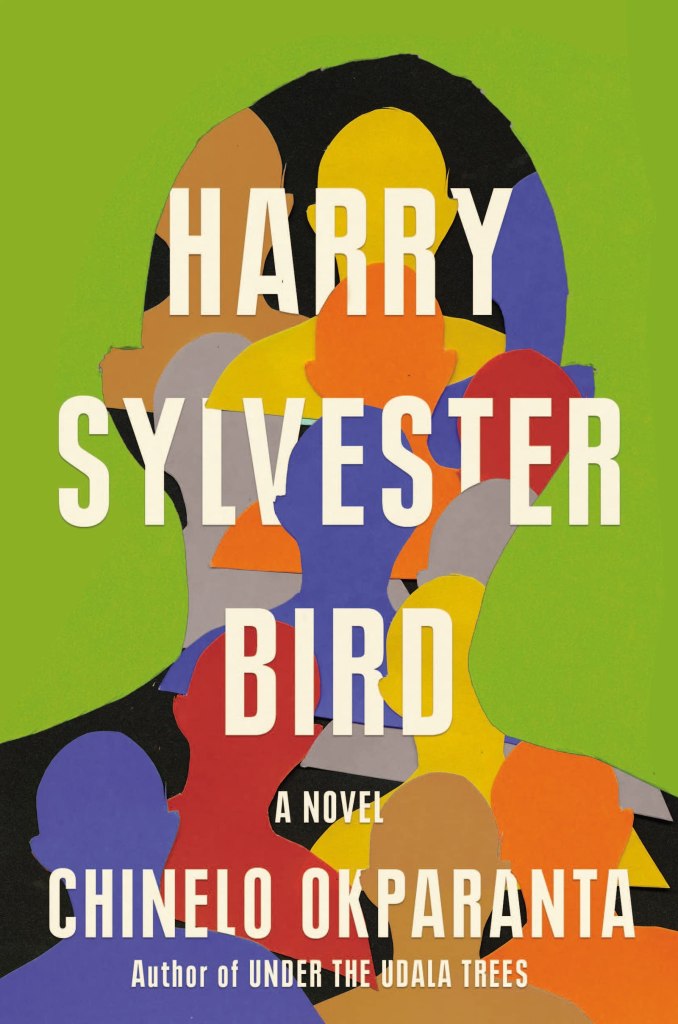
312 pages.
First published in July 2022.
Genre: Fiction.
Chinelo Okparanta’s Harry Sylvester Bird is the oddest book I’ve read in a while. It opens with Harry going on safari with his parents to the Serengeti. Harry’s mom, Chevy, is a distant germophobe who won’t let her son touch her, and will not touch him. His father, Wayne, is a complete buffoon and racist, who seems to enjoy unsettling those around him. The couple fights constantly, and neglects their son, even forgetting to feed him. The safari ends when the family is escorted back to the airstrip after Wayne takes off in the camp’s vehicle on his own, determined to see the Big Five, guide or no guide.
That first third of the book reads like satire, with outlandishly cartoonish characters and stodgy writing. In Tanzania, the camp manager, described as “the darkest man,” treats Harry with kindness. This seems to trigger—or maybe exacerbate—Harry’s latent body dysmorphia, making him identify very strongly with Black people, and begin to reject his whiteness. This “darkest man” inexplicably calls Harry G-Dawg, which name Harry adopts later on.
Harry makes his way through a season of loneliness in high school. Inexplicably, he decides to adopt the town of Centralia for his senior project—a real place in Pennsylvania, in the US, now mostly abandoned due to a decades-long underground fire that made it a dangerous place to live. Harry spruces up the main street and plants a few trees. Harry’s time in high school ends with the outbreak of Covid, and his resultant mental breakdown.
The book really only seems to take off when Harry—now G-Dawg—goes to college, where he meets a wonderful Nigerian woman, Maryam, with whom he enters into a serious relationship. Secretly, G-Dawg, who now sees himself as Black, has also joined something called Transracial-Anon. This section of the book locates G-Dawg in the real world, and starts to show the consequences of his self-image, and its effect on other people.
While Harry is a sympathetic character—helpless, perhaps the product of childhood trauma, as implied in the book—it is difficult to know why the author chose him to carry a story like this. The book deals with race; but it feels rather clumsily done, particularly in the early chapters. In addition, first person narration here, written from Harry’s perspective, clouds the narrative, as Harry is completely without insight. It is unsettling for the reader.
There are some interesting sub-plots. The narrative ends in 2025, so some of the later chapters of the book are speculative; the author also dabbles a little in US politics, introducing a third political party called the Purists, who read like Trump’s supporters. However, there is much else in the book that baffles. What is Transracial-Anon, and why is the seeming goal to change one’s race, rather than to treat apparent race dysmorphia? Why does Maryam even like G-Dawg, and why does she stay with him for so long? What happens to Harry’s parents?
I am glad to have read this book, which has received positive reviews elsewhere. I intend, however, to now look for interviews with the author, to help me understand what she was trying to do.
My rating: 5/10.
 Harare Review of Books
Leave a comment