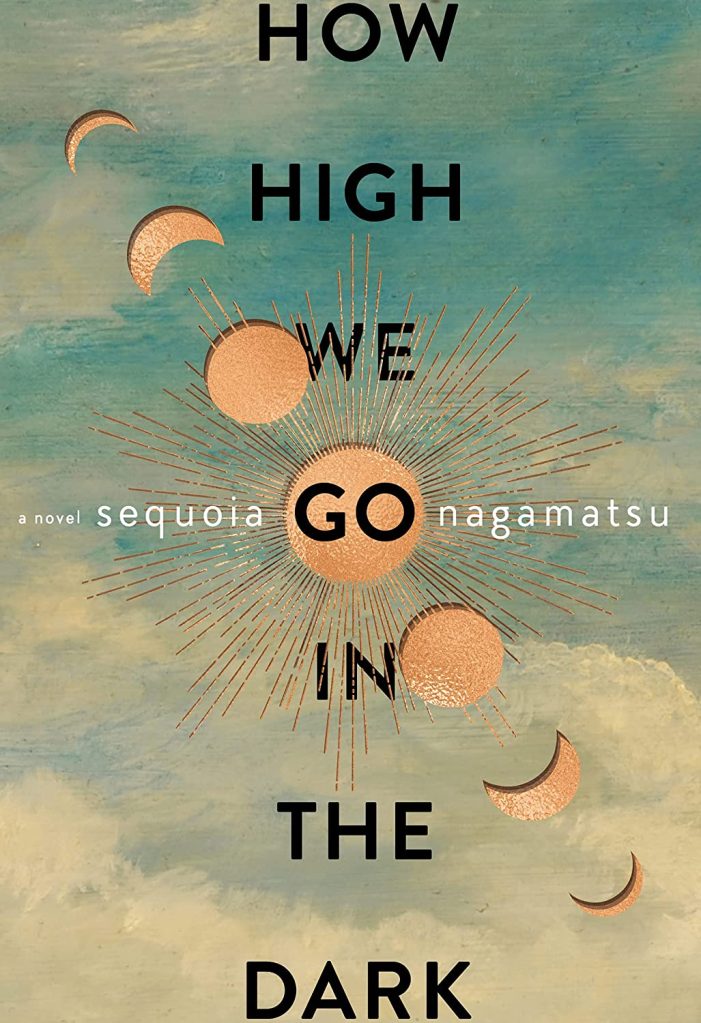
304 pages.
First published in 2022.
Finished reading on Feb 3, 2022.
Genre: Science Fiction.
Supplied description: Beginning in 2030, a grieving archeologist arrives in the Arctic Circle to continue the work of his recently deceased daughter at the Batagaika crater, where researchers are studying long-buried secrets now revealed in melting permafrost, including the perfectly preserved remains of a girl who appears to have died of an ancient virus.
Once unleashed, the Arctic Plague will reshape life on earth for generations to come, quickly traversing the globe, forcing humanity to devise a myriad of moving and inventive ways to embrace possibility in the face of tragedy. In a theme park designed for terminally ill children, a cynical employee falls in love with a mother desperate to hold on to her infected son. A heartbroken scientist searching for a cure finds a second chance at fatherhood when one of his test subjects—a pig—develops the capacity for human speech. A widowed painter and her teenaged granddaughter embark on a cosmic quest to locate a new home planet.
From funerary skyscrapers to hotels for the dead to interstellar starships, Sequoia Nagamatsu takes readers on a wildly original and compassionate journey, spanning continents, centuries, and even celestial bodies to tell a story about the resiliency of the human spirit, our infinite capacity to dream, and the connective threads that tie us all together in the universe.
Summary review: Really intense, epic, science fictional but with great character studies. Content warning for lots of body horror and death themes. Also be warned that this is *very* much a pandemic book, which of course can be triggering when we’re living through one. Lots of fascinating concepts around dealing with mass casualty, from societal and economic perspectives.
Rated: 8/10.
The following review first appeared in The Sunday Long Read on Feb 5, 2022:
Reading a pandemic novel in Pandemic Year Three sounds like a recipe for gloom and misery, and this book delivers, in spades. A group of scientists working in a melting Siberia uncovers the remains of a young girl, which appear to harbor a virus that’s dangerous to humans. True to form, governments don’t act early or decisively, and the virus spreads around the world, eventually killing tens of millions. In fourteen interlinked stories, Nagamatsu explores sickness, death and loss, scientific progress, the effects of the pandemic on the world’s economy, and how capitalism may respond to huge casualties—elegy hotels, funerary tokens, euthanasia parks.
Nagamatsu also has a potential answer for what we would do with all of the bodies: put them in towering skyscrapers.
This book is relentlessly grim in the first half. There is body horror, and every kind of trigger imaginable for issues relating to bereavement. Where it excels is in perfectly balancing character studies with speculative imagining, in how everything reads as eerily plausible. Recalling Carl Sagan, the chapter at the end is from the perspective of a very high-concept far-future human, which supplies some of the spiritual basis for the story, and ties up a paradox for us.
Read “How High We Go in the Dark” only if you can handle death by pandemic as the suffocating theme; there will be no escapism with this one. It is, however, a beautiful and deeply affecting book, which will stay with you for a long time.
 Harare Review of Books
Leave a comment