
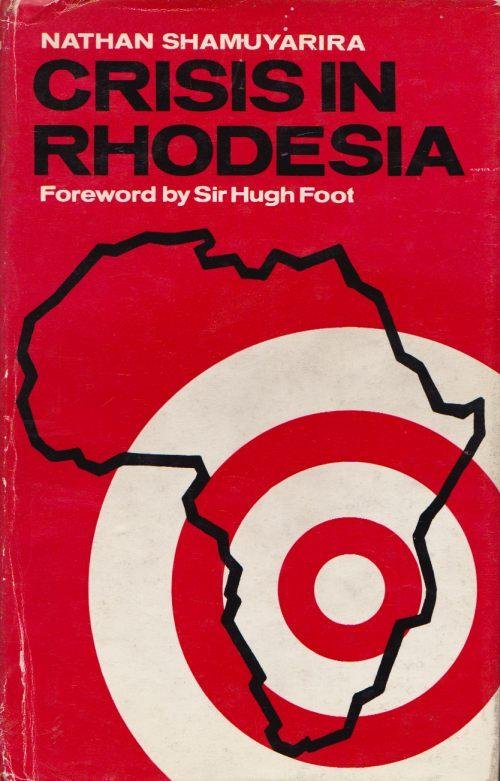
240 pages
First published in 1965.
Finished reading on 10 September, 2021.
Genre: Non-fiction.
My Twitter thread here.
This book (1965) is, very unfortunately, out of print.
Nathan Shamuyarira was a Zimbabwean nationalist. Born in 1928, he attended Waddilove Institute, from which he qualified as a teacher. He completed secondary school by correspondence, and taught at various schools, including Tegwane.
He joined African Newspapers Ltd in 1953, and became the first editor of African Daily News in 1956. He was editor-in-chief of African Newspapers Ltd from 1959 to 1962. In 1962, he joined ZAPU. He became disenchanted with Joshua Nkomo’s leadership, and joined a group that splintered from ZAPU in 1963 to become ZANU.
Notable dates:
- 1968: ZANU secretary for external affairs.
- 1971-3: Frolizi Treasurer.
- 1977: Left for Mozambique, to rejoin the liberation struggle.
- 1980-1987: Minister of Information.
- 2003-2014: On US sanctions list.
- Died in 2014.
I will let the author’s preface explain the book.
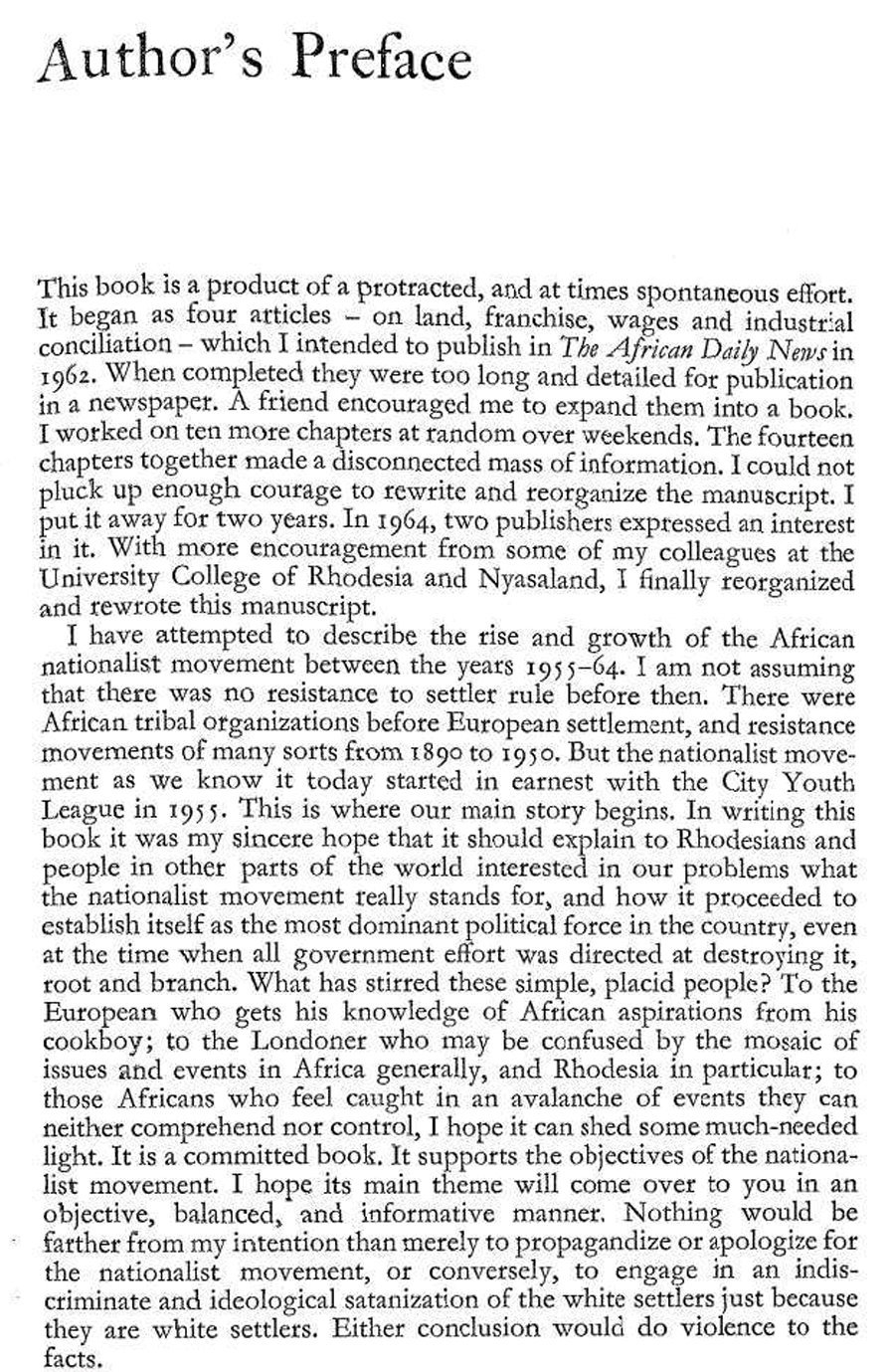

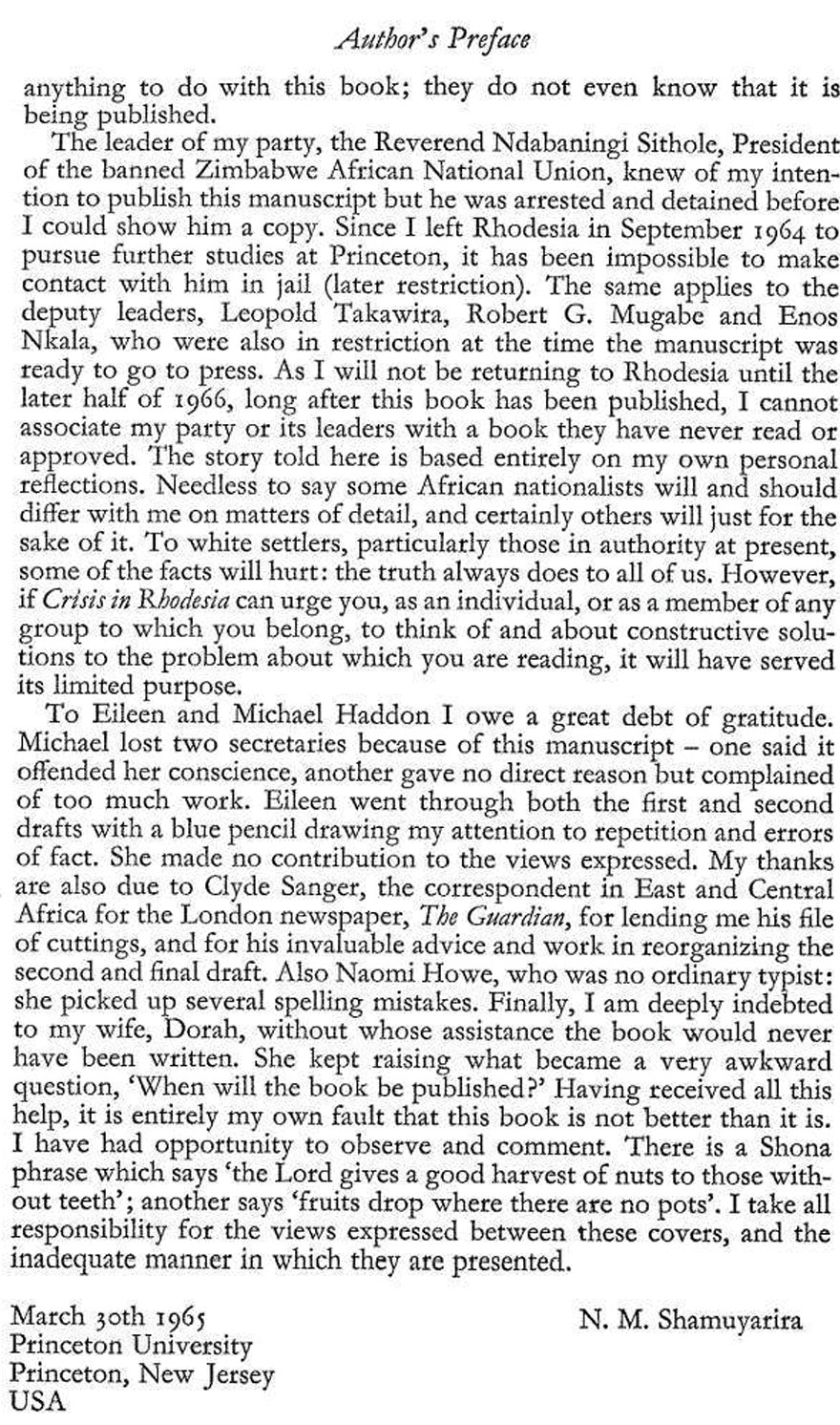
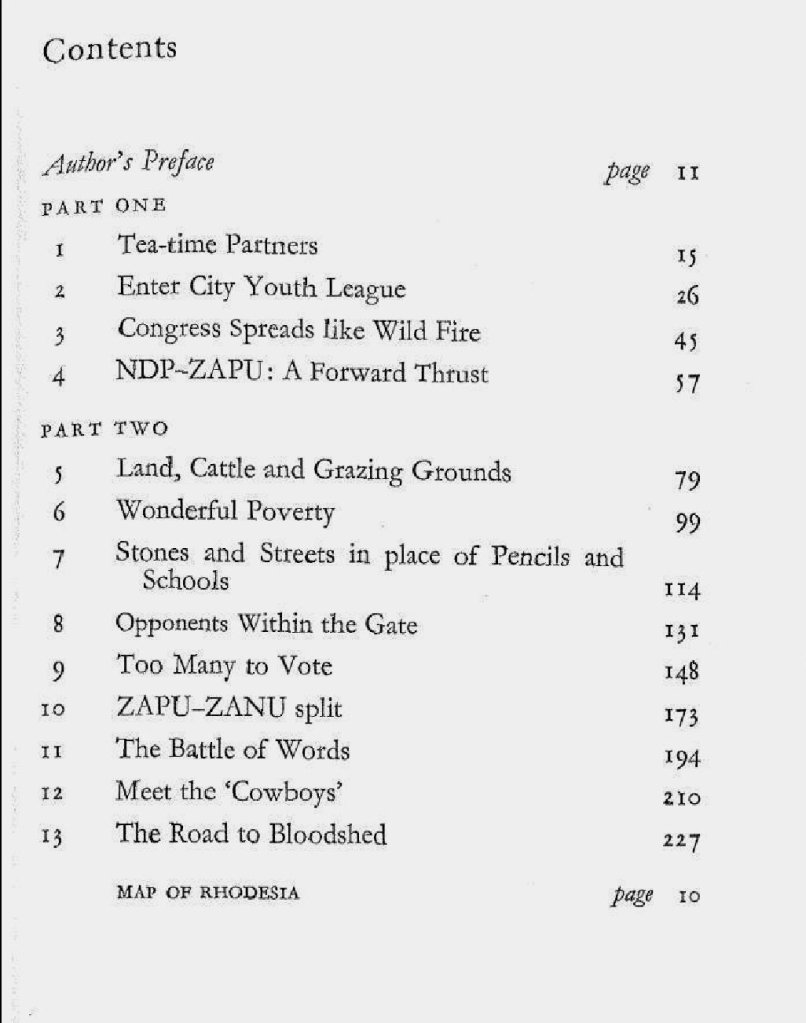
Crisis in Rhodesia covers the growth of the nationalist movement between 1955 and 1964, as well conditions in Rhodesia at the time. Mr Shamuyarira, a reporter, put together very relevant material, with only a little bias (he was an actor in the movement). His bias, however, does not detract from his clear-eyed analysis.
I had some idea of the events of this period, but this book fleshes out the highlights I knew with more complete detail about what Rhodesia was like, at the time, for black Zimbabweans; how the nationalists became politically aware; and how the nationalists began to mobilise the general populace, and to gain their support. It was also particularly useful to read Vesta Sithole’s version of events before I read this, because Crisis in Rhodesia gives detail from the other side about the reasons for the ZAPU split that led to the formation of ZANU, in 1963 (Ch. 10). It also offers some clarity about why ZANU later decided to go to war with the Rhodesians.
I was particularly interested in details about the Rhodesian brand of racism, from initial paternalism (or, liberalism), to the hardening of attitudes that, even now, inspires white supremacists.
Mr Shamuyarira also spends a lot of time on the state of education for black Zimbabweans at the time, which is the most complete picture I’ve found so far, and which clarifies for me why so many young people (including my Sekuru) joined the nationalist movement, and later went to war.
As always, I find it instructive to read material written by nationalists — to get it from the horse’s mouth, so to speak. I am always interested in how ZANU came to be the party it is today, and much can be inferred from the thoughts and worldviews of its founders. This book offers much in this respect. Something else that struck me were Shamuyarira’s thoughts on the rapes that happened during the bus boycott of 1956 (also referred to in Guns and Guerrilla Girls – review to follow):
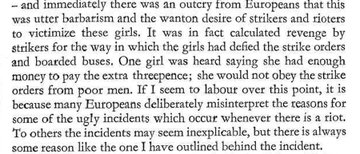
Could that attitude reflect the general cultural views of the time towards (working) women, and could this have been the attitude of other nationalists? Might this go some way towards explaining the continuing misogyny in Zimbabwean politics? (Ref: Coups and phalluses; Eternal Mothers, Whores, or Witches)
Shamu’s book doesn’t go into a great deal of detail about the pan-African aspect of Zimbabwean nationalism, but the last two chapters cover some of the African and international thinking, attitudes and interventions of that time. He explains some of the changes in white Rhodesian politics that resulted in UDI in 1965. Again, this is important in understanding what led to the liberation war.
In all, an extremely important book, which really should not be out of print 😦 I would encourage all Zimbabweans to read it, to understand more about the formation of our country. It is also an important record of that time in our history.
 Harare Review of Books
Leave a comment