
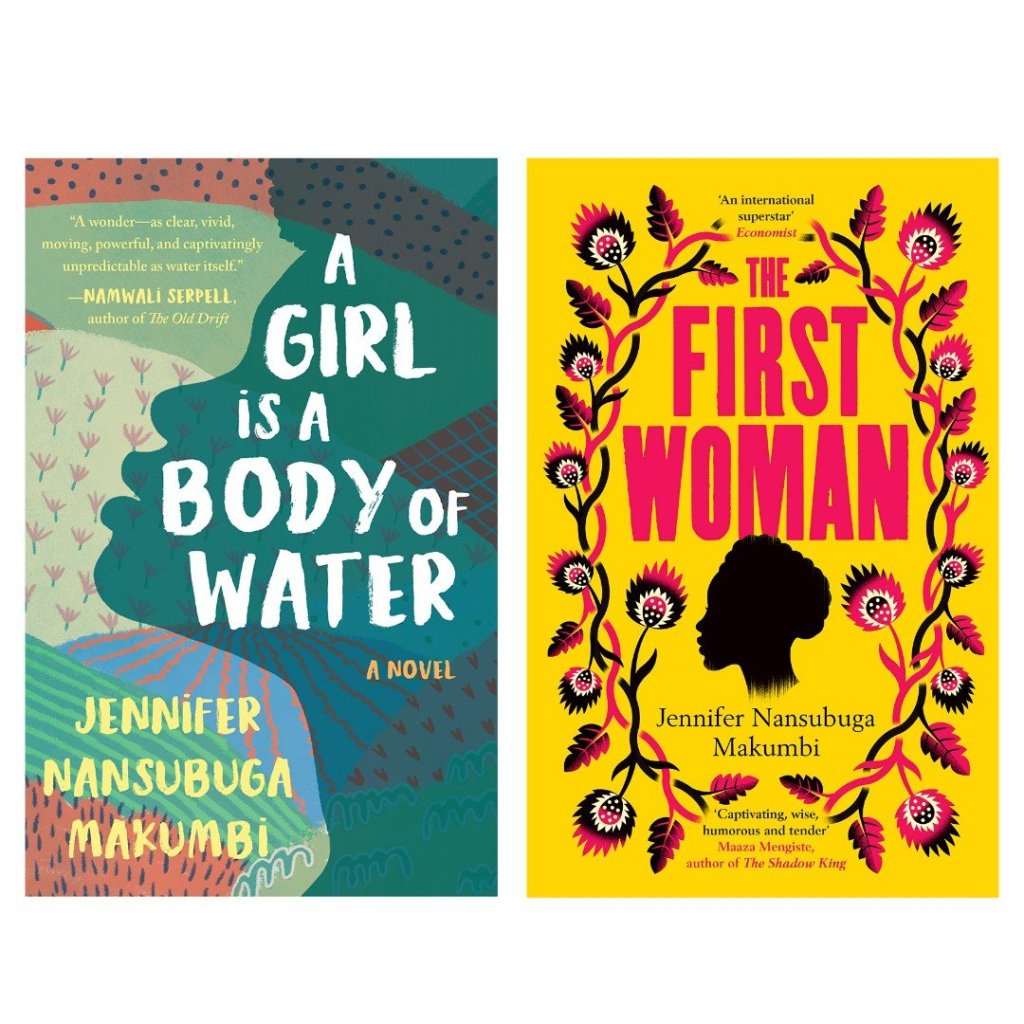
400 pages.
First published in 2020.
Finished reading on 14 Sept 2021.
Genre: Fiction.
Supplied blurb: “A powerful feminist rendition of Ugandan origin tales, The First Woman tells the story of Kirabo, the equivalent of Eve in Ugandan mythology.”
“Smart, headstrong, and flawed, Kirabo is raised by doting grandparents in idyllic Natteria in rural Uganda. But as she enters her teens, she starts to feel overshadowed by the absence of the mother she has never known. At once epic and deeply personal, it tells the story of one young girl’s search for her mother, her discovery of what it means to be a woman throughout history and the implications of her future.”
The book is billed as the companion to her acclaimed debut, Kintu.
Wow!
Another book that took me a while to get into; but I think that’s because of how I read since the pandemic (and there’s so much else going on, really). This book needs tiiime.
First of all: mwenkanonkano! It’s never defined in the book (and there’s no glossary), but this is Ugandan feminism that came long before Western feminism. This is what the book is built around, and it’s a very strongly feminist book.
It is also a Bildungsroman, the coming-of-age story of Kirabo, from her early, mostly idyllic years with her grandparents in the rural areas, to her high school years at an excellent Catholic high school. So many things are covered here: class, myth and traditional beliefs, Kirabo’s sexual exploration and liberation, her search for her mother and relationship with her father and stepmother, Uganda during Idi Amin, and — wonderfully — we get a chance to see a beautiful friendship between two women, her grandmother and Nsuuta, the village “witch”.
I love Jennifer Nansubuga Makumbi’s writing style, and this, like Kintu, is beautifully structured; but it also has a freedom that Kintu does not have. There are many places where I laughed out loud, or covered my mouth and clutched my pearls. I LOVE that for a story about an African girl, and African women. I love that this was a story I could relate to, and also learn from. This is unapologetic African womanhood.
Ms Makumbi’s books are also a celebration of Ugandan (or perhaps Ganda) culture. Part of this is the use of local words with no glossary, which was a fun challenge (I’m very much for this, and I love how Ms Makumbi really doesn’t have time 😄 You just need to catch up). There’s a lot to learn from what feels like a very well-researched novel.
So, although I initially put this book aside, I found it truly excellent, and highly recommend it. I do find that I need to be in a certain mood to read books like this, as they need proper engagement: prepare to spend time with it, if you’re like me. Read for Kirabo, a wonderful character; for her complicated love story; for the love around her from her extended family; for her heartbreaking relationship (or not) with her mother; for Uganda; and for a non-Western feminist novel (yay!!)
Rated: 9/10. This is why Ms Makumbi is my fave. I love that this book exists! Naturally, it will be compared to/talked about alongside that other landmark one.
‘Listen, Nnambi,’ she interrupted harshly, ‘getting married is not going to heaven. Maybe the first two, three, even five years it is heaven, but you must drop back to earth some time. Sooner or later the storm strikes. You are busy with the children; he is bored with the routine. The marriage is tossed this way and that. Mostly, he is tossing it, but the world belongs to him. He can get another woman on the side for relief. So, what do you do – pick up your breasts and throw them in the hearth?’ There was a pause. Nnambi blew her nose. ‘Now is the time to decide whether you came into this marriage for a visit, in which case I suggest you pack your bags and come home with me, or if it is about those two little ones, in which case I suggest you tighten your girdle because this is just the beginning. From what I see, you have made him the centre of your life and armed him with arrows to hurt you. We sat you down for the bridal sessions and told you the hard facts of marriage, but did you listen? No. Because you were in love, love, love. Now love is rusting, you are crying.’
 Harare Review of Books
Leave a comment