304 pages.
First published in 2021.
Finished reading on Aug 7, 2021.
Genre: Fiction.
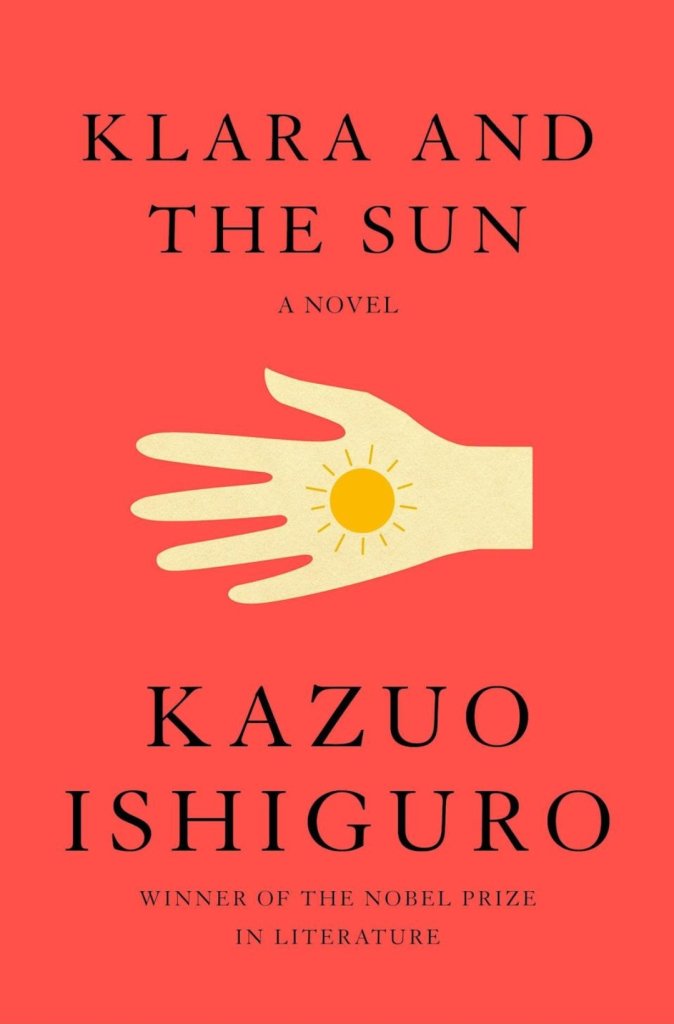
Klara and the Sun, the first novel by Kazuo Ishiguro since he was awarded the Nobel Prize in Literature, tells the story of Klara, an Artificial Friend with outstanding observational qualities, who, from her place in the store, watches carefully the behavior of those who come in to browse, and of those who pass on the street outside. She remains hopeful that a customer will soon choose her.
Klara and the Sun is a thrilling book that offers a look at our changing world through the eyes of an unforgettable narrator, and one that explores the fundamental question: What does it mean to love?
Klara is indeed an unforgettable, and a rather unreliable narrator (not her fault). This is a relatively slow-paced book, intriguing for the conceit of humans as seen from the perspective of an artificial intelligence.
The twist in the middle was relatively unexpected, and added pathos to what is mostly a story about how self-centred humans are, and the frightening prospect of us gaining the ability to make intelligent beings to serve us until we get tired of them; or, a study of consumerism.
My favourite parts of the story were to do with Klara’s perception of the world (particularly when she got disorientated, and (mild spoiler) things separated into perceptual boxes. I was also very intrigued by the figure of the Sun, less a character than (it turns out) an almost religious figure (I won’t spoil it any more). These parts of the book were sensitively written, and made Klara a truly sympathetic character.
I was less interested in the humans (although Rick was interesting), and it takes a long while in the book to understand what’s happened to humanity; and, even then, understanding remains incomplete — which is why this isn’t really science fiction, no matter what they tell you. I’d had enough of Josie (Klara’s main human) after the middle third of the book, and felt justified for my feelings at the end. Will also say it was nice to never be sure if the minor characters were human or artificial, leaving one to wonder why there’s a line at all (– of course there should be a line, but it’s nice to wonder).
I wanted to lead with this, as it annoyed me greatly, but I’ve left it for the end: once again, as is common, there are references to “black-skinned” people (x3), and no references to other skin colours. First of all, I’m pretty sure there are many dark-skinned people, but very few with black skin; so it’s amazing that the author found three with actual black skin to put in this book. Secondly, it made me think about the fact that AI has the same biases we do: if the narrator is an artificial intelligence, Klara sees a raced world, with “white” people as the default. I’m sure that was not an intended takeaway on the author’s part, but the point was made quite effectively for me.
That last part meant for me that this book is—
Rated: 6/10. So, a decent read, a little on the long side for how little happens, but always interesting for the interiority of the robot.
 Harare Review of Books
Leave a comment