
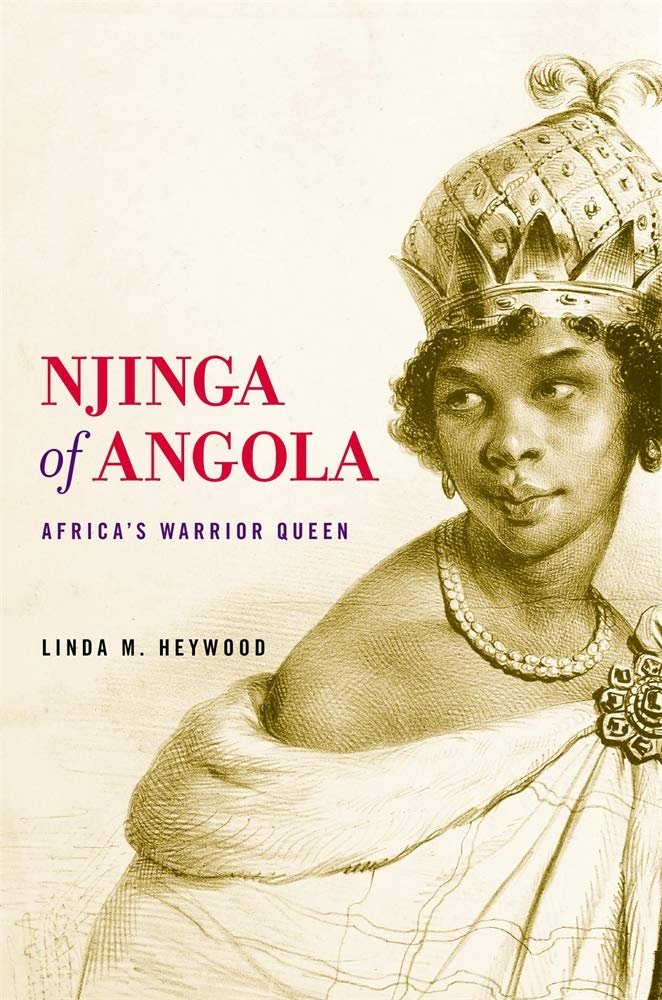
320 pages.
First published in 2017.
Finished reading on June 15, 2021.
Genre: Non-fiction.
Though largely unknown in the Western world, the seventeenth-century African queen Njinga was one of the most multifaceted rulers in history, a woman who rivaled Elizabeth I and Catherine the Great in political cunning and military prowess. Linda Heywood offers the first full-length study in English of Queen Njinga’s long life and political influence, revealing how this Cleopatra of central Africa skillfully navigated–and ultimately transcended–the ruthless, male-dominated power struggles of her time.
In 1626, after being deposed by the Portuguese, she transformed herself into a prolific slave trader and ferocious military leader, waging wars against the Portuguese colonizers and their African allies. Surviving multiple attempts to kill her, Njinga conquered the neighboring state of Matamba and ruled as queen of Ndongo-Matamba. At the height of her reign in the 1640s Njinga ruled almost one-quarter of modern-day northern Angola. Toward the end of her life, weary of war, she made peace with Portugal and converted to Christianity, though her devotion to the new faith was questioned.
Who was Queen Njinga? There is no simple answer. In a world where women were subjugated by men, she repeatedly outmaneuvered her male competitors and flouted gender norms, taking both male and female lovers. Today, Njinga is revered in Angola as a national heroine and honored in folk religions, and her complex legacy continues to resonate, forming a crucial part of the collective memory of the Afro-Atlantic world.
I first came across the name Nzinga when every second woke person on Twitter was using the name, but I was never curious about it 😄 Turns out, I needed to be, because woke people already knew something about this amazing woman.
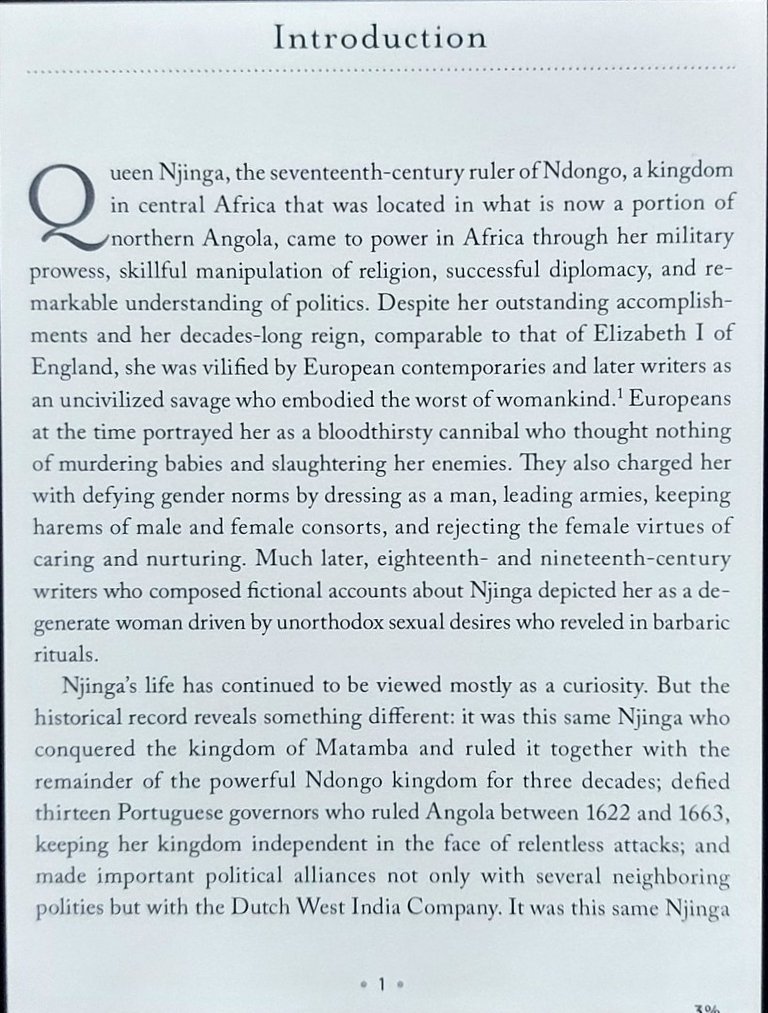
This book fixed the deficit in my knowledge very smartly. Written by an academic, it’s nevertheless very accessible; except, you may find the shifting political alliances in 17th century Angola as bewildering and eventually stultifying as I did. Never mind those, though: Njinga is a fascinating character, and her life makes for a compelling read.
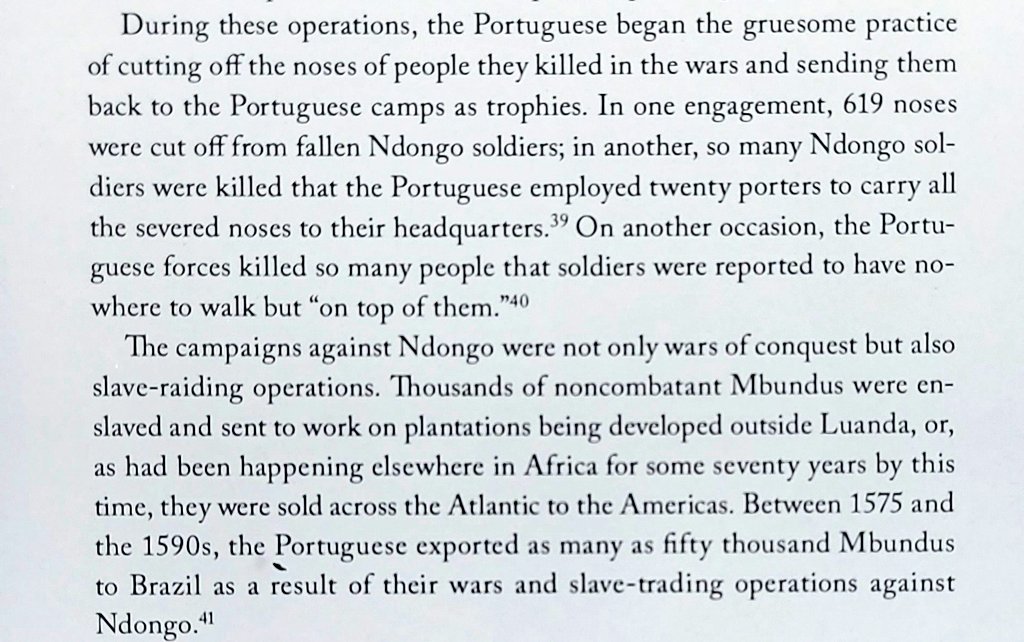
In addition, it’s always edifying to read about different colonial approaches:
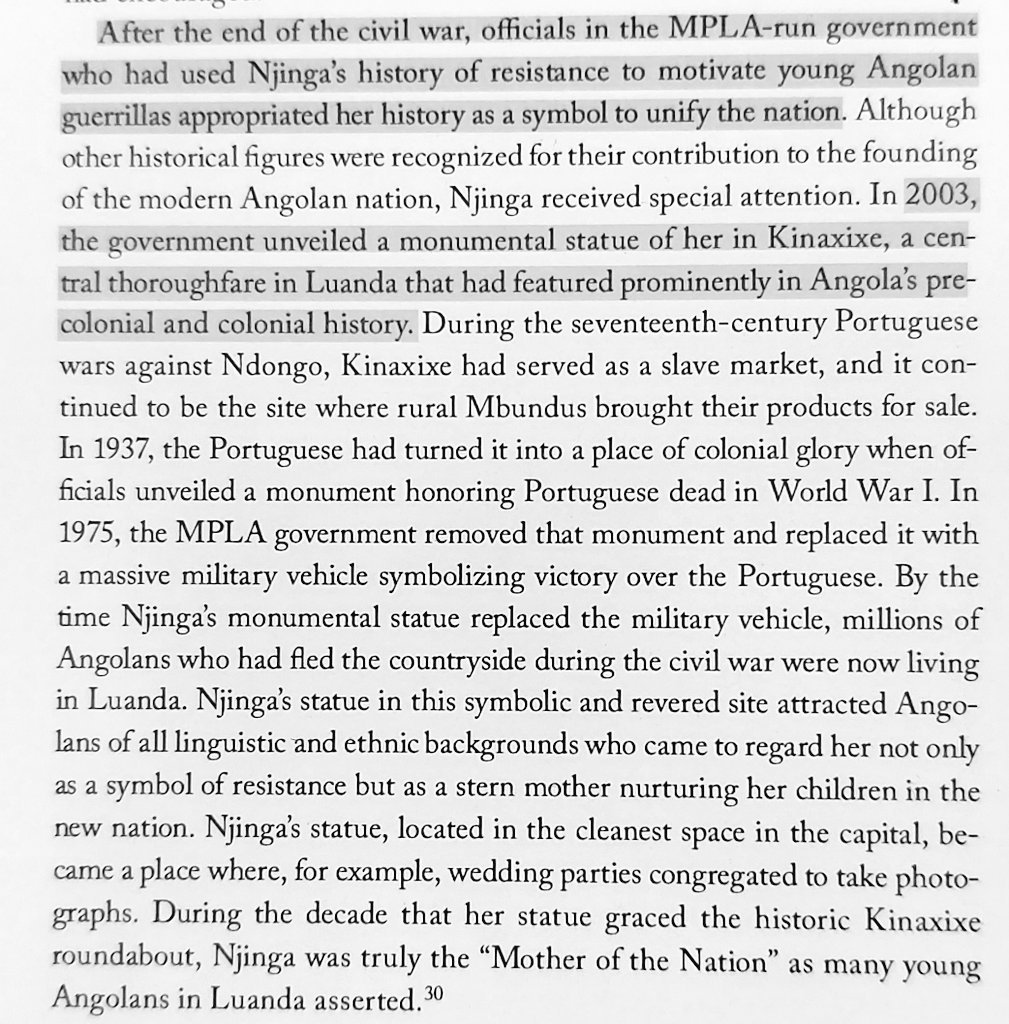
I was also very intrigued, after reading through most of the book, to see parallels between the use of the myth of Njinga to create a nationalist icon in 1970s Angola, and Zimbabwe’s historical and also recently revived myth-making around Nehanda:
Other snippets on Twitter here.
I got to thinking again about the Western insistence on written history being “real” (To whom?), and “accurate” (By whose standards? Interpreted by whom?). How forcing a people to speak the coloniser’s language disrupted/distorted/*destroyed* oral tradition. Much of what was written about Njinga over the two centuries after her rule came from Portuguese missionary sources, who of course had their own agenda. It is interesting that the MPLA may have reverted to local historical sources, but created a myth for their own agenda, too. Maybe history must always be disputed, and narratives must always have a purpose?
Regardless, very much worth educating yourself about this larger-than-life southern African woman of history. I feel as proud of her as if her blood runs in my veins — even if she was an occasional cannibal, and sent people off into slavery.
Rated: 8.5/10.
Update: adding links to interesting articles:
Nzinga Mbandi and Angolan Independence https://www.jstor.org/stable/3513061
Queen Nzinga. African Feminist Forum. http://www.africanfeministforum.com/queen-nzinga-angola/
 Harare Review of Books
Leave a comment