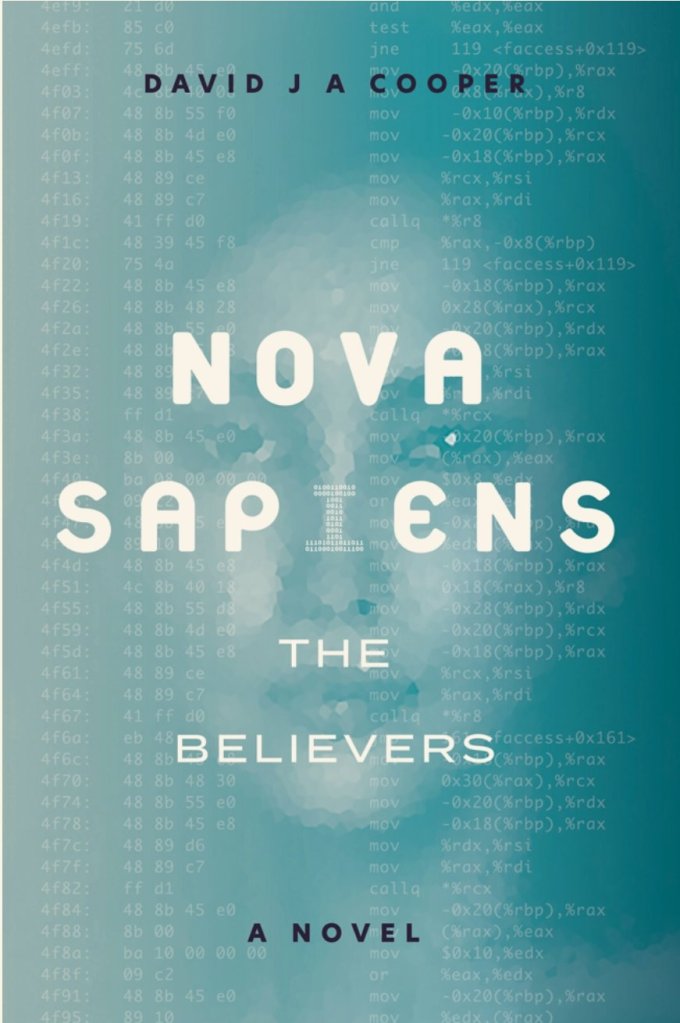
354 pages.
First published in 2020.
Finished reading on Apr 19, 2021.
Genre: Science Fiction
Kasih is a robotic child drawn into a project to discover her secrets, and into a war that threatens all humanity, including her own. The murder of her family by Union troops in Bandung leaves the rebels’ robotics experts, Losana Maraiwai and Wei Dingxiang, with nobody to explain Kasih’s design but Kasih herself.
She is not what anyone expected. In Darwin, Dingxiang suspects a magic trick may explain away her human-like artificial intelligence. In Beijing, Union politician Gabriel da Costa fears an extinction-level technology. Both sides of the war see a weapon that might win it. But Kasih is not strong, fast, or even particularly coordinated. She tries in vain to make sense of her father’s death, and of a world ready to dismantle her and repurpose her technology. And she cannot escape the Union’s plans.
The rebels, including Kasih’s original rescuers, Paul Kanner and Debra Hall, are powerless in the face of a new army of robotic soldiers based on her design. The Union has created monsters, whose cold efficiency unleashes wholesale destruction. They threaten the world’s only chance for freedom, and perhaps its very survival.
Neither Kasih nor Dingxiang understand why Kasih herself is not like them. Kasih must fight back against the fate others have determined for her, and for the world, and Dingxiang needs her ingenuity to solve the very conundrum that her existence represents. For Kasih to save her human friends, she must help them destroy her own kind.
Thank you to NetGalley and to Green Hill Publishing for this DRC.
Warning: spoilers abound!
This is about a robot, and personhood. Unfortunately, very early on, the main protagonist loses everything — a quick way to bring about the crisis she must resolve, but quite brutal in view of the subsequent events.
The protagonist is very likable — very human, in the middle of many inhuman (military) characters. The way she’s treated before and after a big reveal about her origins is quite telling; still, I think the other characters seemed unnecessarily cruel, perhaps to create a contrast with her. It’s not very clear to me why people react so badly to her before the “bad robots” come along, and I don’t think the author explored this to my satisfaction. Is it the (kind of) uncanny valley? Is it because she seems completely human, but isn’t? Maybe it’ll be clear to other readers.
I was troubled by certain experiences the protagonist went through that never found resolution (– and the framing became quite gut-churningly explicit at some point 💔). She had sympathetic people among her captors, but it’s horrible that she sets aside her experiences to help humans.
The story also seemed to go off on tangents frequently, seemingly for world-building purposes, but it felt very disjointed, and I have only a very murky idea of why the situation was what it was, and who the major players were (and so, in this, the book felt like a sequel). The bits set in government offices were completely extraneous and baffling to me, and I mostly skipped over them. There is some resolution of this in the end.
One thing that’s explored incidentally is a post-disability, “transhumanist” world, because of cybernetics. I’m left wondering if people in this particular (built) world would become more or less accepting of disability? Although one of the characters becomes gravely injured and so goes through the process of becoming partly cybernetic (a cyborg!), it’s never explored whether the people around her accept her, except as a useful tool. (Nb. These thoughts are inspired by an important book I read last year: Disfigured, by Amanda LeDuc, which I will review on this blog and link to soon.)
Also, how nice to read about a world that’s not US-centric!
Content warnings: pretty graphic physical violence in places, and the aforementioned framing relating to sexual abuse (no actual sexual abuse in the book).
Rated: 4/5, because it’s a really good story! Could have been tighter, but still really good.
 Harare Review of Books
Leave a comment