
Goodreads alleges that I read 155 books in 2020? I guess I had a lot of time? Full disclosure: some of those were how-to art books, as I’m currently obsessed with watercolour. But here are the actual books I found interesting, and recommend, and some of the reasons why.
In no particular order:
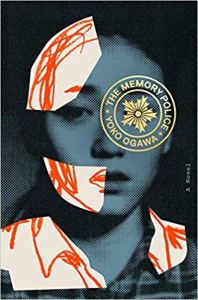
1. The Memory Police x Yōko Ogawa.
I had wanted to read this book because it seems to be about the power of the state over memory, especially where there is a repressive regime. I loved it. I did think, though, that the touch was very light on the role of fear in forgetting, about how remembering is an act of resistance or rebellion, compared to my own experience. But so much of this book was relatable. Enough said (because this is not a political treatise).

2. So Long A Letter x Mariama Bâ.
I waited years and years to get my hands on this book, never managing to find it anywhere; and then my friend W bought me a copy, and I truly wanted to cry. It was worth the wait. Very short, but a wonderful portrait of a woman’s life.
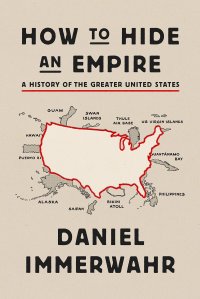
3. How to Hide an Empire x Daniel Immerwahr.
I confess that this book was a revelation for me. If you’re not aware of The US/America as Empire and Grand Coloniser, it will be a revelation for you too. Devoured it, and came away quite radicalised.
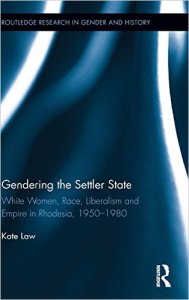
I enjoyed this so much that I raved about it on Twitter. It was briefly free to read, and I’m very glad I had the opportunity to learn more about the role white women played in supporting the colonial state. Much of what I read tied together stories I heard from my mother and grandmother, and put those in context; so that was fun.
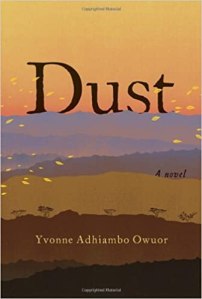
5. Dust x Yvonne Adhiambo Owuor.
Another book I loved, although I had a hard time with it initially because it felt very fragmented in some parts. It made sense in the end, and the fragmentation was like another character in the book. An epic.
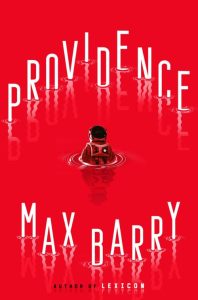
6. Providence x Max Barry.
This is a very original book, and it is sci-fi, and it is set in space, with a very cool ship. That is all.
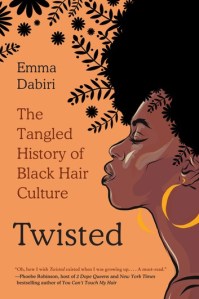
7. Twisted: The Tangled History of Black Hair Culture x Emma Dabiri.
A fun and slightly irreverent (towards whom?) book. Was a bit disappointed that a lot of it focused on West African culture when it referred to Africa; but, a very good read about black hair. Would love to read about black hair culture in southern Africa.
8. African Democratization and Military Coups x Chuka Onwumechili.
It was fascinating to read about the history of coups in Africa + Haiti from the 1950s to 1990s, and about helpful interventions. The book was also very interesting on the OAU, its failures in retrospect, and the structural problems that have continued with the AU.
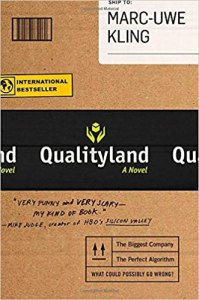
9. Qualityland x Marc-Uwe Kling.
A very clever, very fun read which is definitely not about Amazon. I know I’m going to read this again.
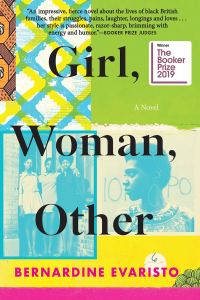
10. Girl, Woman, Other x Bernadine Evaristo.
This was quite a journey for me. I struggled with the style at first, and put it aside for months. Finally picked it up again, and then enjoyed it. I also disliked one or three of the characters.
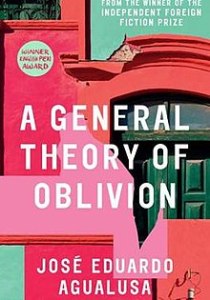
11. A General Theory of Oblivion x José Eduardo Agualusa. Translated by Daniel Hahn.
This book has an unusual and wonderful structure, and I *loved* the magical realism. Come for Angola around Independence and just after; stay for all of the interesting characters.
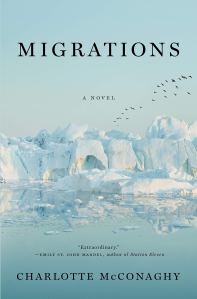
12. Migrations x Charlotte McConaghy.
My top read in 2020, and that’s because I cried at the end. It’s about migration and loss, and cli-fi is the vehicle the author uses. You may not cry, but I do recommend this if you like good writing.
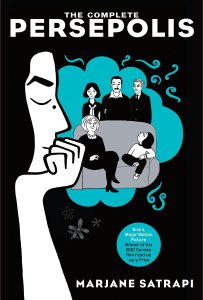
13. The Complete Persepolis x Marjane Satrapi.
This is probably, looking back from the year 2050, the thing that got me into graphic novels. I don’t know how she did it, but it’s an extremely memorable memoir that I can’t wait to read again. Read to get a different perspective about Iran, and also read about this rather amazing woman. (I read two other graphic novels in 2020, and they were okay.)
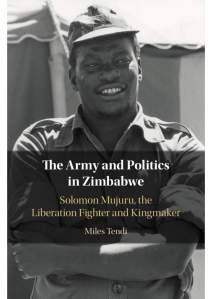
14. The Army and Politics in Zimbabwe: Mujuru, the Liberation Fighter and Kingmaker x Blessing-Miles Tendi.
Illuminating! Our heroes have clay feet, and I appreciate all the research that went into putting this together. The author came across as having become a little enamoured with the myth of Mujuru, but I didn’t really mind that in the end. Very readable. Highly recommended if you’re at all interested in Zimbabwe.
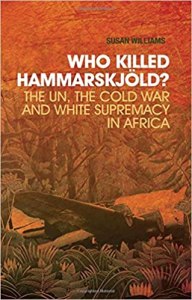
15. Who Killed Hammarskjöld? The UN, The Cold War and White Supremacy in Africa x Susan Williams.
This was compelling, and astonishing. I still don’t know who did it, but I have my suspicions. Read.
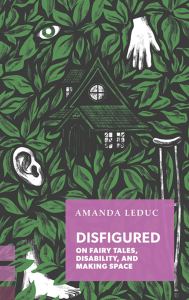
16. Disfigured: On Fairy Tales, Disability and Making Space x Amanda Leduc (audiobook)
This book was like therapy for me, and I felt a shift in my worldview. I’ve lined up more reads from this perspective for 2021.
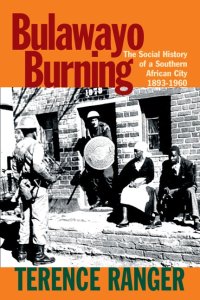
17. Bulawayo Burning x Terence Ranger
How lovely to read about the city I love! Also nice to have read it after reading Butterfly Burning, by Yvonne Vera, as they are kind of companion books. The only dip for me was aaaaaaallllll of the stuff about labour, when my eyes glazed over; but, good read.
18. Guns and Guerrilla Girls x Tanya Lyon (thesis)
This is available online. Fascinating, with caveats about the author’s perspective (which she herself refers to in the thesis). Come for the feminist perspective of Zimbabwe’s liberation struggle.
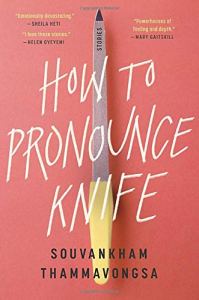
19. How to Pronounce Knife x Souvankham Thammavongsa
Enjoyed all of the pieces in this very even anthology. An excellent writer.
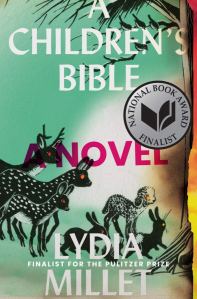
20. A Children’s Bible x Lydia Millet
I’ve already caused a little bit of controversy with my very high rating for this book. It’s the subtext for me, which is clever, or not, depending on your perspective. Read anyway for the cli-fi, and to throw theoretical things at the idiot parents.
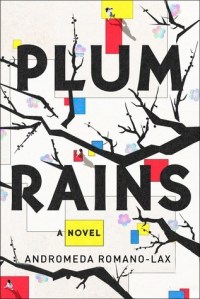
21. Plum Rains x Andromeda Romano-Lax
This book was quite breath-taking (and unexpected, as I chanced upon it on some random list). It’s set in near-future Japan, and is about a Filipina nurse, a caretaker robot, and their client. Highly recommend for all of the concepts, and thoughts about future work, too.

22. Noumenon Ultra x Marina J. Lostetter
Won’t talk much about this one here; it’s the third of a trilogy with very high-concept sci-fi. Loved all of the books.
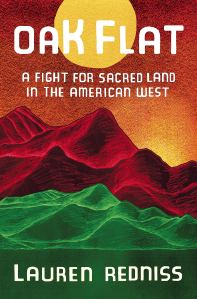
A very beautiful book about Native land, mining, and colonisers. Written like an essay/reportage, with gorgeous illustrations.

24. Midnight in Chernobyl x Adam Higginbotham.
A very long and complex read, with a bewildering cast of characters. I think it could have been quite a bit shorter; but, if you watched Chernobyl, then this fleshes things out a lot.
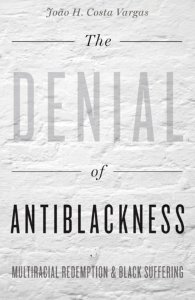
25. The Denial of Antiblackness: Multiracial Redemption & Black Suffering x João H. Costa Vargas
Another free read (at the time, anyway) (threaded with link on Twitter here). Focused on the carceral system in the US and Brazil, but deals extensively with antiblackness.
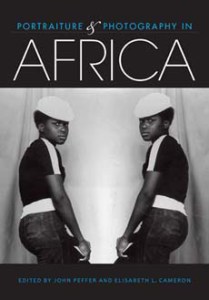
26. Portraiture and Photography in Africa. Edited by John Peffer and Elizabeth L. Cameron
Loved this for the history of photography mainly in West and East Africa, with images. There’s a lot to learn in here.
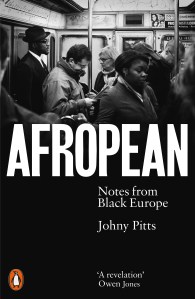
27. Afropean x Johny Pitts, and
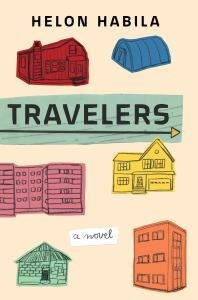
28. Travelers x Helon Habila
Read these last two together, because it’s interesting to see these two different perspectives on essentially the same subject: African migrants in Europe. One is fiction, and the other is non-fiction, but I much preferred Helon Habila’s, as I found Pitts’ book a little detached and elitist (although I did give it a high rating). (Watched Habila at Afrolit, and he struck me as very cerebral.)
If you got this far, congratulations! And I’m sorry I cheated. But, thanks for reading :))
 Harare Review of Books
Leave a comment